Project Stargate: CIA Remote Viewing Program (1978–1995)
— EXECUTIVE SUMMARY
Project Stargate was a multi-decade, government-funded intelligence program that investigated the use of remote viewing for espionage purposes. Despite statistically significant laboratory results, the CIA terminated the program in 1995 due to a lack of proven operational utility.
The moment it began
In the early 1970s, the atmosphere within the American intelligence community was thick with the paranoia of the Cold War. Reports had filtered back to Washington suggesting that the Soviet Union was pouring significant resources into the study of psychic warfare, creating a perceived 'psychic gap' that the United States felt compelled to close. It was against this backdrop of existential anxiety that the CIA turned its gaze toward the Stanford Research Institute (SRI) in Menlo Park, California. On a quiet, unassuming day in 1972, physicists Russell Targ and Harold Puthoff began the initial research that would eventually evolve into a sprawling, multi-decade endeavor. The setting was far removed from the typical clandestine operations of the era; instead of dark alleys or dead drops, the work took place in laboratory environments where subjects were asked to 'see' remote locations using only their minds. The air was filled with the hum of equipment and the intense focus of researchers attempting to quantify the unquantifiable, marking the birth of a program that would eventually be known as Stargate.
What they saw
What began as small-scale, experimental sessions quickly evolved into a structured methodology for intelligence collection. Remote viewers, often military personnel or civilian contractors, were tasked with visualizing distant targets—ranging from foreign military installations to the locations of hostages. In one notable instance during the 1979 Iran hostage crisis, viewers reportedly provided information regarding the status and location of captives. In other operations, viewers claimed to describe a new class of Soviet ballistic missile submarine while it was still under construction at a classified facility. The process was methodical: a viewer would be given a target, often with minimal information, and would then attempt to describe the site or object in detail. These sessions were recorded in transcripts that captured the viewers' impressions, sketches, and verbal descriptions. While the accuracy of these reports varied wildly, the sheer volume of data generated over the years created a complex, often contradictory record of what these individuals claimed to witness from thousands of miles away.
The witnesses
At the heart of the program were the remote viewers themselves—individuals who occupied a strange space between military intelligence assets and subjects of scientific inquiry. Names like Ingo Swann became synonymous with the development of 'Coordinate Remote Viewing,' a set of instructions designed to standardize the psychic experience. These viewers were not merely passive participants; they were often deeply invested in the belief that their abilities were a legitimate, albeit misunderstood, tool for national security. Their backgrounds were diverse, ranging from career military officers to civilians with an interest in parapsychology. In their own documented words, they described the sensation of 'viewing' as a distinct, often exhausting mental effort that required intense concentration. They spoke of 'flashes' of imagery or 'impressions' that would coalesce into a coherent picture of a target. Despite the skepticism they faced from the broader intelligence community, these individuals maintained that their contributions were genuine, even when the results failed to meet the rigorous standards of traditional intelligence gathering.
The investigation
As the program transitioned through various codenames—Gondola Wish, Grill Flame, Center Lane, Sun Streak, and finally Stargate—the investigation into its efficacy became increasingly complex. The Defense Intelligence Agency (DIA) and the Army took over the program, establishing an operational unit at Fort Meade, Maryland. Researchers at SRI and later at Science Applications International Corporation (SAIC) under Dr. Edwin May conducted hundreds of experiments to measure the validity of remote viewing. They utilized rigorous protocols, such as using a 'beacon' to assist viewers or relying on computer-generated random targets to eliminate bias. These investigations were not just about proving the existence of psychic phenomena; they were about determining if such phenomena could be weaponized. Every session was meticulously documented, with researchers recording the accuracy of the descriptions against the actual ground truth of the targets. The goal was to transform a subjective experience into an objective intelligence product, a task that proved to be as elusive as the phenomena itself.
The official record
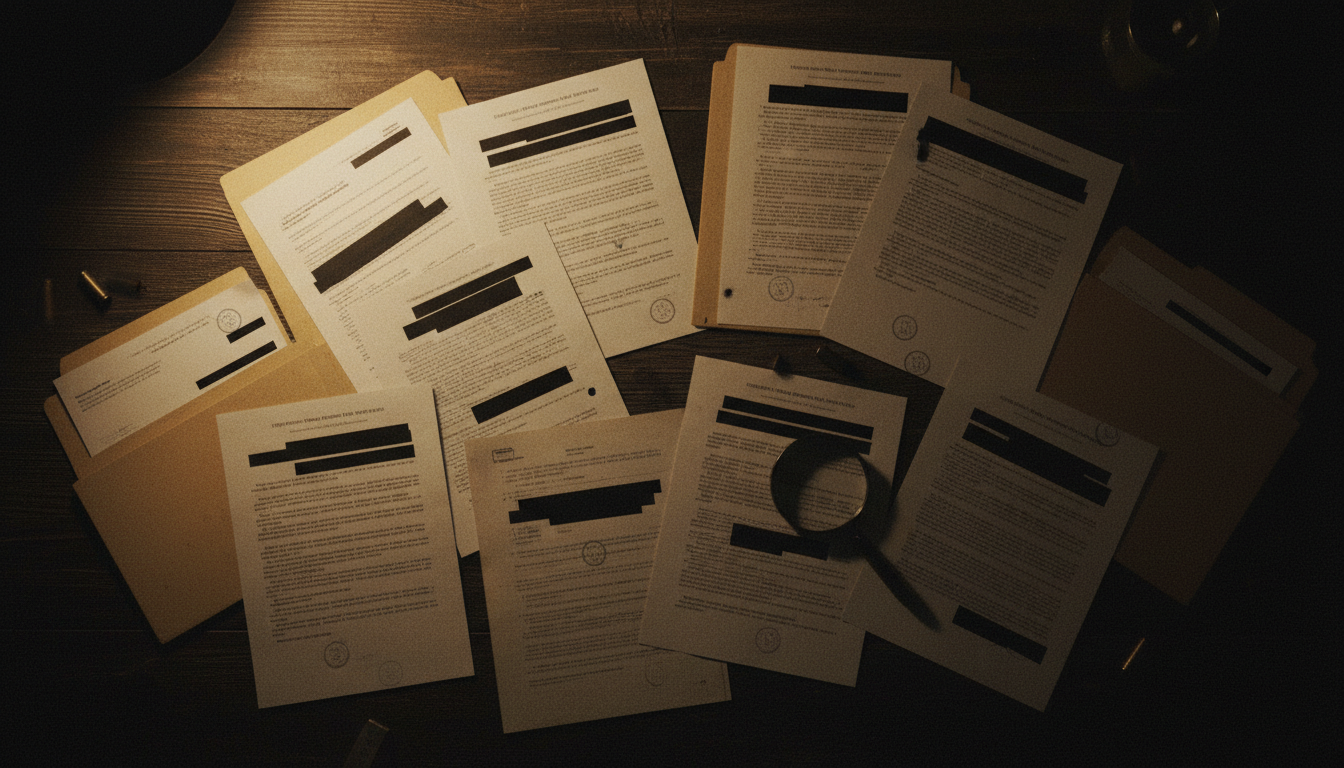
The official record of Project Stargate is a massive, sprawling archive of approximately 89,000 pages, now housed in the CIA’s online Reading Room. These documents include research papers, operational reports, session transcripts, and internal memos that span the program's 23-year history. Much of this material was classified for decades, hidden behind the veil of national security. The files reveal a program that was constantly struggling to justify its existence. There are reports of successful hits, where a viewer’s description matched a target with startling accuracy, but these are interspersed with pages of vague, unusable data. The documents also highlight the internal friction between those who believed in the program's potential and those who viewed it as a waste of taxpayer money. The declassification of these files has allowed for a rare, transparent look at how the government attempted to integrate the paranormal into its intelligence apparatus, leaving behind a legacy that is as much about the limits of science as it is about the nature of belief.
The arguments
In 1995, the CIA commissioned the American Institutes for Research (AIR) to conduct an independent review of the program, leading to a clash of perspectives that defined the end of Stargate. Statistician Jessica Utts, who reviewed the laboratory data, concluded that the statistical evidence for a psychic effect was strong, noting that the results were consistently above chance. However, psychologist Ray Hyman, a noted skeptic, argued that these statistical anomalies did not translate into operational intelligence value. Hyman pointed out that the 'successes' were often subject to interpretation and that the program lacked a consistent, reliable methodology. The debate centered on the difference between a laboratory result and a real-world application. While Utts argued that the existence of the phenomenon was scientifically proven, Hyman maintained that the program had failed to demonstrate that it could provide actionable intelligence. This fundamental disagreement remains the core of the controversy, with proponents pointing to the data as evidence of a breakthrough, while critics dismiss it as a series of statistical coincidences.
Where the case stands today
Today, Project Stargate stands as a fascinating case study in the intersection of government, science, and the unknown. The CIA terminated the program in 1995, concluding that while some laboratory results were statistically anomalous, remote viewing had not been proven useful enough for intelligence operations to justify continued funding. The program is no longer active, and the government has largely distanced itself from the study of parapsychology for intelligence purposes. Yet, the legacy of Stargate persists. It serves as a reminder of the lengths to which intelligence agencies will go to gain an advantage, even if it means exploring the fringes of human capability. The declassified archive remains a resource for researchers and the public alike, inviting ongoing scrutiny and debate. Whether one views Stargate as a visionary attempt to harness the power of the mind or as a cautionary tale of bureaucratic overreach, it remains a significant chapter in the history of the Cold War, illustrating the enduring human desire to see what lies beyond the reach of our physical senses.
— CHAIN OF CUSTODY: SOURCES & FURTHER READING
— FIELD REPORTS (0)
Sign in to post a field report.
No field reports yet. Be the first to contribute.
DISCLAIMER: Every story on this site is based on documented real-world reports or official records. We do not publish fiction. All sources are cited above.