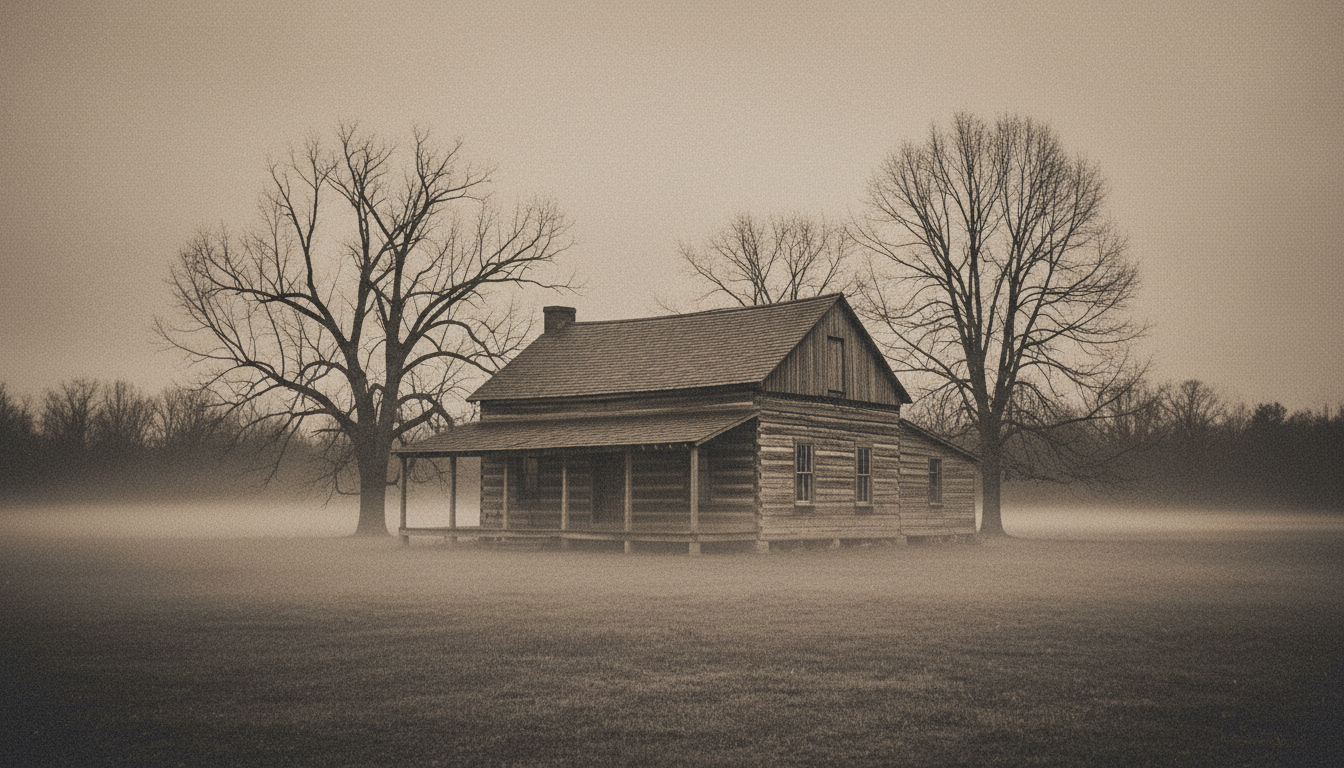
The Haunting of the Stanley Hotel
— EXECUTIVE SUMMARY
The Stanley Hotel in Estes Park, Colorado, has cultivated a reputation as a premier site for paranormal activity since its opening in 1909. From the infamous 1911 gas explosion in Room 217 to its role as the inspiration for Stephen King's 'The Shining,' the property remains a focal point for ghost hunters and historical researchers alike.
The moment it began
The atmosphere at the Stanley Hotel in Estes Park, Colorado, is defined by the thin, crisp air of the Rocky Mountains and the imposing, elegant silhouette of its Georgian architecture. While the hotel opened its doors in 1909 as a sanctuary for the affluent, the true genesis of its spectral reputation is often traced back to a singular, violent event on June 25, 1911. On that summer evening, the hotel was plunged into darkness following a severe storm that caused a power failure. Elizabeth Wilson, the hotel’s chief housekeeper, was tasked with navigating the darkened corridors to light the gas lanterns in the guest rooms. As she entered Room 217, she was unaware that a gas leak had been accumulating in the confined space. The moment she struck a match to ignite the lantern, the accumulated gas ignited, resulting in a massive explosion that tore through the structure. The blast was so powerful that it destroyed ten percent of the hotel, leaving the floor of Room 217 compromised and sending Wilson plummeting into the room directly below. It was a moment of sudden, chaotic violence that shattered the tranquility of the mountain retreat and, according to local lore, anchored a lingering presence to the site that would persist for over a century.
What they saw
The aftermath of the 1911 explosion was not merely a matter of structural damage; it became the foundation for a series of inexplicable phenomena. Witnesses over the decades have described a spectrum of activity that defies conventional explanation. In Room 217, guests have reported the sensation of being watched, the sound of phantom footsteps, and the inexplicable movement of personal belongings. Beyond the room itself, the hotel’s fourth floor has become synonymous with the sounds of children playing, despite records indicating no child ever died on the premises. In the music room, the phantom of Flora Stanley, the wife of the hotel’s founder, is said to be heard playing the piano, with the music ceasing abruptly the moment a living person enters the room. Other reports include shadowy figures manifesting in the hallways, flickering lights that defy electrical failure, and the distinct, chilling sensation of being touched by unseen hands. These events occur with a frequency that has transformed the hotel from a mere luxury destination into a living laboratory for the study of the unexplained, where the boundary between the physical structure and the spectral echoes of its past seems perpetually porous.
The witnesses
The witnesses to these events are as varied as the guests who frequent the hotel, ranging from skeptical staff members to seasoned paranormal investigators. Elizabeth Wilson herself, who survived the 1911 explosion with broken ankles, is said to remain a protective presence, often tidying rooms and folding clothes for guests. In 1974, author Stephen King and his wife Tabitha stayed in Room 217, an experience that would eventually serve as the primary inspiration for his seminal horror novel, 'The Shining.' King reported seeing a child calling out to his nanny on the second floor, a detail that solidified his vision of the hotel as a place where the past refuses to remain buried. More recently, visitors like the Mausling family have documented their own brushes with the unknown during guided spirit tours. Even the hotel’s management, including skeptics like Dave, have acknowledged the persistent nature of these reports. These witnesses, often having no prior connection to one another, provide consistent accounts of specific, localized phenomena, suggesting that the experiences are not merely the product of individual imagination but are tied to the physical environment of the hotel itself.
The investigation
Given its status as a paranormal nerve center, the Stanley Hotel has been subjected to rigorous scrutiny by professional investigators. Teams from major media outlets, including the Travel Channel’s 'Ghost Adventures' and SyFy’s 'Ghost Hunters,' have deployed advanced equipment to capture evidence of the afterlife. These investigations typically involve the use of electromagnetic field (EMF) meters, digital voice recorders, and thermal imaging cameras to detect anomalies in the hotel’s environment. Investigators have documented high EMF readings in areas where spectral activity is reported, as well as audio recordings of disembodied voices and laughter. The hotel’s own staff, including tour guides who specialize in the property’s history, often act as the first line of investigation, documenting guest reports and cross-referencing them with historical records. Despite the high-tech nature of these modern inquiries, the results remain elusive, often providing more questions than answers. The investigators themselves, such as the author and part-time investigator who considers the Stanley the top of his list of haunted locations, emphasize that the sheer volume of data collected over the years makes it difficult to dismiss the reports as mere coincidence or mass hysteria.
The official record
The official record of the Stanley Hotel is a complex tapestry of historical fact and anecdotal evidence. While the hotel maintains a detailed history of its construction by Freelan Oscar Stanley, the co-founder of the Stanley Motor Carriage Co., the paranormal reports are treated with a mixture of professional caution and marketing embrace. The 1911 explosion is a documented historical event, and the subsequent repairs are part of the hotel’s architectural timeline. However, the 'official' stance on the hauntings is often left to the interpretation of the guests. There are no classified documents or withheld reports regarding the phenomena; rather, the evidence exists in the form of thousands of guest logs, staff testimonies, and the ongoing documentation of paranormal teams. The hotel’s management maintains a policy that discourages hoaxing, viewing it as a fireable offense, which lends a degree of credibility to the reports that do emerge. The lack of a singular, definitive 'official' explanation for the hauntings has allowed the narrative to evolve, with the hotel serving as a case study in how historical sites manage the intersection of heritage and the supernatural.
The arguments
Skeptics of the Stanley Hotel’s haunted reputation often point to the building’s age and the natural characteristics of its construction as the primary culprits for the reported phenomena. The hotel, which is still settling after more than a century atop its Rocky Mountain perch, is prone to creaks, tics, and structural shifts that can easily be mistaken for footsteps or the movement of furniture. The 'ghostly' sounds are frequently attributed to the building’s plumbing, wind whistling through the corridors, or the settling of timber and steel beams. Furthermore, the power of suggestion plays a significant role; guests who arrive at the hotel already primed by the cultural legacy of 'The Shining' are more likely to interpret mundane occurrences as paranormal. However, proponents of the haunting theory argue that these explanations fail to account for the specificity of the reports—such as the consistent descriptions of apparitions or the intelligent responses to questions during investigations. They contend that while some events can be explained by the 'creaks and quirks' of the grand lady, the sheer volume and consistency of the reports across different eras suggest an underlying reality that transcends simple structural explanations.
Where the case stands today
Today, the Stanley Hotel stands as a symbol of paranormal intrigue and a testament to the enduring human fascination with the unknown. It remains a sought-after destination for both luxury travelers and those hoping to catch a glimpse of the spectral. The hotel has successfully integrated its haunted history into its identity, offering ghost tours and maintaining a dedicated space for paranormal research. Its legacy is inextricably linked to the cultural impact of Stephen King’s work, which transformed the hotel into a global icon of horror. Yet, beyond the pop culture fame, the Stanley remains a site of genuine historical interest, where the stories of the past—from the pioneering spirit of F.O. Stanley to the tragic accident of Elizabeth Wilson—continue to shape the present. The case of the Stanley Hotel matters because it serves as a bridge between the tangible history of the American West and the intangible, often unsettling, experiences of those who walk its halls. It continues to thrive as a case study in how we interact with the places we inhabit, reminding us that even in the most luxurious settings, the past is never truly gone.
— CHAIN OF CUSTODY: SOURCES & FURTHER READING
— FIELD REPORTS (0)
Sign in to post a field report.
No field reports yet. Be the first to contribute.
DISCLAIMER: Every story on this site is based on documented real-world reports or official records. We do not publish fiction. All sources are cited above.