The 1963 Val Johnson Incident
— EXECUTIVE SUMMARY
On August 27, 1979, Marshall County Deputy Sheriff Val Johnson experienced a harrowing, unexplained encounter with a brilliant ball of light while on patrol in rural Minnesota. The incident left his patrol car physically damaged and resulted in a significant, unaccounted-for lapse in time, cementing the event as one of the most credible and scrutinized UAP cases in history.
The moment it began
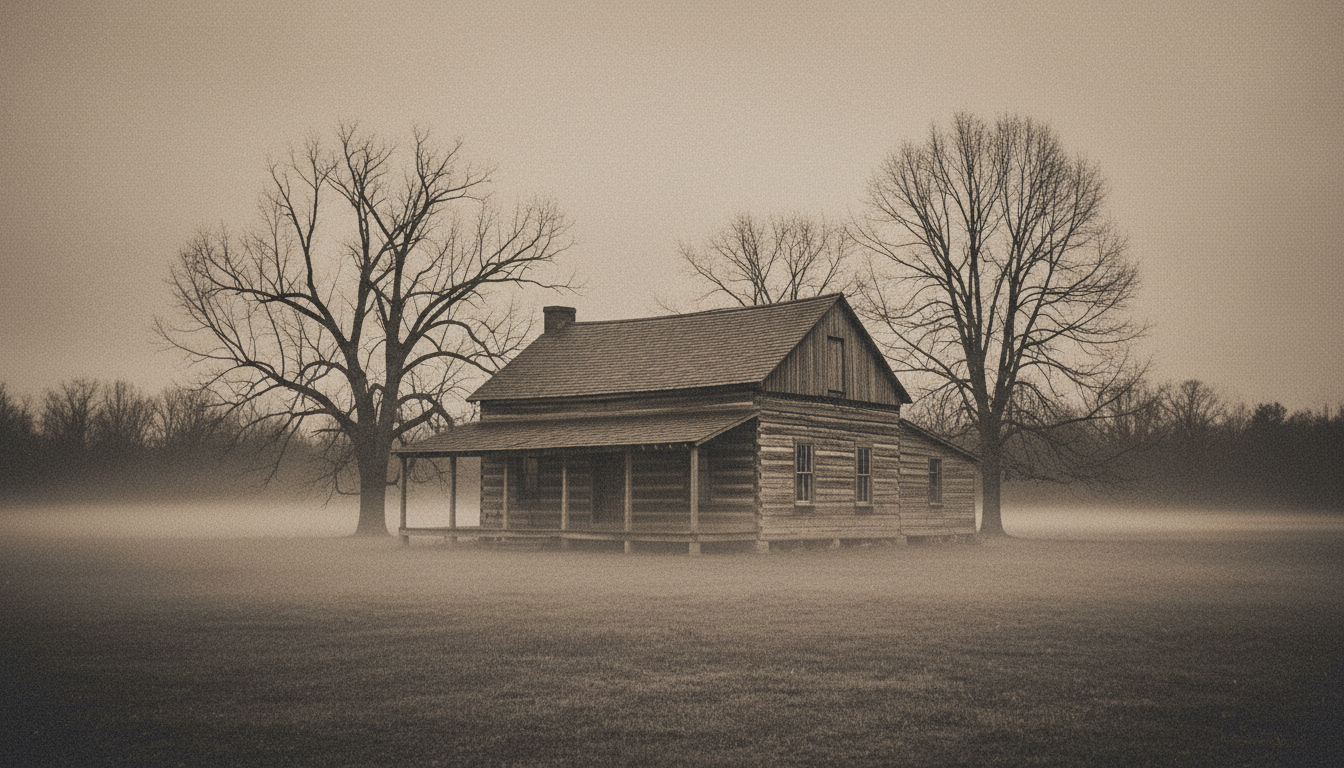
It was the early morning hours of August 27, 1979, in the desolate, flat expanse of Marshall County, Minnesota. The air was still, and the rural landscape near the town of Stephen was shrouded in the deep darkness of a late-summer night. Deputy Sheriff Val Johnson, a man known for his steady demeanor and professional reliability, was conducting a routine patrol. He was driving his squad car along a quiet stretch of County Highway 5, roughly ten miles west of Stephen, when the monotony of the shift was shattered. At approximately 1:40 a.m., Johnson’s attention was drawn to a peculiar, brilliant light manifesting in the darkness ahead. It was not the typical glow of a distant farmhouse or the high beams of an oncoming vehicle; it was a concentrated, intense ball of white light, estimated to be eight to twelve inches in diameter, hovering roughly three to four feet above the ground. The atmosphere felt heavy, and the sudden appearance of this luminous anomaly in such a remote location immediately signaled that this would be no ordinary patrol. Johnson, acting on instinct and professional curiosity, turned his vehicle onto State Highway 220 to investigate, initially suspecting that he might be witnessing an aircraft in distress or an emergency landing. The silence of the Minnesota plains was about to be broken by an event that would defy conventional explanation and haunt the records of local law enforcement for decades to come.
What they saw
As Johnson maneuvered his cruiser toward the light, the situation escalated with terrifying speed. According to his own accounts, the object did not merely sit in the distance; it seemed to react to his approach. The light, which he described as having very defined edges, suddenly surged toward his vehicle. In a heartbeat, the brilliance of the object engulfed the car, blinding the deputy and filling the cabin with an overwhelming, searing radiance. Johnson reported hearing the sharp, unmistakable sound of glass shattering as the force of the encounter struck the vehicle. He felt a violent jolt, a sensation of being physically impacted by an unseen, powerful entity. Then, there was only darkness. When Johnson finally regained consciousness, the world had shifted. He found himself and his patrol car in a completely different position, having traveled approximately 850 to 950 feet from the point of the initial impact. The silence had returned to the highway, but the environment was now marked by the aftermath of a violent collision. He was disoriented, and as he would soon discover, nearly forty minutes of his life had vanished into a void of missing time, leaving him in a state of shock and confusion that would persist long after the light had vanished into the night sky.
The witnesses
Val Johnson was the primary witness, but his credibility as a law enforcement officer became the bedrock upon which the case’s reputation was built. Unlike many who report UAP sightings, Johnson was a trained observer, accustomed to the rigors of police work and the necessity of accurate reporting. In the aftermath, he described the light as being so intense that it caused him physical distress, specifically noting that his eyes felt irritated, similar to the sensation of 'welder’s burns,' which prevented him from tolerating bright lights for a period following the encounter. While Johnson was the only person inside the vehicle, the physical evidence left behind served as a silent, corroborating witness to his experience. Other deputies arrived on the scene shortly after the incident, finding Johnson in a state of mild shock and observing the undeniable damage to the cruiser. Furthermore, the broader context of the region suggests that Johnson was not alone in his observation of strange phenomena; reports of unusual lights in the area were documented by others during that period, adding a layer of regional consistency to his account. Despite the skepticism that naturally follows such claims, those who knew Johnson, including former Sheriff Dennis Brekke, maintained that he was a man of integrity who simply reported what he had experienced without embellishment or claims of extraterrestrial contact.
The investigation
Following the incident, the Marshall County Sheriff’s Department launched an immediate investigation, recognizing that they were dealing with an event that transcended standard traffic accidents. The patrol car itself became the most critical piece of evidence. It sustained a peculiar array of damage: a shattered windshield with four distinct points of impact, a dented hood, a broken headlight, and two stainless steel antennas that had been bent to 90-degree angles. The vehicle was subjected to various forms of scrutiny, including magnetic testing conducted by the Center for UFO Studies in Evanston, Illinois, though these tests yielded no definitive results. In November 1979, a metal engineer from Honeywell was brought in to examine the car, concluding that an unexplained electrical force or physical 'thing' had caused the structural damage. The investigation also involved the Federal Aviation Agency (FAA) and the United States Air Force, both of which confirmed that no scheduled aircraft or reported flights were in the vicinity of Marshall County at the time of the incident. The lack of any conventional explanation for the damage or the missing time left investigators with a profound mystery, as the physical evidence clearly indicated a high-energy event that defied the capabilities of any known terrestrial technology or natural phenomenon.
The official record
The official records of the Val Johnson incident remain a testament to the limitations of mid-century investigative techniques when faced with the unknown. The Marshall County Sheriff’s Department documented the event as a legitimate, albeit inexplicable, occurrence. While the Air Force and FAA were consulted, their involvement was largely characterized by a lack of data, as they could not identify any radar returns or flight plans that matched the description of the light. The case file, preserved in part by the Marshall County Historical Society, contains photographs of the skid marks, the shattered glass, and the bent antennas, serving as a permanent record of the physical toll taken on the cruiser. Notably, the official reports do not speculate on the nature of the object, maintaining a neutral, journalistic tone that focuses on the facts of the damage and the deputy’s testimony. There were no classified documents released that provided a 'smoking gun' explanation, and the incident was never officially attributed to a meteor, a weather balloon, or a secret military project. The absence of a definitive conclusion in the official record has allowed the case to remain an open question, with the primary documentation serving as a foundation for researchers who continue to analyze the event decades later.
The arguments
Skeptics have long scrutinized the Val Johnson incident, with the most prominent voice being that of Phillip Klass, often referred to as the 'Sherlock Holmes of Ufology.' Klass and other critics argued that the incident could have been a hoax or a misinterpretation of natural phenomena, such as a meteor or a localized atmospheric effect. Some suggested that the damage to the car could have been staged or caused by a mundane collision that Johnson later attributed to a UAP. However, these arguments often struggle to account for the specific, localized nature of the damage—such as the precise bending of the antennas and the specific pattern of the windshield cracks—which do not align with typical vehicular accidents. Furthermore, the credibility of Johnson as a deputy sheriff, combined with the lack of any motive for a hoax, makes the 'staged event' theory difficult to sustain for many researchers. The argument that it was a meteor also fails to explain the duration of the encounter or the physical interaction with the vehicle. While skeptics remain unconvinced of an extraterrestrial origin, the sheer lack of a viable, evidence-based alternative that explains all facets of the case—the light, the damage, and the missing time—keeps the debate alive, with many concluding that the incident remains a genuine, if unexplained, anomaly.
Where the case stands today
Today, the Val Johnson incident is regarded as a cornerstone of UAP research, frequently cited in the annals of American history as one of the most credible encounters on record. The patrol car, which serves as a tangible link to that night in 1979, is preserved at the Marshall County Museum in Warren, Minnesota, where it continues to draw visitors interested in the intersection of law enforcement and the unknown. Val Johnson himself eventually moved on, retiring and living a quiet life in Eau Claire, Wisconsin, largely stepping away from the spotlight that the incident cast upon him. Despite the passage of over four decades, the case remains a subject of intense interest, featured in numerous documentaries, books, and academic discussions regarding UAP phenomena. It matters because it represents a rare instance where a trained, reliable witness provided a consistent account supported by physical evidence that could not be easily dismissed. The Val Johnson incident serves as a reminder that even in the most mundane, rural settings, the sky can hold mysteries that challenge our understanding of reality, and that the pursuit of truth requires us to look closely at the evidence, even when it defies our current scientific framework.
— CHAIN OF CUSTODY: SOURCES & FURTHER READING
— FIELD REPORTS (0)
Sign in to post a field report.
No field reports yet. Be the first to contribute.
DISCLAIMER: Every story on this site is based on documented real-world reports or official records. We do not publish fiction. All sources are cited above.