The 1947 Roswell UFO Incident
— EXECUTIVE SUMMARY
The 1947 Roswell incident remains a foundational event in UAP history, originating from a military press release about a recovered 'flying disc' that was later attributed to the classified Project Mogul. Despite official explanations, the case persists as a cultural touchstone for debates regarding government transparency and extraterrestrial visitation.
The moment it began
On the high desert plains of New Mexico, the summer of 1947 was marked by an atmosphere of post-war transition and a burgeoning public fascination with the unknown. On July 7, 1947, W.W. 'Mac' Brazel, a rancher working approximately 75 miles northwest of Roswell, encountered a sprawling field of debris on the land he managed near Corona, New Mexico. The timing was significant; the nation was in the midst of what historians and researchers now refer to as the 'UFO Wave of 1947,' a period characterized by a sudden, intense surge in reports of unidentified aerial phenomena across the United States. Brazel, having observed the scattered remnants of metallic and rubberized materials, contacted the local sheriff. He expressed his belief that the debris might be part of a 'flying disc,' a term that had recently entered the American lexicon. The environment was dry, isolated, and quiet, yet the discovery would soon shatter the tranquility of the region, drawing the attention of the 509th Bomb Group stationed at the nearby Roswell Army Air Field. The stage was set for a collision between local curiosity and the rigid, secretive machinery of the United States military, initiating a sequence of events that would eventually define the trajectory of modern ufology and governmental skepticism for the next century.
What they saw
Witnesses described a scene that defied the conventional engineering standards of the era. The debris field, according to accounts, stretched over a vast area, composed of materials that were described as lightweight yet possessing an incredible, almost impossible strength. These metallic fragments were accompanied by strips of foil and rubberized components that seemed to exhibit strange, anomalous properties. The recovery process began in earnest when military personnel from the Roswell Army Air Field arrived to secure the site. On July 8, 1947, the Public Information Office at the base issued a press release that would echo through history, asserting that the Army Air Forces had successfully recovered a 'flying disc.' This announcement was disseminated to local newspapers and subsequently picked up by national wire services, creating an immediate sensation. However, the narrative shifted rapidly. Brig. Gen. Roger Ramey, the Eighth Air Force Commander, intervened, ordering the debris to be flown to Eighth Air Force Headquarters at Fort Worth Army Air Field, Texas. There, the initial assessment of a 'flying disc' was abruptly retracted and replaced with a new, more mundane explanation: the wreckage was merely the remains of a classified weather balloon project. This sudden pivot from a sensational discovery to a routine meteorological device fueled immediate suspicion and set the foundation for decades of intense public scrutiny.
The witnesses
At the heart of the incident were individuals like W.W. 'Mac' Brazel, whose initial report to the sheriff served as the catalyst for the entire affair. Brazel’s background as a rancher provided him with a practical, grounded perspective, yet his description of the materials he found—metallic, strong, and unlike anything he had encountered in his years on the range—lent the story a sense of genuine mystery. The military personnel involved, including those from the 509th Bomb Group, were tasked with the recovery, and their subsequent accounts have been the subject of exhaustive analysis. Lt. Col. Sheridan Cavitt, for instance, was interviewed decades later by Col. Richard L. Weaver regarding his role in the recovery. These witnesses, caught between their professional duties and the unfolding public spectacle, provided fragments of a narrative that would eventually be scrutinized by investigators, journalists, and conspiracy theorists alike. Their documented words, often conflicting or obscured by the passage of time and the weight of military classification, remain the primary source material for those attempting to reconstruct the events of those few days in July. The tension between the firsthand observations of the rancher and the official military accounts created a divide that has never been fully bridged, leaving the testimony of these individuals as the bedrock of the Roswell legend.
The investigation
Official investigations into the Roswell incident were not immediate, but rather evolved over decades as public interest intensified. In the 1990s, the General Accounting Office (GAO) initiated a formal probe at the request of New Mexico Congressman Steven Schiff, aiming to determine if the U.S. Air Force or any other government agency possessed information regarding the alleged crash and recovery of an extraterrestrial vehicle. This inquiry led to an exhaustive search for records, which revealed that while Army regulations in 1947 required the permanent maintenance of air accident reports, no such report existed for the Roswell event. The investigation, led by the Office of the Secretary of the Air Force, sought to reconcile the conflicting narratives. Researchers examined technical and progress reports from the era, eventually identifying Project Mogul as the most likely source of the wreckage. This highly classified program, which utilized high-altitude balloons equipped with radar reflectors and acoustic sensors to monitor Soviet nuclear weapons research, provided a plausible, if controversial, explanation for the debris. The investigation was methodical, attempting to account for every piece of evidence, including the alleged 'alien bodies,' which the Air Force later attributed to anthropomorphic test dummies used in high-altitude research, suggesting that memories of various events had been consolidated over time.
The official record
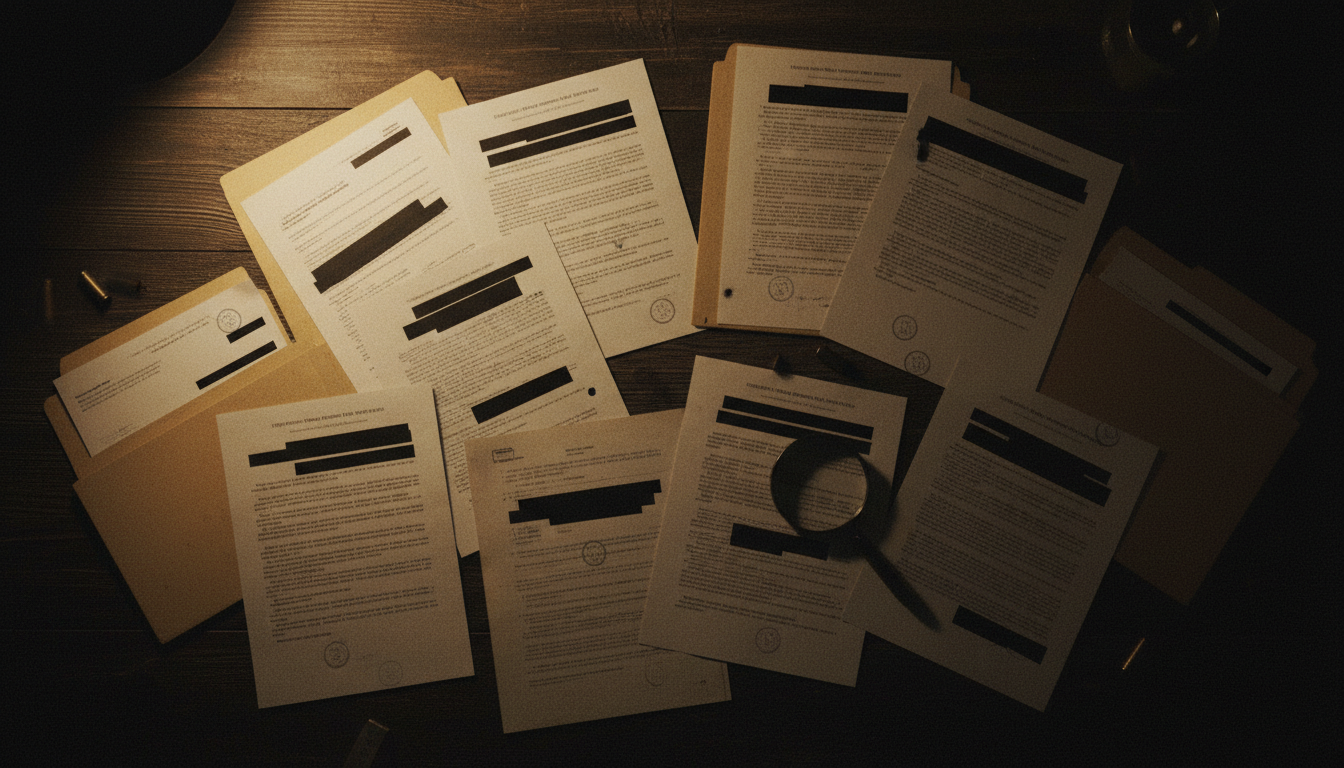
The official record concerning Roswell is a complex tapestry of declassified documents and military reports. According to the 1994 and 1997 Air Force reports, the debris recovered near Roswell was not of extraterrestrial origin but was instead the remnants of a Project Mogul balloon train. This program, which carried a Top Secret classification and a priority level of 1A, was designed to detect the atmospheric signatures of Soviet nuclear tests. The records indicate that the materials—neoprene balloons, radar reflectors, and specialized sensors—would have appeared unusual to a layman in 1947, potentially leading to the misidentification of the wreckage. The Air Force concluded that there was no evidence of a cover-up regarding alien technology or biological entities. Instead, they argued that the 'alien' sightings were likely misinterpretations of scientific activities, such as the use of anthropomorphic test dummies in later high-altitude experiments. Despite these findings, the lack of a formal 1947 air accident report remains a point of contention for many. The official stance remains that the incident was a result of a classified military project, and that the subsequent decades of speculation were fueled by a misunderstanding of these sensitive, high-priority operations that were, by necessity, kept from the public eye at the time.
The arguments
Skeptical arguments regarding the Roswell incident focus on the convergence of Cold War secrecy and the psychological phenomenon of the 'UFO wave.' Proponents of the Project Mogul explanation argue that the materials described by witnesses—metallic, lightweight, and strong—perfectly match the components of the radar reflectors used in the balloon trains. They contend that the military’s initial confusion and subsequent retraction were standard procedures for protecting a highly classified, top-priority program from Soviet intelligence. Conversely, critics of the official explanation point to the inconsistencies in the military’s own statements, the alleged intimidation of witnesses, and the persistent, detailed accounts of individuals who claim to have seen something far more advanced than a balloon. They argue that the 'test dummy' explanation is a convenient, retrospective attempt to explain away reports of bodies that do not align with the timeline of the dummy experiments. The debate often hinges on whether one trusts the institutional narrative of the Air Force or the collective, albeit anecdotal, memory of the witnesses. The strength of the skeptical argument lies in the documented existence of Project Mogul, while the strength of the counter-narrative lies in the enduring, visceral nature of the eyewitness accounts that refuse to be silenced by bureaucratic reports.
Where the case stands today
Today, the Roswell incident stands as a pivotal moment in the history of unidentified aerial phenomena, serving as a cultural touchstone that continues to shape modern conceptions of government secrecy and the possibility of extraterrestrial life. It remains a subject of intense study, discussed in both historical academic works and popular culture. The case is far from closed in the public imagination; it continues to be referenced in debates about transparency, the nature of UAP, and the role of the military in managing public perception. Even with the release of the 1997 'Case Closed' report, the incident remains a lightning rod for those who believe that the truth is still being withheld. Its significance lies not just in what happened in the New Mexico desert in 1947, but in what the event represents: a fundamental distrust of official narratives and an enduring human desire to understand our place in the universe. Whether viewed as a tragic misunderstanding of a classified Cold War project or as the most significant encounter in human history, the Roswell incident remains a permanent fixture in the American consciousness, ensuring that the questions raised in that summer of 1947 will continue to be asked for generations to come.
— CHAIN OF CUSTODY: SOURCES & FURTHER READING
— FIELD REPORTS (0)
Sign in to post a field report.
No field reports yet. Be the first to contribute.
DISCLAIMER: Every story on this site is based on documented real-world reports or official records. We do not publish fiction. All sources are cited above.