The 1926 Poltergeist at the Borley Rectory
— EXECUTIVE SUMMARY
The Borley Rectory, once dubbed the most haunted house in England, became the epicenter of a legendary paranormal investigation led by Harry Price in the 1920s. Despite its eventual destruction by fire, the site remains a focal point for debates regarding the validity of ghost hunting and the influence of media on supernatural folklore.
The moment it began
In the quiet, rolling landscape of Braintree, Essex, the Borley Rectory stood as a looming, red-brick monument to Victorian architecture, constructed in 1862 to serve the local parish. By 1926, the house had already begun to cultivate a reputation that would eventually see it labeled the most haunted house in England. The atmosphere surrounding the rectory was one of heavy, suffocating isolation, exacerbated by the lack of modern amenities like electricity or plumbing. On a cold, damp day in early 1926, the household was already grappling with a series of inexplicable disturbances that defied the rational expectations of the era. The residents, including the Reverend Guy Smith and his family, found themselves living in a state of perpetual unease. The air within the rectory felt thick, and the silence of the Essex countryside was frequently punctured by sounds that had no earthly origin. It was not merely the creaking of old floorboards or the settling of foundations; it was a deliberate, rhythmic intrusion into their domestic lives. As the sun dipped below the horizon, casting long, distorted shadows across the rectory’s facade, the inhabitants were often left to wonder if the legends of a long-lost monastery and a spectral nun were manifesting in the very rooms they occupied. The stage was set for a confrontation between the mundane reality of parish life and the encroaching, unseen forces that would soon draw the attention of the entire nation.
What they saw
What began as subtle, unsettling occurrences soon escalated into a barrage of phenomena that left witnesses terrified and bewildered. The events unfolded with a chaotic, almost aggressive, sequence. Residents reported the distinct, heavy sound of footsteps pacing through empty corridors, the sudden, violent smashing of household objects, and the inexplicable ringing of bells that had long been disconnected. Perhaps most chilling were the messages that appeared, seemingly out of thin air, scrawled upon the walls in a hand that belonged to no living person in the house. Witnesses described the spectral image of a nun, a figure draped in dark, mournful robes, gliding through the gardens and the interior halls, her presence often accompanied by a drop in temperature that chilled the very marrow of those who encountered her. Objects would levitate and be hurled across rooms with significant force, striking walls and furniture with a violence that suggested a sentient, albeit malevolent, intelligence. These were not fleeting glimpses or auditory hallucinations; they were persistent, physical manifestations that demanded acknowledgment. The sequence of these events—the rapping on doors, the physical assaults on the inhabitants, and the visual apparitions—created a tapestry of terror that transformed the rectory from a place of worship into a theater of the macabre, where the laws of physics seemed to hold no sway.
The witnesses
The witnesses to these events were not merely superstitious locals, but individuals whose backgrounds and testimonies provided the foundation for the rectory’s infamy. The Reverend Guy Smith, who served as the rector, was among the first to document the disturbances, eventually reaching out to the press in desperation. His wife, who shared the burden of the haunting, described the psychological toll of living in a house that seemed to actively reject their presence. Their young daughter, Ethel, became a focal point for the poltergeist activity; her bedroom door was frequently the target of rhythmic, insistent rapping, and she once reported being slapped in the face by an unseen hand while lying in bed. These accounts were corroborated by various visitors and staff who spent time within the rectory’s walls. The consistency of their reports—the specific details of the nun’s appearance, the timing of the bell-ringing, and the physical nature of the objects being thrown—lent a weight to their claims that could not be easily dismissed. Their documented words, preserved in letters and later in the archives of the British Library and the National Archives, paint a picture of a family under siege, struggling to reconcile their faith with the inexplicable, violent reality of their daily existence.
The investigation
In June 1929, the investigation reached a turning point when the psychical researcher Harry Price arrived at the rectory, prompted by the media coverage in the Daily Mirror. Price, a man of meticulous, if controversial, methods, brought with him a team of observers and a suite of equipment designed to capture evidence of the supernatural. He conducted systematic vigils, utilizing cameras, audio recording devices, and even a planchette for spirit writing. During his stay, Price documented phenomena that he claimed were of an absolutely abnormal nature. He famously reported instances where wine in glasses transformed into ink or perfume, while remaining intact in the bottles. His team conducted séances, during which they claimed to make contact with spirits such as Marie Lairre, a woman allegedly murdered in the 1600s, and a spirit named Sunex Amures, who ominously predicted the destruction of the rectory. Price’s approach was designed to be scientific, yet his reliance on these séances and the subjective nature of the observations left his findings open to intense scrutiny. He sought to quantify the unquantifiable, using the tools of the modern age to probe the mysteries of the past, yet the very nature of the phenomena often seemed to evade the rigid constraints of his experimental design.
The official record
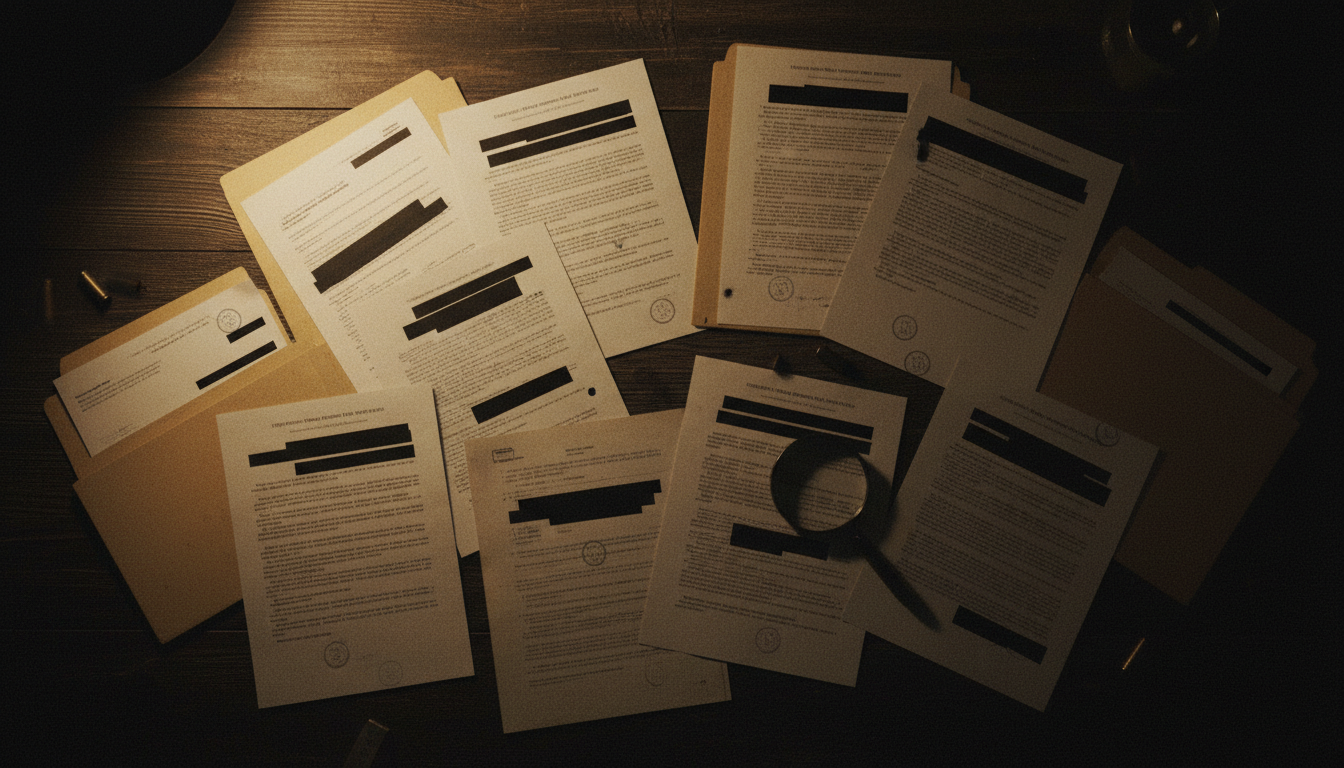
The official record of the Borley Rectory is a complex, often contradictory collection of documents, including the famous 'Locked Book' compiled by S. H. Glanville, which served as a comprehensive log of the phenomena observed during Price’s tenancy. These records, now held within the British Library and the National Archives, contain a wealth of detail that remains a subject of intense study. Much of the material was meticulously cataloged, yet significant portions of the investigation remain shrouded in ambiguity. There are reports of phenomena that were never fully explained, and instances where evidence was seemingly withheld or lost. The official files reflect a struggle to categorize the events; they are filled with witness statements, transcripts of séances, and photographic documentation that, while compelling, often lack the definitive proof required by the scientific community. The records also highlight the tension between the desire for objective truth and the inherent subjectivity of the witnesses. Many of the documents were written with the intent of building a narrative, and as such, they reflect the biases and expectations of those who compiled them. The classification of these files as part of the historical record ensures that the debate over the rectory’s true nature will continue, as the documents themselves provide no final, indisputable verdict.
The arguments
Skepticism regarding the Borley Rectory has been as persistent as the haunting itself. Critics, most notably the Society for Psychical Research, published a scathing report in 1956 that accused Harry Price of exaggerating, or even deliberately fabricating, evidence to bolster the rectory’s reputation. The argument is that the phenomena were the result of natural causes—mice, structural settling, or the overactive imaginations of the residents—rather than supernatural intervention. Skeptics point to the lack of concrete, physical evidence for the existence of the Borley monastery or the nunnery at Bures, suggesting that the legends were merely a convenient backdrop for a manufactured mystery. Furthermore, the financial incentives for maintaining the rectory’s reputation as the most haunted house in England cannot be ignored; the publicity generated by Price’s investigations brought significant attention and potential profit. However, proponents of the haunting argue that the sheer volume of independent witness reports, spanning decades and involving diverse individuals, cannot be dismissed as mere coincidence or mass hysteria. They contend that while some evidence may have been embellished, the core of the experience remains a genuine, albeit poorly understood, encounter with the unknown, and that the skeptical explanations often fail to account for the intensity and specificity of the reported events.
Where the case stands today
Today, the Borley Rectory exists primarily as a legend, its physical structure having been destroyed by fire in 1944, an event that only served to cement its place in the annals of paranormal history. The site remains a point of pilgrimage for those fascinated by the intersection of the supernatural and the human psyche. The case of Borley is significant not because it provides definitive proof of ghosts, but because it represents the birth of modern ghost hunting culture. It forced a conversation about the boundaries of scientific inquiry and the role of the media in shaping our perception of the paranormal. The ongoing debate, fueled by the extensive records in the British Library and the National Archives, ensures that the rectory will never truly be forgotten. Whether one views the events as a genuine haunting or a masterfully constructed hoax, the legacy of Borley Rectory endures as a testament to our enduring fascination with the mysteries that lie beyond the veil of the known world. It serves as a cautionary tale about the fragility of evidence and the power of narrative, reminding us that in the study of the supernatural, the truth is often as elusive as the spirits themselves.
— CHAIN OF CUSTODY: SOURCES & FURTHER READING
— FIELD REPORTS (0)
Sign in to post a field report.
No field reports yet. Be the first to contribute.
DISCLAIMER: Every story on this site is based on documented real-world reports or official records. We do not publish fiction. All sources are cited above.