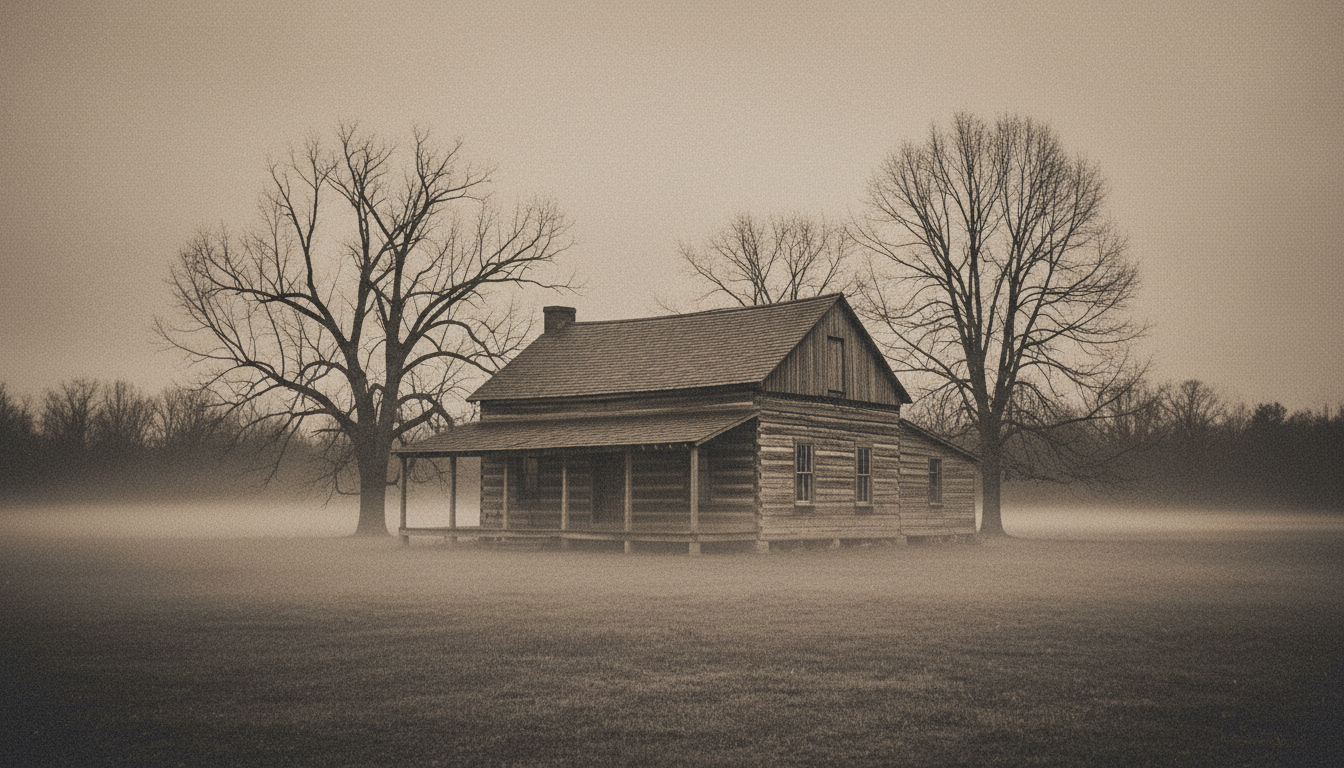
The 1967 Westall UFO Encounter
— EXECUTIVE SUMMARY
On April 6, 1966, over 200 students and staff at Westall High School in Clayton South, Australia, witnessed a mysterious metallic object descend and land in a nearby paddock. Despite decades of investigation and witness testimony, the event remains one of the most significant and debated unexplained aerial phenomena in Australian history.
The moment it began
It was the Wednesday before Easter, April 6, 1966, in the quiet Melbourne suburb of Clayton South. The morning was unremarkable, with the typical bustle of a school day unfolding at Westall High School and the adjacent Westall State School. Located approximately 21 kilometres from the Melbourne central business district, the area was a modest community where life moved at a predictable pace. At roughly 11:00 am, the atmosphere shifted abruptly. Students who were out on the school oval for a sports lesson, along with several teachers, found their attention drawn upward by an anomaly in the sky. The weather was clear enough for the object to be seen with startling clarity. What began as a routine morning of education and play quickly transformed into a moment of collective shock. As the news of the sighting spread through the school grounds, hundreds of children and staff members abandoned their classrooms and duties, drawn by the frantic reports of a flying saucer. The sheer number of witnesses—estimated at over 200—created a scene of chaotic disbelief, as the object hovered, descended, and eventually maneuvered in ways that defied the known capabilities of conventional aircraft of the era.
What they saw
Eyewitnesses described a silvery, saucer-like craft that appeared to be metallic and, in some accounts, possessed a purple hue. The object was reported to be roughly the size of two or three cars. It did not merely fly; it performed a series of maneuvers that left observers stunned. According to multiple accounts, the craft hovered over the school lawn for several minutes before descending into a nearby paddock known as The Grange, located about 400 metres from the school. Some witnesses noted that the object seemed to 'thicken' or change shape, an effect similar to a disc tilting to reveal its underside. The craft was observed by students and teachers alike, who watched as it landed in the grass. For approximately 20 minutes, the object remained in the paddock, leaving behind physical traces in the form of large circles of flattened grass with well-defined, discoloured edges. The departure was as dramatic as the arrival; the object took off at high speed, reportedly pursued by several light aircraft, before vanishing from sight. The silence of the craft during its initial movements was a detail that stuck with many, contrasting sharply with the frantic activity that followed its sudden ascent.
The witnesses
Among the witnesses were students and staff who would carry the memory of that morning for the rest of their lives. Andrew Greenwood, a science teacher at the school, became a central figure in the documentation of the event. Despite having no prior interest in ufology, Greenwood stood by his account, describing an object that hovered, darted, and accelerated with impossible speed. His testimony, provided to researcher James McDonald in 1967, remains a cornerstone of the case. Other witnesses, such as Terry Peck, who was playing cricket on the oval, vividly recalled the terror and awe of the moment. Many students reported collapsing in fear as the object descended. Decades later, in 2006, a gathering of witnesses—including individuals named Joy and Jeff—recounted their experiences, emphasizing that the object was not a helicopter or a conventional plane. These personal narratives, often shared with a sense of urgency, highlight the profound psychological impact the event had on those present. They describe a day where their reality was challenged, and despite the passage of time, they remain steadfast in their conviction that what they saw was not of this world.
The investigation
In the immediate aftermath, the investigation was characterized by a strange mix of public interest and official obstruction. Two days after the sighting, on Good Friday, investigators from the Victorian Flying Saucer Research Society (VFSRS) arrived at the scene. They interviewed witnesses and attempted to document the physical evidence left in the paddock. However, their efforts were met with a wall of silence from authorities. Freelance reporters who rushed to the scene found their access blocked by cordons, and attempts to secure information from Moorabbin Airport, the Department of Air, and the Army were met with denials. Later, researchers like Paul Norman and Peter Norris worked to piece together the timeline, eventually connecting with American atmospheric physicist Professor James McDonald. McDonald’s 1967 interviews with Greenwood and others provided a more formal structure to the testimonies. Despite the lack of official cooperation, the persistence of independent researchers ensured that the details of the sighting were not lost to history, even as the original news footage from Channel Nine mysteriously vanished from the station's archives.
The official record
If one were to search the official archives for a definitive report on the Westall incident, they would likely come up empty-handed. The Department of Air and the RAAF have historically maintained that they have no record of the event, a fact that has fueled decades of speculation. Researcher Bill Chalker, who examined RAAF and Department of Defence UAP files in 1984, found no mention of the Westall encounter. This absence of documentation is often cited by proponents of the theory that the incident was covered up. Some researchers, such as Shane Ryan, have suggested that the Department of Supply may have been involved, and that thousands of files in the National Archives remain unopened, potentially holding the key to the mystery. The school’s own response was one of suppression; Headmaster Frank Samblebe held an assembly shortly after the event, declaring that flying saucers did not exist and instructing students and staff to remain silent. This directive to 'talk to no one' effectively stifled the official narrative, leaving the event to exist primarily in the memories of the witnesses and the unofficial records of private researchers.
The arguments
Skeptical explanations for the Westall incident have primarily focused on the possibility of a runaway high-altitude balloon. Researcher Keith Basterfield, drawing on National Archives material, has argued that the object may have been a balloon from Project HIBAL, a joint US-Australian program that operated from 1960 to 1969. This theory suggests that a balloon launched from Mildura could have been carried into the area by westerly winds. Other skeptics, such as Steve Roberts of Australian Skeptics, have pointed to the proximity of Moorabbin Airport, suggesting the object could have been an experimental Earth-based craft. Some have even proposed that the sighting was a case of mass hysteria or, as suggested by Dr. Brad Tucker, a phenomenon like ball lightning. However, these explanations are met with fierce opposition from witnesses who insist that the object’s controlled, intelligent movements and the physical traces left behind cannot be explained by a balloon or atmospheric anomalies. The debate remains narrow and specific, with the 'balloon' theory serving as the most rigorous counter-explanation, yet it remains contested by those who were there.
Where the case stands today
Today, the Westall UFO encounter stands as one of the most significant and enduring mysteries in Australian history. It is frequently referred to as 'Australia’s Roswell,' a testament to its status as a landmark event in the study of unidentified aerial phenomena. On the 50th anniversary of the incident, renewed media interest and interviews with surviving witnesses demonstrated that the case is far from closed. The ongoing quest for answers continues to drive researchers to petition for the release of classified documents, hoping that the Defence Department will eventually share what they know. The case matters not only because of the sheer number of witnesses but because it highlights the tension between public experience and official skepticism. It serves as a reminder of the complexities of human observation and the societal repercussions of encountering the unknown. As long as the files remain closed and the witnesses continue to speak, the Westall incident will remain a vital, unresolved chapter in the history of UAP sightings, demanding continued investigation and a commitment to the truth.
— CHAIN OF CUSTODY: SOURCES & FURTHER READING
— FIELD REPORTS (0)
Sign in to post a field report.
No field reports yet. Be the first to contribute.
DISCLAIMER: Every story on this site is based on documented real-world reports or official records. We do not publish fiction. All sources are cited above.