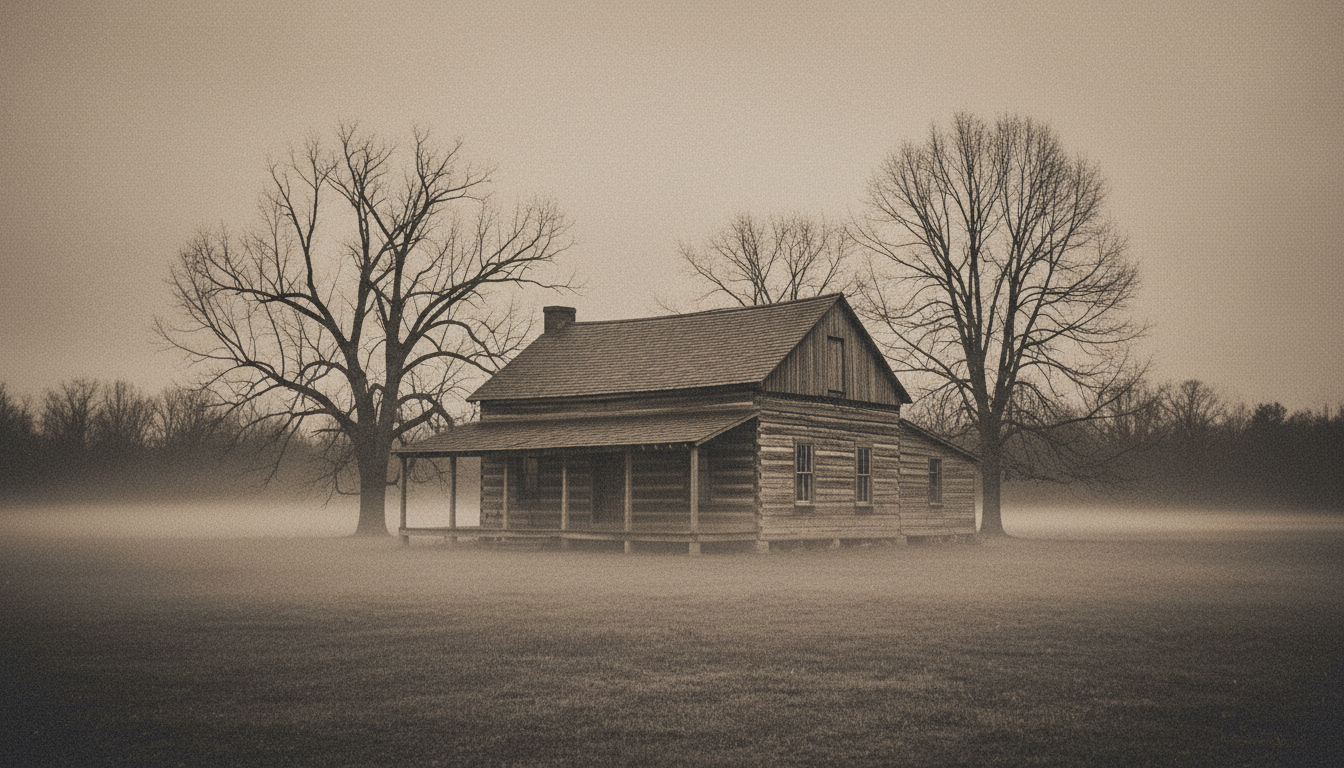
The 1878 Wexford Poltergeist Incident
— EXECUTIVE SUMMARY
The 1878 Wexford Poltergeist remains a seminal case in Irish paranormal history, characterized by violent physical disturbances within the Dwyer family home. Despite extensive media coverage and religious intervention, the true nature of these events continues to spark debate between proponents of the supernatural and those favoring psychological explanations.
The moment it began
The winter of 1878 in County Wexford, Ireland, was marked by a biting, damp chill that seemed to seep into the very marrow of the stone cottages dotting the rural landscape. For the Dwyer family, the year did not begin with the typical quietude of a rural Irish winter, but with a sudden, violent disruption that would shatter their domestic peace. It was a cold, unremarkable evening when the first signs of the anomaly manifested. The family, gathered in the main living quarters of their home, were engaged in the mundane tasks of the season—tending to the hearth and preparing for the night—when the atmosphere in the room shifted perceptibly. There was no warning, no gradual onset of unease; rather, the silence was abruptly punctured by a series of sharp, rhythmic rappings that seemed to emanate from the very walls of the structure. The Dwyers, a family known for their industry and quiet life, were initially baffled, assuming the sounds were merely the settling of an old house or the scurrying of vermin. However, as the hour grew late and the shadows lengthened, the nature of the disturbances escalated from auditory curiosities to physical manifestations that defied the conventional laws of their reality. The air grew heavy, and the temperature in the room seemed to plummet, leaving the family in a state of profound, paralyzing confusion as they realized they were no longer the sole masters of their own home.
What they saw
The progression of the phenomena was as rapid as it was terrifying. Following the initial auditory warnings, the physical environment of the Dwyer household began to behave in ways that were entirely impossible. Witnesses reported that household objects, ranging from small kitchen utensils to heavy pieces of furniture, began to move with a deliberate, almost malicious intent. Chairs were observed sliding across the floorboards without human contact, while crockery was launched from shelves with such force that it shattered against the opposing walls. The most unsettling aspect of these events was the apparent lack of a source; there was no visible entity, no mechanical device, and no logical explanation for the kinetic energy being exerted. Family members watched in horror as stones, seemingly appearing from thin air, were hurled across the room, striking surfaces with a violence that suggested a powerful, unseen hand. Furniture was not merely moved; it was overturned and, in some instances, broken into splinters. The sequence of these events was relentless, occurring in broad daylight as well as under the cover of darkness, ensuring that the family had no respite from the chaos. The sheer unpredictability of the objects’ trajectories created an environment of constant, high-stakes terror, where the very items meant to provide comfort and utility became instruments of a chaotic, invisible force.
The witnesses
The accounts of the Wexford incident were not limited to the immediate family; they were corroborated by a network of neighbors and visitors who found themselves drawn into the unfolding drama. The Dwyers, whose names have been preserved in local lore as a family of good standing and reputation, were forced to open their doors to a community that was equal parts curious and fearful. Neighbors who entered the home to offer assistance or investigate the claims reported their own harrowing experiences. One neighbor, whose identity remains obscured in the historical record to protect their privacy, described the sensation of an unseen presence that seemed to watch them from the corners of the room. These witnesses, many of whom were simple, pragmatic people, were deeply shaken by what they saw. Their documented testimonies, often shared in hushed tones at the local market or in the pages of regional newspapers, spoke of levitating objects and the unsettling feeling of being physically pushed by an invisible pressure. The consistency of these reports across different individuals—people who had no reason to fabricate such stories—lent a weight of credibility to the Dwyer family’s claims. They were not seeking fame or fortune; they were simply trying to survive a situation that had rendered their home uninhabitable and their lives a spectacle of the inexplicable.
The investigation
As the disturbances continued, the local community felt compelled to intervene, leading to a series of investigations that were as much about spiritual preservation as they were about scientific inquiry. Religious leaders from the surrounding parishes were summoned to the Dwyer home, tasked with the solemn duty of cleansing the space of what was widely believed to be a malevolent spirit. These men, armed with prayers and holy water, conducted rites intended to restore order to the household. However, their efforts were met with limited success. The disturbances, rather than ceasing, continued sporadically for several months, defying the ecclesiastical attempts to banish the entity. While these investigations were not conducted with the modern tools of parapsychology, they were documented with the rigor of the time. The clergy noted the persistence of the phenomena and the failure of traditional methods to quell the activity. This period of investigation highlighted the limitations of the era’s understanding of the supernatural, as the religious authorities found themselves grappling with a force that did not respond to the standard liturgical interventions, leaving them to conclude that the nature of the disturbance was far more complex than simple folklore.
The official record
The media coverage of the 1878 incident was extensive, providing a window into the Victorian public’s fascination with the paranormal. Publications such as the Dublin Weekly News and various local journals dedicated significant column inches to the Wexford Poltergeist, detailing the firsthand accounts of the Dwyers and their neighbors. These reports were instrumental in shaping the public narrative, transforming a private family tragedy into a matter of public debate. The official record, as it exists in the archives, is a collection of these journalistic accounts, which often balanced the sensationalism of the era with a genuine attempt to document the facts. Much of the information was gathered through interviews and on-site observations, though some details were inevitably lost or embellished as the stories traveled through the community. The records indicate that while the authorities were aware of the situation, there was no formal government intervention, as the matter was largely viewed as a local, domestic issue. The lack of a centralized, scientific investigation meant that much of the evidence remained anecdotal, leaving the incident to be preserved in the collective memory of the region rather than in the sterile files of a government agency.
The arguments
The Wexford Poltergeist incident became a lightning rod for the intellectual debates of the late 19th century. Skeptics, particularly those within the emerging scientific community, were quick to dismiss the events as the result of mass hysteria or elaborate hoaxes. They argued that the stress of the family’s situation, combined with the power of suggestion, led witnesses to perceive events that were either mundane or entirely fabricated. Some theorized that the disturbances were the result of natural, albeit rare, geological or physical phenomena that the family lacked the knowledge to explain. Conversely, believers pointed to the sheer volume of consistent, independent witness accounts as evidence of a genuine, malevolent force. They argued that the physical damage to the home and the duration of the events were too significant to be the work of a prankster. The debate was emblematic of the broader tension between the rationalism of the Victorian era and the enduring, deep-seated belief in the supernatural. While the skeptics’ arguments provided a logical framework for dismissing the claims, they often failed to account for the visceral, lived experience of those who were present in the house, leaving the question of the incident’s authenticity unresolved.
Where the case stands today
Today, the Wexford Poltergeist of 1878 is remembered as a quintessential example of the Victorian-era obsession with the unknown. It serves as a historical touchstone for researchers of the paranormal, illustrating how such events can profoundly shape community narratives and influence cultural understandings of the supernatural. The case remains significant not because it has been solved, but because it persists as a mystery that challenges our modern, secular worldview. It reminds us that even in an age of increasing scientific enlightenment, there are experiences that defy easy categorization. The legacy of the Dwyer family’s ordeal is found in the ongoing interest in poltergeist activity and the continued exploration of the boundaries between the physical and the metaphysical. As we look back on the incident, it is clear that its importance lies in its ability to provoke curiosity and debate, serving as a testament to the human desire to understand the inexplicable. Whether one views the Wexford Poltergeist as a genuine manifestation of a hidden force or as a fascinating study in human psychology, the case remains an essential part of Ireland’s rich, haunting history, ensuring that the story of the Dwyer family will continue to be told for generations to come.
— CHAIN OF CUSTODY: SOURCES & FURTHER READING
— FIELD REPORTS (0)
Sign in to post a field report.
No field reports yet. Be the first to contribute.
DISCLAIMER: Every story on this site is based on documented real-world reports or official records. We do not publish fiction. All sources are cited above.