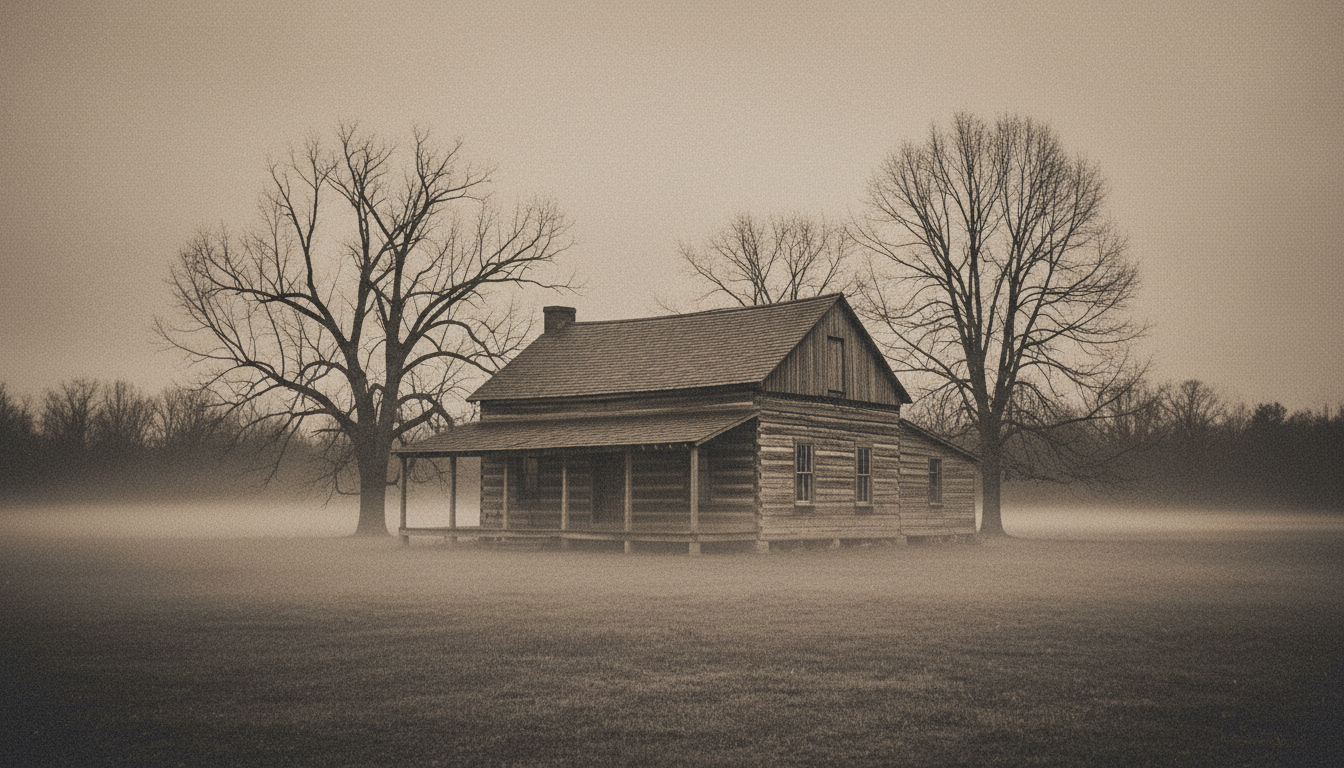
The 1969 Bridgewater Triangle Haunting
— EXECUTIVE SUMMARY
In July 1969, the Bridgewater Triangle in southeastern Massachusetts emerged as a focal point for unexplained phenomena, including spectral apparitions and strange aerial lights. This narrative explores the historical roots and persistent mysteries of this 200-square-mile region, which remains a subject of intense paranormal investigation.
The moment it began
It was July 1969, a summer defined by cultural upheaval and the quiet, creeping dread that settled over the rural landscapes of southeastern Massachusetts. As the world looked toward the moon, the residents of the Bridgewater Triangle—a roughly 200-square-mile expanse encompassing towns like Abington, East Bridgewater, and Bridgewater—found their gaze fixed firmly on the dark, impenetrable canopy of the Hockomock Swamp. The weather was stifling, a humid, heavy heat that seemed to trap the very air within the dense, boggy acres of the region. For those living on the fringes of this wilderness, the nights were no longer peaceful. The silence of the countryside was increasingly punctured by inexplicable noises, and the darkness, once familiar, began to feel crowded. It was during this period that the area began to shed its reputation as a mere rural backwater, transforming into a crucible of the unexplained. Local families, long accustomed to the isolation of the woods, found themselves questioning the reality of their own surroundings as the first reports of strange, glowing lights and spectral figures began to circulate through the local community, marking the birth of a modern legend.
What they saw
As the summer progressed, the reports grew increasingly bizarre and difficult to categorize. Residents described a series of disturbances that defied conventional explanation. In the vicinity of the Freetown State Forest, a group of teenagers reported a harrowing encounter with a glowing, entity-like presence that seemed to hover just above the tree line, casting an unnatural light across the forest floor. This was not an isolated event; across the Triangle, witnesses spoke of shadowy figures that appeared to lurk just outside the periphery of their homes. One resident, in particular, recounted a chilling experience where a dark, indistinct shape manifested near his property. Initially dismissed as a trick of the light or a trick of the mind, the figure became more pronounced with each passing night, eventually instilling a profound sense of dread and foreboding that lingered long after the entity vanished. These sightings were accompanied by reports of unusual animal behavior, with livestock acting erratically and local wildlife seemingly fleeing the depths of the swamp, as if driven by a force that remained invisible to the human eye.
The witnesses
The individuals who came forward were not seekers of fame, but rather local residents—farmers, students, and families—who found their sense of security shattered by these encounters. Their accounts, documented in the archives of the Bridgewater Public Library, reflect a genuine confusion and fear. One resident, whose experience with a shadowy figure became a cornerstone of the 1969 reports, described the sensation of being watched, noting that the figure seemed to possess a weight and presence that defied the laws of physics. Another group of teenagers, who witnessed the glowing entity near Freetown, spoke of a paralyzing fear that gripped them as they watched the object hover in the night sky. These witnesses, often hesitant to speak publicly for fear of ridicule, provided consistent details that painted a picture of an area under siege by the unknown. Their testimonies, preserved in local newspaper coverage from the era, serve as the primary record of a summer where the boundary between the mundane and the supernatural seemed to dissolve, leaving those who lived there to grapple with the reality of their experiences.
The investigation
In the wake of these reports, the Bridgewater Triangle became a magnet for both local law enforcement and early paranormal investigators. The police, tasked with maintaining order in a region increasingly gripped by hysteria, were forced to respond to calls that fell far outside the scope of traditional criminal activity. Investigators combed the dense woodlands, documenting accounts and attempting to capture physical evidence of the phenomena. They explored the historical context of the region, noting the presence of ancient Native American burial sites within the Triangle, which many believed contributed to the area's haunted reputation. Photographs were taken of the swampy terrain, and while many images showed nothing more than the interplay of light and shadow, the sheer volume of reports necessitated a more serious inquiry. Researchers spent long nights in the field, recording audio of the swamp and mapping the locations of the most frequent sightings, hoping to find a pattern in the chaos that had descended upon the region during that fateful summer.
The official record
Despite the intensity of the investigations, the official record remains frustratingly sparse. Law enforcement reports from 1969 often categorized these incidents as disturbances of the peace or misidentified natural phenomena, yet the underlying files suggest a deeper level of uncertainty. Many of the accounts were never fully resolved, leaving them to languish in the archives as unexplained anomalies. The documentation that does exist highlights the difficulty of applying scientific rigor to events that are inherently subjective and fleeting. While some reports were dismissed as hysteria, others were treated with a degree of caution that suggests the authorities were at a loss to explain the sheer frequency of the sightings. The lack of concrete, physical evidence—such as clear photographs or biological samples—meant that the official narrative remained one of ambiguity. The files from this period serve as a testament to the limitations of traditional investigation when faced with phenomena that refuse to conform to the established laws of nature, leaving the truth of the 1969 hauntings buried in the bureaucratic silence of the era.
The arguments
Skeptics have long argued that the events of 1969 were the result of mass hysteria, fueled by the isolation of the region and the power of local folklore. They point to the misidentification of natural phenomena—such as swamp gas, atmospheric conditions, or the reflection of lights from nearby highways—as the most likely explanation for the glowing orbs and spectral apparitions. Furthermore, the psychological impact of living near the vast, intimidating Hockomock Swamp is often cited as a catalyst for the heightened state of alarm among residents. However, proponents of the paranormal argue that these explanations fail to account for the consistency of the reports across different locations and the physical reactions of witnesses who experienced genuine, visceral fear. They contend that the sheer density of the activity, combined with the historical significance of the land, suggests that the Bridgewater Triangle is a genuine "window area" where the veil between dimensions is thin. While the skeptical view provides a rational framework, it often struggles to address the persistent, anecdotal evidence that has defined the region for decades.
Where the case stands today
Today, the Bridgewater Triangle is recognized as one of the most concentrated areas of paranormal activity in the United States, a reputation that has only grown since the summer of 1969. It remains a site of pilgrimage for researchers, cryptozoologists, and enthusiasts who continue to explore its dark, mysterious woodlands in search of the truth. The legacy of the 1969 hauntings persists, woven into the local mythology and serving as a reminder of the enduring power of the unknown. The area continues to draw attention, with modern documentaries and investigations keeping the stories alive for a new generation. Whether one views the Triangle as a genuine hotspot for the supernatural or a fascinating case study in human psychology, its importance cannot be denied. It stands as a testament to our enduring fascination with the mysteries that lie just beyond our understanding, a place where the past and the present collide in the shadows of the Hockomock Swamp, ensuring that the questions raised in 1969 will continue to be asked for years to come.
— CHAIN OF CUSTODY: SOURCES & FURTHER READING
— FIELD REPORTS (0)
Sign in to post a field report.
No field reports yet. Be the first to contribute.
DISCLAIMER: Every story on this site is based on documented real-world reports or official records. We do not publish fiction. All sources are cited above.