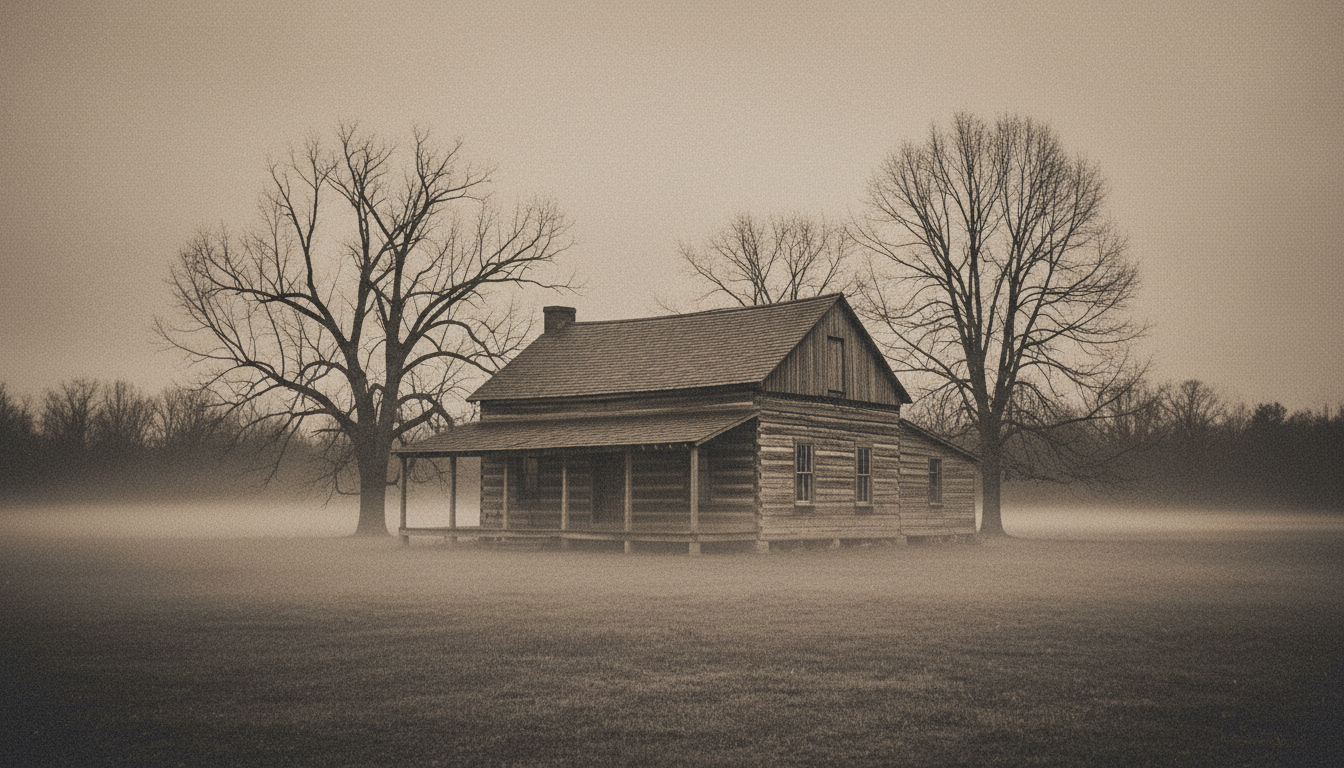
The 1920 Gifford Haunting
— EXECUTIVE SUMMARY
In March 1920, the Gifford family of Kirtland, Ohio, endured a series of inexplicable disturbances that drew significant public and investigative attention. The case remains a notable historical example of early 20th-century paranormal reporting, balancing eyewitness accounts with the skepticism of the era.
The moment it began
It was March 1920, and the late winter chill still clung to the landscape of Kirtland, Ohio. The Gifford family, residing in their quiet home, found their domestic peace shattered not by the elements, but by a series of bizarre and unsettling occurrences that defied conventional explanation. The atmosphere in the house, previously unremarkable, shifted abruptly as the family began to experience phenomena that would soon become the talk of the region. It began in the quiet hours of the evening, when the house should have been settling into the stillness of the night. Instead, the Giffords were met with a series of sharp, rhythmic rapping sounds that seemed to emanate from the very walls of their residence. These were not the settling groans of an old structure or the scurrying of vermin; they were deliberate, percussive, and persistent. As the family gathered in the living area, attempting to rationalize the noise, the situation escalated from auditory disturbances to physical manifestations. The air grew heavy, and the sense of normalcy that had defined their lives in Kirtland evaporated, replaced by a mounting dread that something—or someone—had breached the sanctity of their home.
What they saw
Following the initial rapping, the events within the Gifford home unfolded with a terrifying, beat-by-beat intensity. Over the course of several days, the disturbances grew more aggressive. Family members reported witnessing objects moving inexplicably across rooms, as if propelled by an unseen force. Items that had been stationary on tables or shelves would suddenly slide or be launched into the air, crashing against walls or falling to the floor with a violence that left the family shaken. The sequence of events was relentless; no sooner had one object settled than another would begin its erratic movement. The family described these incidents as a chaotic assault on their environment. Beyond the movement of objects, the physical atmosphere of the home became increasingly hostile. Family members reported sudden, localized drops in temperature—what would later be described as cold spots—that seemed to move through the rooms like a physical presence. These sensations were accompanied by an overwhelming feeling of being watched, a psychological weight that made the simple act of moving through their own home a harrowing experience. The escalation from sound to physical interaction suggested a phenomenon that was not merely auditory, but deeply intrusive.
The witnesses
As the reports of the disturbances spread beyond the walls of the Gifford home, the witnesses became central to the narrative. The Gifford family themselves were the primary witnesses, providing detailed accounts of the terror they endured. Their testimonies were not isolated; neighbors in the Kirtland area corroborated the family’s experiences, claiming to have heard the peculiar, rhythmic noises emanating from the house even from the street. These neighbors, many of whom were long-time residents of the community, were initially skeptical, yet their own ears confirmed the reality of the sounds. The documentation of these events relied heavily on the eyewitness testimonials of the family members, who described the cold spots and the strange sensations that accompanied the movement of objects. These accounts were not delivered in a vacuum; they were shared with local authorities and eventually with the broader public. The consistency of these reports, despite the fear they caused, provided a foundation for the case that would eventually attract the attention of investigators from the Spiritualist community, who sought to document the experiences of those living through the ordeal.
The investigation
As the situation in the Kirtland home gained notoriety, the investigation moved beyond local authorities to include those with a specific interest in the paranormal. During this period, investigators from the Spiritualist community visited the Giffords, bringing with them the tools and methodologies of their time. These investigators were tasked with collecting accounts and attempting to communicate with the entities they believed were responsible for the disturbances. They spent hours in the home, observing the environment and documenting the family’s claims. While modern forensic technology was not available, these early investigators relied on meticulous note-taking, eyewitness interviews, and the observation of the physical environment. They sought to measure the cold spots and record the timing of the rapping sounds. Their presence in the home was an attempt to bring order to the chaos, to categorize the phenomena, and to determine if the disturbances were indeed the result of a ghostly presence. The investigators’ efforts were documented in the records of the time, providing a glimpse into the early 20th-century approach to investigating the unexplained.
The official record
The official record of the 1920 Gifford haunting is preserved in the archives of the Ohio Historical Society and the Paranormal Investigations Archive. These documents serve as the primary source for understanding the events as they were understood at the time. The records include the initial reports filed with local authorities, which were prompted by the escalating nature of the disturbances. These files contain the raw, unfiltered accounts of the family, detailing the specific incidents of flying objects and the persistent rapping. While some aspects of the case were widely publicized, other details remained within the private sphere of the family’s experience. The records indicate that the case was treated with a mix of seriousness and curiosity by those who documented it. There is no evidence of classified or withheld information in the traditional sense, but the records do reflect the limitations of the era’s investigative techniques. The documentation remains a testament to the family’s distress and the public’s fascination, capturing a moment in time when the boundaries between the known and the unknown were being tested in a small Ohio town.
The arguments
Throughout the investigation, the Gifford case was subject to intense scrutiny, with skeptics and believers clashing over the authenticity of the claims. The strongest skeptical explanations focused on the possibility of natural causes, such as structural issues within the home, the settling of the foundation, or even the potential for human intervention or pranks. Skeptics argued that the sounds could be attributed to the house itself, and that the movement of objects might have been exaggerated by the family’s heightened state of fear. However, these arguments often failed to account for the corroboration provided by neighbors who heard the noises from outside the home. Proponents of the supernatural aspect argued that the consistency of the reports and the physical nature of the disturbances pointed toward a phenomenon that could not be explained by mundane factors. The debate was not merely about the events themselves, but about the interpretation of reality. The case remains a classic example of the tension between empirical observation and the subjective experience of the paranormal, with neither side able to definitively prove their position to the satisfaction of the other.
Where the case stands today
Today, the 1920 Gifford haunting remains a significant entry in the annals of Ohio’s paranormal history. It serves as a reference point for researchers and enthusiasts who study the evolution of haunting reports in the early 20th century. The case is notable for the varying perspectives it attracted, from the sensationalism of the media to the serious interest of the Spiritualist community. It matters because it highlights the human response to the inexplicable—the need to document, to investigate, and to find meaning in the face of the unknown. While the house itself may no longer be the center of such activity, the documented accounts continue to be referenced, providing a window into a time when the community of Kirtland was forced to confront the possibility of the supernatural. The legacy of the Gifford case is not found in a definitive answer, but in the enduring questions it raises about the nature of our reality and the persistence of the stories we tell about the things that go bump in the night.
— CHAIN OF CUSTODY: SOURCES & FURTHER READING
— FIELD REPORTS (0)
Sign in to post a field report.
No field reports yet. Be the first to contribute.
DISCLAIMER: Every story on this site is based on documented real-world reports or official records. We do not publish fiction. All sources are cited above.