The 1945 Phoenix Lights Incident
— EXECUTIVE SUMMARY
The 1945 Phoenix Lights incident remains a foundational case in UAP history, involving military personnel from Luke Air Force Base who observed an unexplained triangular formation of lights. Despite rigorous military reconnaissance and archival analysis, the event remains officially unresolved, fueling decades of debate regarding aerial security and government transparency.
The moment it began
On the evening of December 14, 1945, the skies over Phoenix, Arizona, became the stage for an event that would eventually be etched into the annals of military and paranormal history. The atmosphere was crisp, typical of the high desert winter, as military personnel stationed at Luke Air Force Base went about their routine duties. The base, a critical hub for training and operations, was quiet until the reports began to filter in. It was not a singular observation but a series of sightings that disrupted the calm of the night. As the darkness deepened, service members on duty reported observing a series of lights in a formation that moved silently across the night sky. The lack of engine noise, combined with the precise, synchronized movement of the lights, immediately set the event apart from the standard training exercises or routine flight paths common to the region. The witnesses, accustomed to the sights and sounds of military aviation, found themselves confronted with a phenomenon that defied the conventional aeronautical logic of the post-war era.
What they saw
What unfolded over the next several minutes was a display that challenged the observers' understanding of aerial capabilities. Descriptions from various Air Force members included a bright, triangular formation, which was inconsistent with known aircraft of the time. The lights did not flicker like stars or move with the erratic nature of meteors; instead, they maintained a steady altitude and course, moving with a deliberate, almost mechanical precision. The formation appeared to be a singular, structured entity rather than a collection of independent aircraft. As the lights traversed the horizon, they maintained their relative positions, creating a silhouette that suggested a massive, solid object. The silence of the craft was perhaps the most unsettling aspect, as no propulsion noise was detected by those on the ground. The formation moved across the sky with a fluidity that suggested advanced control, leaving the witnesses to grapple with the reality that they were observing something that did not belong to the known inventory of the United States military or any foreign power.
The witnesses
Many of the witnesses were trained service members, providing a level of credibility to the reports that garnered immediate attention from both military officials and early UFO research organizations. These were individuals whose professional lives depended on their ability to identify aircraft, judge distances, and maintain situational awareness. Their documented accounts, preserved in various archives, reflect a mixture of professional detachment and genuine bewilderment. One witness noted the stark contrast between the object’s appearance and the standard aircraft they were trained to recognize. Another described the feeling of unease that permeated the base as the realization set in that the object was not responding to standard identification protocols. These service members, whose names and ranks were recorded in the initial incident logs, provided consistent descriptions that formed the backbone of the subsequent investigation. Their testimony was not that of casual observers, but of trained professionals who recognized that what they were seeing was fundamentally outside the scope of their daily operations.
The investigation
Following the initial reports, official inquiries were launched to determine the nature of the phenomenon. The Air Force conducted several reconnaissance missions in the days following the event to discern whether the sighting could be linked to foreign aircraft, potential secret military tests, or an entirely unknown aerial object. Investigators scrutinized radar logs, flight manifests, and weather reports, attempting to find a terrestrial explanation for the triangular formation. The process was exhaustive, involving interviews with ground crew, pilots, and radar operators who were on duty that night. Despite the rigorous analysis, no conclusive evidence was able to definitively explain the observations. The investigators looked for signs of atmospheric anomalies, balloon launches, or experimental aircraft, but each lead eventually hit a dead end. The lack of a clear, identifiable source for the lights led to a period of intense internal review, as the military sought to reconcile the high-quality witness testimony with the absence of physical or radar-confirmed evidence.
The official record
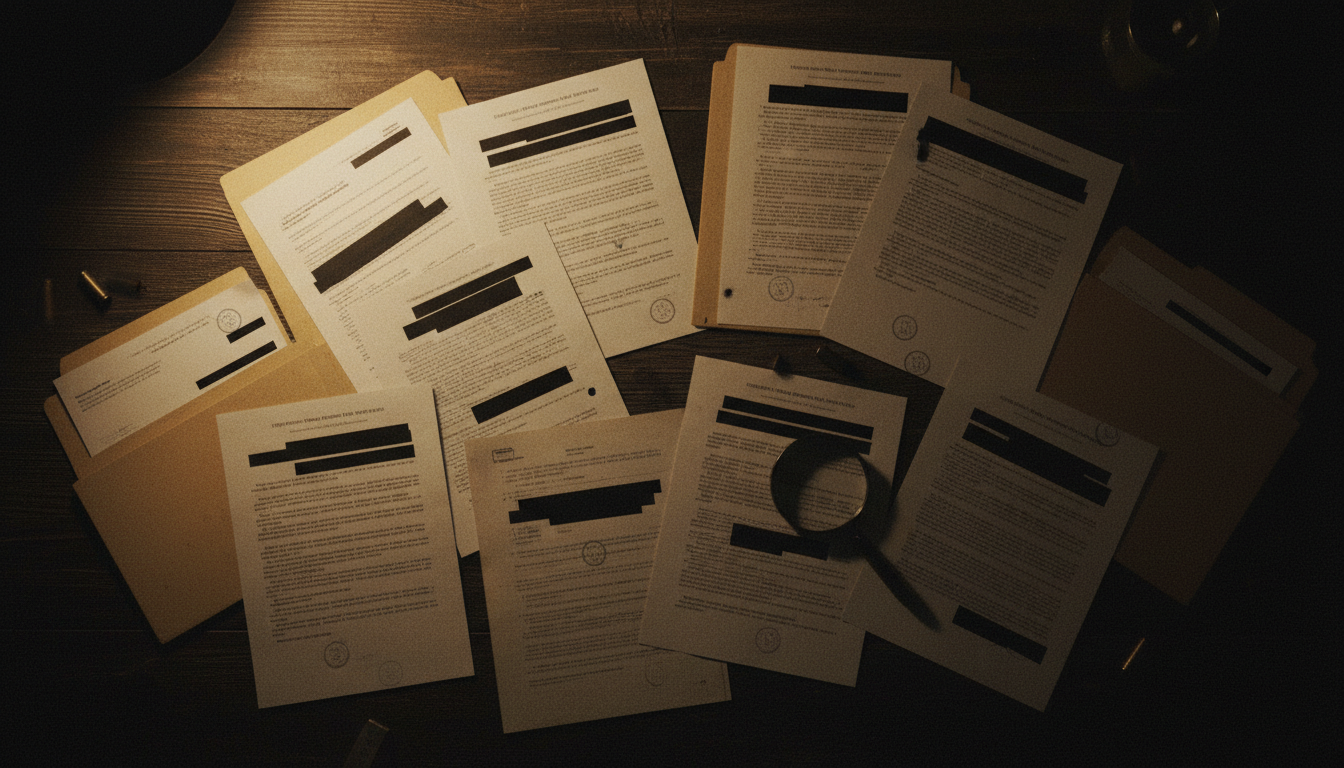
Records of the incident are preserved within government archives, documenting military observations of unidentified flying objects that have been subject to decades of scrutiny. These files, often heavily redacted or summarized in later reports, highlight the military's struggle to categorize the event. The official record notes the time, location, and the specific nature of the formation, yet it remains conspicuously silent on the identity of the object. While some documents suggest the possibility of secret military tests, others acknowledge that the performance characteristics reported by the witnesses were far beyond the capabilities of 1945-era technology. The files serve as a testament to the government's early efforts to address UAP encounters, reflecting a period when the military was just beginning to formalize its approach to such phenomena. The preservation of these records in the U.S. National Archives and other repositories ensures that the incident remains a permanent fixture in the history of UAP research, even as the specific details remain shrouded in ambiguity.
The arguments
Over the years, the incident has been subjected to various skeptical interpretations, ranging from misidentified celestial bodies to secret experimental aircraft. Skeptics often point to the limitations of 1945 radar technology and the potential for atmospheric refraction to create illusions of structured formations. However, these arguments often fail to account for the sheer number of trained observers who reported the same consistent, triangular shape and silent movement. The argument that the lights were merely a secret military test is also frequently debated; while the U.S. military was indeed developing advanced technology at the time, the performance reported—specifically the silent, steady-course flight—does not align with the known propulsion systems of the era. Furthermore, the lack of any subsequent declassification of such a project suggests that if it were a secret test, it remains one of the most successful and well-hidden operations in history. The tension between these skeptical explanations and the witness testimony continues to drive the discourse, as neither side has been able to provide a definitive, universally accepted conclusion.
Where the case stands today
Decades later, the Phoenix Lights incident of 1945 continues to receive renewed interest, with researchers revisiting the case in light of advancements in technology and the growing repository of military documentation on UAPs. This particular sighting has transitioned into a prominent case study within the broader examination of unexplained aerial phenomena, solidifying its position in both military and paranormal research history. The case remains a touchstone for those advocating for greater transparency regarding UAP encounters, as it highlights the potential need for a more open dialogue between the government and the public. Today, the records of the incident are analyzed with modern analytical tools, contributing to ongoing dialogues regarding UAP investigations and the potential security implications of such encounters. The incident serves as a reminder that even in the mid-20th century, the skies held mysteries that challenged our understanding of the world, and the quest to understand these events remains as relevant today as it was in the immediate aftermath of the sighting.
— CHAIN OF CUSTODY: SOURCES & FURTHER READING
— FIELD REPORTS (0)
Sign in to post a field report.
No field reports yet. Be the first to contribute.
DISCLAIMER: Every story on this site is based on documented real-world reports or official records. We do not publish fiction. All sources are cited above.