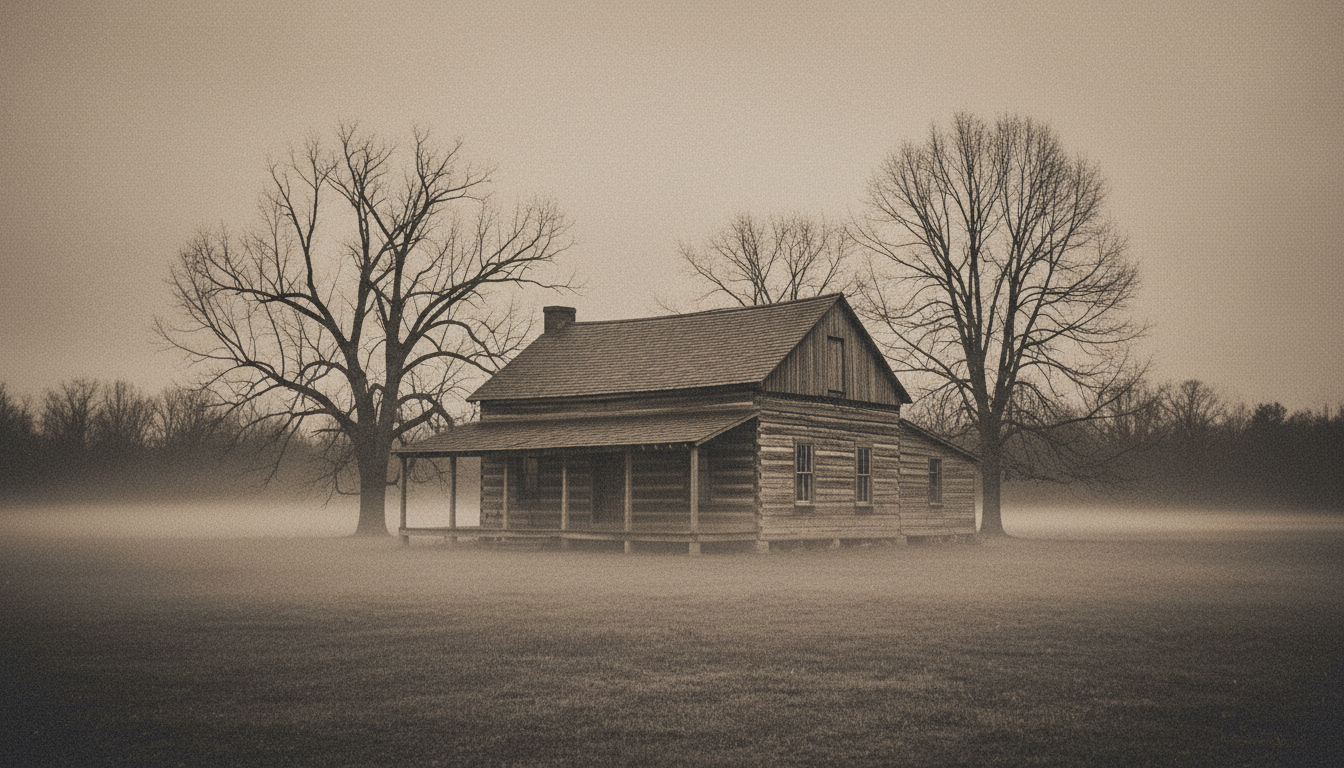
The 1801 Berkshire UFO Sighting
— EXECUTIVE SUMMARY
The 1801 Berkshire UFO sighting remains a foundational moment in American aerial phenomena lore, marking an early instance of mass public fascination with unexplained celestial objects. While historical records from the era are sparse, the event serves as a critical benchmark for understanding the evolution of public discourse surrounding unidentified aerial phenomena.
The moment it began
On the first day of August in 1801, the quiet, rolling landscape of Berkshire, Massachusetts, became the stage for an event that would ripple through the annals of early American history. The weather was typical for a New England summer, with the humid air of the valley settling over the rural communities as dusk approached. Residents, accustomed to the predictable rhythms of agricultural life, were suddenly drawn from their homes by a disturbance in the evening sky. It was not a storm, nor was it the familiar sight of a meteor shower. Instead, a profound silence seemed to descend upon the area, broken only by the collective murmurs of a populace witnessing something that defied the natural order of their world. As the sun dipped below the horizon, the sky transformed into a canvas for an object that appeared to possess a life of its own, moving with a deliberate, almost intelligent grace that left the observers in a state of profound bewilderment. The hour was late, yet the streets and fields were filled with people who had abandoned their evening chores to stare upward, their faces illuminated by the strange, pulsating glow of an entity that refused to be categorized by the scientific understanding of the early nineteenth century.
What they saw
Beat by beat, the object’s behavior challenged the witnesses' perception of reality. It did not streak across the sky like a falling star, nor did it drift aimlessly like a cloud. Instead, it moved with an extraordinary speed that seemed to defy the limitations of known physics, darting across the horizon before coming to a sudden, jarring halt. Many observers described the object as oval-shaped, emitting a brilliant, self-contained glow that cast long, eerie shadows across the Berkshire hills. The craft, if it could be called that, demonstrated a capability to hover in place, defying the gravity that held the rest of the world firmly to the earth. Then, with a swiftness that left the onlookers breathless, it would alter its trajectory, executing sharp, angular maneuvers that suggested a level of control far beyond any balloon or kite of the era. The silence of its movement was perhaps the most unsettling aspect; it glided through the atmosphere without the sound of wind or mechanical propulsion, a phantom of light that seemed to mock the very laws of nature that the local scholars and community leaders held dear.
The witnesses
Among those who bore witness to the spectacle were prominent community members, individuals whose reputations for sobriety and reliability were well-established within the Berkshire region. These were not people prone to flights of fancy or superstitious hysteria. They included local landowners, merchants, and civic leaders who, in the days following the event, found themselves at the center of a growing storm of public intrigue. Their documented accounts, though varied in their specific descriptions of the object’s size and luminosity, remained consistent in their core assertion: they had seen something that was not of this world. One witness, a local farmer, reportedly described the object as having a surface that shimmered like polished metal, while another, a merchant, emphasized the terrifying speed with which it vanished from sight. Their words, captured in the fragmented records of the time, reflect a mixture of fear, fascination, and a desperate need to reconcile what they had seen with the reality of their daily lives. They spoke of the event with a gravity that commanded attention, forcing their neighbors to confront the possibility that the heavens held secrets far more complex than they had ever dared to imagine.
The investigation
In the immediate aftermath of the sighting, the lack of modern investigative tools meant that the inquiry was left to the local press and the intellectual elite of the region. There were no radar systems to track the object’s path, nor were there cameras to capture its image for posterity. Instead, the investigation was conducted through the medium of the printed word. Newspapers across the United States began to pick up the story, treating it with a mixture of skepticism and genuine curiosity. Local leaders and scholars attempted to rationalize the event, seeking to ground the phenomenon in the known world. They interviewed witnesses, cross-referenced accounts, and debated the possibility of atmospheric anomalies. However, the lack of physical evidence—no debris was ever recovered, and no landing site was ever identified—meant that the investigation remained largely speculative. The press served as the primary record-keeper, capturing the essence of the public’s reaction and the desperate attempts by the educated class to maintain a sense of order in the face of an event that threatened to dismantle their understanding of the natural world.
The official record
What remains of the official record is a collection of newspaper clippings and anecdotal accounts that have been preserved in archives like the Library of Congress. These documents, while lacking the clinical precision of modern military reports, provide a window into the societal impact of the sighting. Much of the information was never classified in the modern sense, but it was certainly left unexplained, relegated to the status of a historical curiosity. The records indicate that the event was widely reported, yet the lack of a centralized authority to investigate such matters meant that the files remained scattered and incomplete. There are no redacted documents or secret memos to be found; instead, there is only the silence of history, a void where a definitive explanation should be. The event was treated as a phenomenon of the time, a curiosity to be discussed in parlors and taverns, but it never received the rigorous, systematic analysis that would characterize the UFO investigations of the mid-twentieth century. It remains a case of an event that was documented by the public but ignored by the scientific establishment of the day.
The arguments
Skeptical explanations for the 1801 sighting were as varied as the descriptions of the object itself. The most common arguments centered on meteorological phenomena, such as ball lightning, rare atmospheric reflections, or even the misidentification of celestial bodies. Scholars of the time argued that the witnesses, caught up in the excitement of the moment, had projected their own fears and expectations onto a natural, albeit rare, occurrence. They pointed to the lack of physical evidence as proof that the object was not a solid craft, but rather a trick of the light or a fleeting atmospheric disturbance. However, these arguments often failed to account for the specific, intelligent maneuvers described by the witnesses—the hovering, the sudden changes in trajectory, and the silent, deliberate movement. For many, the skeptical explanations felt like a poor match for the reality of the experience, a way to dismiss the uncomfortable truth that something had appeared in the sky that could not be easily explained away by the science of the nineteenth century.
Where the case stands today
Today, the 1801 Berkshire UFO sighting is recognized as a pivotal moment in the history of American aerial phenomena, a precursor to the modern era of UFO research that would begin in the late 1940s. It serves as a benchmark for understanding how society’s perception of the unknown has evolved over the centuries. While concrete evidence remains elusive, the significance of the event lies in its enduring legacy within the lore of early American encounters. It illustrates humanity’s innate curiosity about what lies beyond our planet and our long-standing engagement with the mysterious. The case continues to be studied by researchers who see it as a vital piece of the puzzle in the broader history of UAP sightings. It reminds us that the fascination with the unknown is not a modern invention, but a thread that runs deep through the fabric of our history, challenging us to keep looking at the sky with a sense of wonder and a critical eye, even when the answers remain just out of reach.
— CHAIN OF CUSTODY: SOURCES & FURTHER READING
— FIELD REPORTS (0)
Sign in to post a field report.
No field reports yet. Be the first to contribute.
DISCLAIMER: Every story on this site is based on documented real-world reports or official records. We do not publish fiction. All sources are cited above.