The Poltergeist of Chetwyn Minor
— EXECUTIVE SUMMARY
In the summer of 1877, a small cottage in Chetwyn Minor, Shropshire, became the site of intense, unexplained poltergeist activity that terrorized a local family. This case remains a significant historical touchstone for early parapsychological research and the Victorian era's struggle to reconcile science with the supernatural.
The moment it began
The summer of 1877 in Chetwyn Minor, Shropshire, was marked by a stifling, heavy heat that seemed to settle over the rural landscape, yet the atmosphere inside one particular cottage was far colder. It was here, in the quiet isolation of the English countryside, that a mother and her two children found their domestic peace shattered by events that defied the rational understanding of the era. The disturbances began with a deceptive subtlety that often characterizes such accounts: a misplaced household item, a soft, rhythmic thud against a wall, or the distinct sensation of being watched from the shadows of a darkened hallway. As the sun dipped below the horizon, the family would gather in the main living area, hoping for a respite from the day's labor, only to find that the very architecture of their home seemed to turn against them. The air would grow thick with an inexplicable tension, and the silence of the evening would be broken by sounds that had no place in a modest cottage. It was not merely the creaking of settling timber or the rustle of wind against the thatch; these were deliberate, percussive sounds that echoed through the corners of the house, signaling the start of a haunting that would soon draw the eyes of the entire region.
What they saw
The escalation of the phenomena was as rapid as it was terrifying. What began as minor auditory disturbances soon manifested into physical, kinetic events that left the occupants in a state of constant, paralyzing fear. Witnesses reported that furniture—heavy chairs and wooden tables—would be tossed across rooms as if by an invisible, violent hand. Items that had been carefully placed on shelves would vanish, only to reappear in impossible locations, sometimes hours later, as if mocking the family's attempts to maintain order. The most harrowing aspect, however, was the emergence of disembodied voices. These were not mere whispers; they were audible, distinct sounds that resonated through the cottage, often accompanied by sharp, rhythmic knockings that seemed to respond directly to the questions posed by the terrified inhabitants. The family, trapped in their own home, became convinced that they were being targeted by a malevolent spirit, an entity that seemed to derive a cruel satisfaction from their distress. The physical environment of the cottage became a stage for a series of surreal, violent displays that defied the laws of physics, turning the mundane act of living into a desperate struggle for survival against an unseen, badgering force.
The witnesses
As the news of the disturbances rippled outward from the cottage, the quiet village of Chetwyn Minor found itself at the center of a burgeoning public fascination. The credibility of the claims was bolstered by the diverse array of witnesses who arrived to observe the phenomena firsthand. Among those who documented their experiences were professional reporters from nearby towns, whose journalistic integrity was tested by the bizarre events they encountered. Local clergy also felt a profound duty to intervene, arriving at the cottage to provide spiritual guidance and comfort to the mother and her children, though many left with their own sense of unease, unable to explain the knockings and movements they had personally witnessed. These witnesses, ranging from skeptical observers to those deeply rooted in their faith, provided testimonials that were recorded in various local publications of the time. Their accounts, often written with a mixture of awe and genuine terror, described the surreal nature of the events, noting how the knockings would often occur in direct reply to their own inquiries. These documented testimonials served to solidify the case in the public consciousness, transforming a private family tragedy into a matter of significant local intrigue.
The investigation
In an era when science was beginning to grapple with the unexplained, the Chetwyn Minor case attracted the attention of early researchers and investigators who sought to apply a more rigorous, analytical lens to the reports. These individuals, often traveling from neighboring towns, arrived with the intent of measuring, observing, and perhaps debunking the claims that had spread through the county. They brought with them the tools of the Victorian age—notebooks, stopwatches, and a deep-seated desire to find a rational explanation for the chaos. During their visits, they conducted systematic observations, attempting to correlate the timing of the disturbances with environmental factors or the movements of the inhabitants. While some investigators remained skeptical, others were forced to confront the reality of the phenomena they witnessed. The documentation produced during these visits was meticulous, capturing the specific nature of the sounds and the physical displacement of objects. These investigations were not merely about proving the existence of a ghost; they were an attempt to categorize and understand the nature of the forces at play, laying the groundwork for what would eventually become the field of parapsychology.
The official record
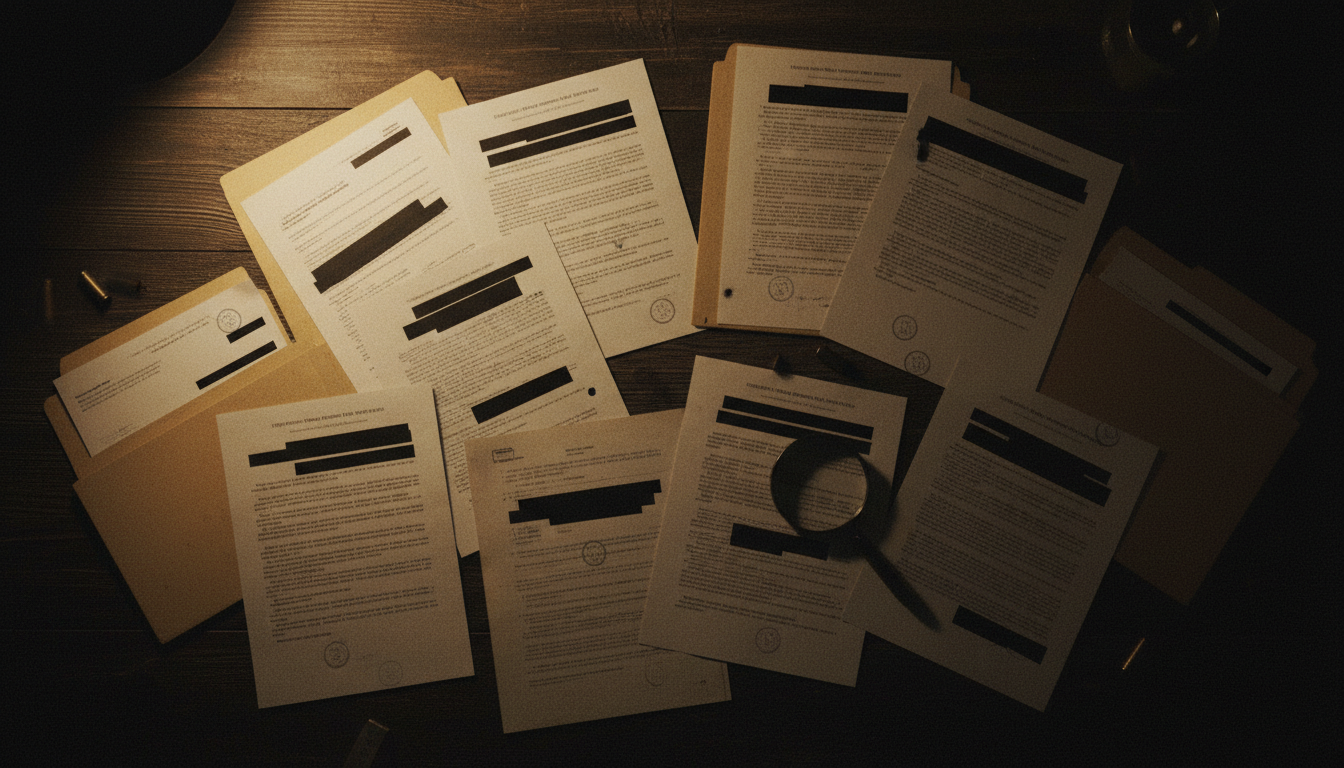
Despite the intensity of the investigations, the official record of the Chetwyn Minor poltergeist remains a complex tapestry of documented fact and lingering mystery. The files, preserved in historical archives and referenced in early psychical research documents, contain a wealth of testimonials that highlight the surreal experiences of those who entered the cottage. However, much of the official record is characterized by what was left unexplained. While the reports detail the knockings, the flying furniture, and the disembodied voices, they often stop short of providing a definitive conclusion. Some aspects of the case were perhaps withheld or lost to time, as the family eventually moved away, leaving the cottage to its own devices. The records that do exist, however, serve as a testament to the era's struggle to document the paranormal. They reflect a time when the boundary between the known and the unknown was being tested, and where the lack of a clear, scientific explanation for the events led to a permanent classification of the case as a significant, albeit unresolved, historical anomaly that continues to intrigue researchers to this day.
The arguments
Throughout the years, the Chetwyn Minor case has been subjected to intense scrutiny, with skeptics and believers alike offering competing explanations for the events. The strongest skeptical arguments often point toward the potential for human trickery or the misinterpretation of natural environmental triggers. Critics have suggested that the stress of the situation, combined with the suggestibility of the witnesses, could have led to the exaggeration of mundane events, such as the settling of the house or the movement of objects by the children themselves. However, these arguments often fail to account for the sheer scale and consistency of the reported phenomena, particularly the instances where knockings occurred in direct response to questioning. Proponents of the paranormal argue that the sheer number of independent witnesses, including clergy and professional reporters, makes a simple explanation of fraud or mass hysteria unlikely. They contend that the consistency of the reports across different observers suggests an external, objective force at work. The debate remains a classic example of the tension between scientific rationalism and the persistent, unexplained nature of human experience, with neither side able to fully dismiss the other's perspective.
Where the case stands today
Today, the account of the Chetwyn Minor poltergeist is viewed as an essential early case study in the history of parapsychology. It serves as a poignant reminder of how societal factors and the cultural landscape of the Victorian era influenced the perception and documentation of hauntings. The case is frequently cited in academic discussions regarding the psychology of paranormal phenomena and the potential environmental triggers that may contribute to such disturbances. Though the original family has long since moved on, the stories of the events remain deeply embedded in local lore, serving as a bridge between the past and the present. The legacy of the Chetwyn Minor incident lies not in a definitive solution, but in the questions it continues to raise about the nature of reality and the limits of human understanding. It stands as a testament to a time when science was actively grappling with the unexplained, creating an enduring legacy of ghostly tales that continue to captivate the imagination of researchers and the public alike, ensuring that the events of 1877 are never truly forgotten.
— CHAIN OF CUSTODY: SOURCES & FURTHER READING
— FIELD REPORTS (0)
Sign in to post a field report.
No field reports yet. Be the first to contribute.
DISCLAIMER: Every story on this site is based on documented real-world reports or official records. We do not publish fiction. All sources are cited above.