The Ghost of the Parker House
— EXECUTIVE SUMMARY
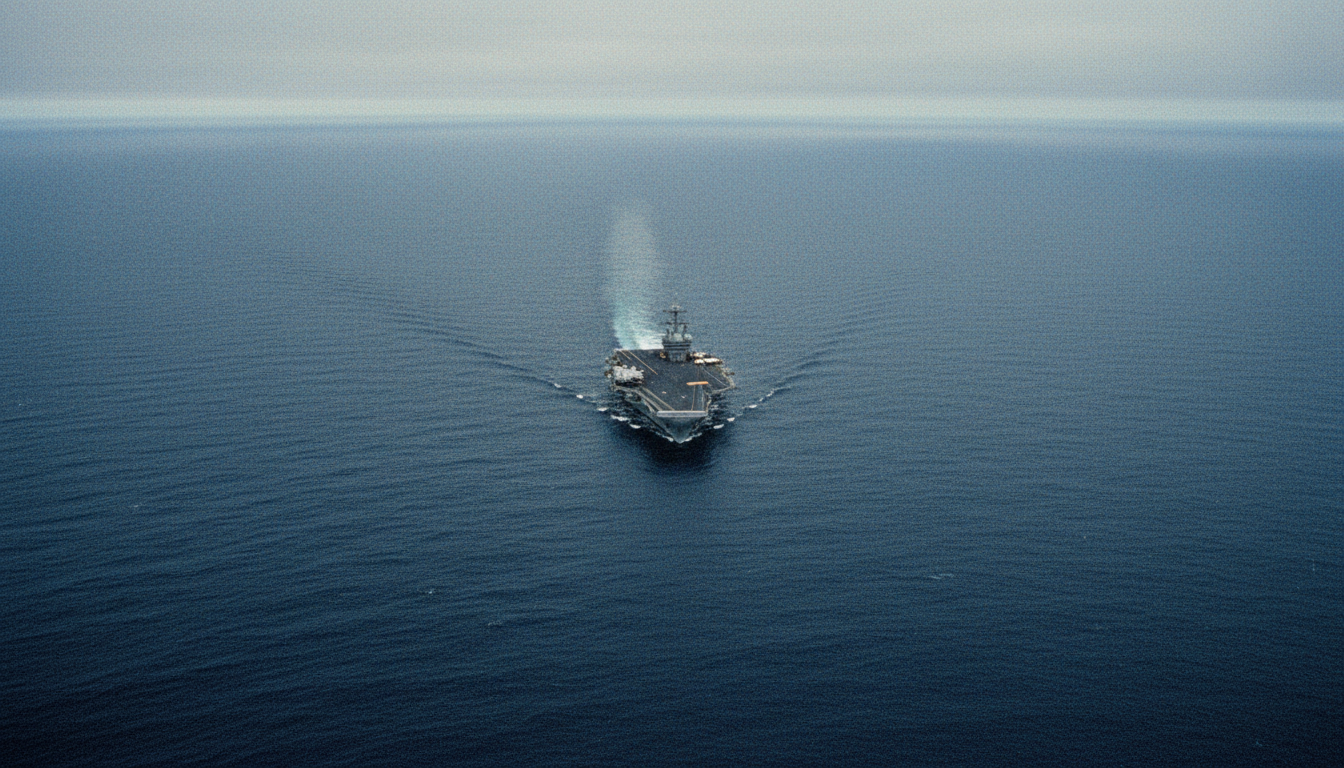
The USS Hornet (CV-12), a decorated World War II aircraft carrier turned museum in Alameda, California, is widely regarded as one of the most haunted vessels in the United States. Visitors and staff frequently report encounters with spectral sailors, unexplained mechanical activity, and lingering presences that suggest the ship remains a sanctuary for those who served.
The moment it began
It is a Friday night on the Alameda waterfront, where the massive silhouette of the USS Hornet (CV-12) looms against the dark expanse of the San Francisco Bay. The air is thick with the salt of the Pacific, and the temperature drops sharply as the sun retreats behind the horizon. For the casual visitor, the ship is a monument to naval history, a vessel commissioned on November 29, 1943, that survived the crucible of the Pacific Theater without ever being struck by a bomb, torpedo, or kamikaze. However, for those who remain on board after the museum doors lock, the atmosphere shifts. The ship, often referred to by its skeleton crew as the "old gray lady," begins to breathe. It is in these quiet, post-tour hours that the creaking of metal and the rhythmic thrum of the tide against the hull seem to take on a more deliberate, sentient quality. Docents and overnight guests, often huddled in the dim light of the lower decks, describe a sudden, heavy stillness that descends upon the passageways, signaling that the living are no longer the only ones occupying the labyrinthine corridors of this floating steel fortress.
What they saw
The reports of the supernatural aboard the Hornet are as varied as they are persistent. Visitors have described walking through the ship’s bewildering maze of low-ceilinged corridors only to feel the distinct sensation of being watched. In the sick bay, where the echoes of history are particularly potent, some have reported seeing shadows detach themselves from the bulkheads, moving with a purpose that defies the physics of a static museum. One of the most chilling accounts involves a volunteer who, while painting a compartment, encountered an apparition of a sailor dressed in crisp white uniform—a figure now colloquially known as the "Dress Whites Ghost." Others have witnessed lockers swinging open on their own, flashlights flickering to life in empty rooms, and objects being displaced by several feet while no one was looking. There are accounts of disembodied voices calling out names in the dark, and in one instance, a visitor reported seeing a man lying in a rack who simply looked up and remarked, "I used to sleep there," before vanishing into the shadows of the berthing area.
The witnesses
The witnesses are not merely thrill-seekers; they include seasoned veterans, museum staff, and skeptical researchers. Docent Bill Fee, who served on the USS Bon Homme Richard, leads history and mystery tours, often warning guests to stick together to avoid becoming part of the ship’s growing lore. Mike Gordon, another docent who served on the USS Hancock, describes feeling an immediate, profound sense of "home" upon stepping onto the Hornet, suggesting that the ship’s energy resonates with those who have spent their lives at sea. Even those who initially approached the ship with a healthy dose of skepticism have been forced to reconsider. Alan McKean, a curator and former Navy SEAL, has famously noted that while he is not a "true believer" in the paranormal, he has witnessed events that defy simple explanation. These individuals, grounded in the reality of naval service, provide a sobering weight to the claims, insisting that the activity is not a product of overactive imaginations but a genuine, recurring phenomenon.
The investigation
Over the years, the Hornet has become a focal point for paranormal researchers, including teams from the Syfy Channel and various independent organizations. These investigators utilize a suite of technology, ranging from K-II meters—which flash red when they detect electromagnetic fluctuations—to digital voice recorders intended to capture electronic voice phenomena (EVP). During these overnight hunts, researchers have documented flashes of light that, when analyzed frame-by-frame, appear to manifest as human forms. Dr. Pamela Heath, a noted parapsychologist, has conducted extensive studies on the ship, often moving from bunk to bunk to sense the lingering energy. Unlike other haunted locations, Heath suggests that the spirits aboard the Hornet are not "stuck" or malevolent, but rather "spirit guides" who remain because they loved the ship and their country. These investigations have consistently yielded evidence that keeps the paranormal community returning, with researchers like Sommer Carter claiming that there has never been an investigation where they did not encounter something unexplainable.
The official record
While the U.S. Navy does not maintain an official log of spectral encounters, the historical record of the ship is undeniable. Commissioned as the eighth ship to bear the name, the CV-12 was built to honor the original Hornet (CV-8), which was lost in the Battle of Santa Cruz in October 1942. Throughout its 27 years of service, the ship saw combat, accidents, and suicides, with at least 300 sailors losing their lives on board. These tragedies are documented in naval archives, providing a somber context for the hauntings. While the museum focuses on the ship’s role in the Pacific Theater and its recovery of the Apollo 11 astronauts, the "official" stance of the museum is one of respectful acknowledgment. They do not shy away from the ghost stories; instead, they incorporate them into the visitor experience, recognizing that the lore is inextricably linked to the ship’s identity. The lack of a formal "paranormal report" does not diminish the weight of the thousands of anecdotal accounts filed by visitors and staff over the decades.
The arguments
The skepticism surrounding the Hornet’s hauntings is as robust as the claims themselves. Critics often point to the ship’s age, the shifting of metal due to temperature fluctuations, and the psychological impact of being in a dark, confined, and historically charged environment. The "creaking" of the ship is frequently attributed to the natural expansion and contraction of steel, while the "voices" are often dismissed as the wind whistling through ventilation shafts or the echoes of the harbor. However, proponents of the paranormal argue that these explanations fail to account for the intelligence behind the events—such as flashlights turning on in response to questions or the specific, detailed descriptions of apparitions that match historical uniforms. The argument for the haunting is bolstered by the sheer volume of reports that occur in areas where no mechanical or environmental explanation is plausible, suggesting that while some events may be misidentified, a core of genuine, unexplained activity remains.
Where the case stands today
Today, the USS Hornet stands as a unique intersection of wartime history and paranormal curiosity. It is a National Historic Landmark, a museum, and a site of ongoing research. The ship continues to host "Monster Bash" events and overnight stays, allowing the public to engage directly with its history and its mysteries. The fact that the Hornet remains a focal point for both historians and ghost hunters speaks to the enduring power of the ship’s legacy. It is not merely a collection of artifacts; it is a vessel that seems to hold onto the memories of those who served within its walls. Whether one views the phenomena as residual energy, spirit guides, or the psychological imprint of a long and storied career, the Hornet remains a place where the past is never truly gone. It serves as a reminder that history is not just what is written in books, but what is felt in the quiet, dark corners of a ship that refuses to be forgotten.
— CHAIN OF CUSTODY: SOURCES & FURTHER READING
— FIELD REPORTS (0)
Sign in to post a field report.
No field reports yet. Be the first to contribute.
DISCLAIMER: Every story on this site is based on documented real-world reports or official records. We do not publish fiction. All sources are cited above.