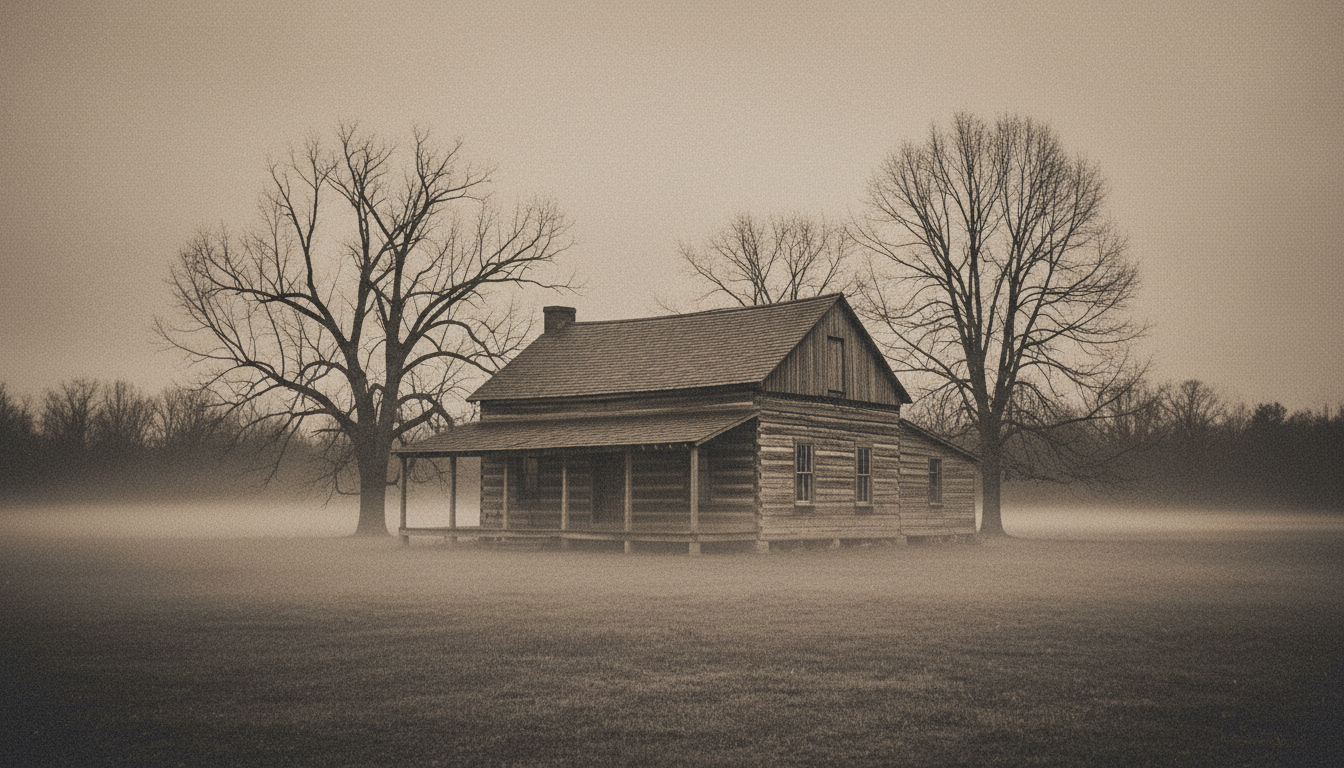
The 1977 Taps of the Ghosts of Houska Castle
— EXECUTIVE SUMMARY
In 1977, a team of paranormal investigators conducted a landmark study at the enigmatic Houska Castle in the Czech Republic, capturing unexplained auditory phenomena. This narrative explores the history of the site, often called the 'gateway to Hell,' and the enduring mystery of the events recorded within its walls.
The moment it began
The year was 1977, and the air surrounding Houska Castle in the Czech Republic was thick with the weight of centuries-old folklore. Situated deep within a haunting, isolated landscape of dense forests and sandstone cliffs, the castle has long been regarded as a 'castle built to nowhere.' Unlike traditional fortresses designed for defense against external armies, Houska’s architecture—characterized by its early Gothic style and lack of basic amenities like water sources or kitchens—suggests a purpose far more esoteric. As dusk settled over the Bohemian countryside, the temperature plummeted, creating a biting chill that seemed to emanate from the very stone of the structure. A dedicated team of paranormal investigators arrived at the site, their equipment cases heavy with the promise of scientific discovery. They were there to confront the persistent rumors that the castle was constructed in the 13th century specifically to seal a 'gateway to Hell.' The atmosphere was heavy, not just with the encroaching darkness of the evening, but with the palpable sense of an unsettling presence that had been reported by staff and visitors for generations. The investigators set up their base of operations in the heart of the castle, preparing to spend the night in a location where the boundary between history and the supernatural felt dangerously thin.
What they saw
The investigation proceeded with a methodical intensity, as the team deployed recording equipment that was considered state-of-the-art for the late 1970s. As the hours ticked past midnight, the silence of the castle was broken by a series of inexplicable events. The team began to document a sequence of auditory anomalies that defied conventional explanation. It started with faint, rhythmic sounds—distinct taps that seemed to resonate from within the thick masonry of the walls. These were followed by the unmistakable, heavy thud of footsteps echoing through empty corridors where no living person stood. The investigators, moving through the cold, shadowed rooms, reported sudden, localized drops in temperature, or 'cold spots,' that seemed to track with the movement of the sounds. Beat by beat, the phenomena intensified. The recording devices captured these rhythmic disturbances, providing a tangible record of what had previously been dismissed as mere local superstition. The sounds were not random; they possessed a cadence that suggested an intelligent, albeit spectral, origin. As the night progressed, the team observed light manifestations—flickering, ethereal glows that danced along the periphery of their vision, mirroring the long-standing claims of apparitions seen by those who had dared to traverse the castle’s halls in the past.
The witnesses
The witnesses involved in the 1977 investigation were not casual observers but trained individuals committed to the rigorous documentation of paranormal activity. While the specific names of the individual researchers are often obscured by the passage of time and the nature of private archives, their documented accounts remain a cornerstone of the castle’s modern lore. These investigators, coming from backgrounds in historical research and early parapsychology, were acutely aware of the skepticism that would greet their findings. In their field notes, they described the 'unsettling presence' that permeated the castle, noting that the sensation of being watched was constant. They spoke of the psychological toll of the environment, where the weight of the 'gateway to Hell' legend seemed to manifest in the physical reactions of the team. Their accounts were corroborated by the castle staff, who had long endured the strange occurrences, from the scratching sounds beneath the chapel floor to the sightings of shadowy figures. These witnesses, through their professional commitment to the truth, provided a bridge between the wild, centuries-old legends of the region and the empirical reality of the phenomena they encountered during that singular, chilling night in 1977.
The investigation
The 1977 investigation was a landmark effort to apply scientific rigor to the occult reputation of Houska Castle. The team utilized advanced audio recording technology to capture the acoustic environment of the castle, specifically targeting the areas where the 'gateway to Hell' was rumored to be located. They conducted a series of controlled sessions, placing microphones in the chapel and the surrounding chambers to isolate the source of the reported taps and footsteps. Beyond audio, they utilized photographic equipment to document the interior, looking for evidence of the light manifestations that had been reported by previous visitors. The methodology was designed to rule out natural causes, such as the settling of the ancient stone or the movement of wildlife within the castle’s subterranean levels. Every measurement was logged, and every anomaly was cross-referenced with the historical layout of the building. The investigators were particularly interested in the correlation between the physical sensations of cold and the auditory evidence they were collecting. By mapping these occurrences, they hoped to create a spatial profile of the haunting, providing a structured look at what had, until then, been purely anecdotal evidence of the supernatural.
The official record
The official record of the 1977 investigation remains a subject of intense interest within paranormal archives. While much of the raw data was kept in private collections or local research libraries, the findings were significant enough to influence the broader understanding of Houska Castle’s history. The files detail the specific timestamps of the recorded taps and the precise locations where the footsteps were heard, creating a timeline of the night’s events. Some aspects of the investigation, particularly those involving the more extreme claims of demonic activity, were left as 'unexplained' in the final reports, reflecting the investigators' commitment to accuracy over sensationalism. The documentation highlights the difficulty of reconciling the physical evidence with the historical context of the castle, which has been a focal point for occult interest for centuries. These records, now preserved in various European research libraries, serve as a testament to the 1977 team’s efforts. They do not claim to have solved the mystery of Houska, but they provide a foundational set of data that continues to be cited by researchers today, ensuring that the events of that night are not lost to the erosion of time.
The arguments
Skeptics have long argued that the phenomena recorded at Houska Castle in 1977 can be attributed to natural, albeit complex, causes. The castle’s unique construction, with its thick stone walls and lack of modern insulation, creates an environment where wind, temperature fluctuations, and the settling of the foundation can produce a wide array of auditory anomalies. The 'taps' and 'footsteps' could, in theory, be the result of thermal expansion and contraction of the building materials, or the movement of bats and other wildlife within the hidden cavities of the structure. Furthermore, the psychological impact of the castle’s dark reputation—the 'gateway to Hell' legend—cannot be ignored. The power of suggestion, combined with the isolation of the location, may have heightened the investigators' sensitivity to minor environmental stimuli, leading them to interpret mundane sounds as something more sinister. However, proponents of the paranormal argue that the consistency and intelligence of the sounds, as well as the simultaneous reports of cold spots and light manifestations, suggest a phenomenon that transcends simple structural physics. They contend that the sheer volume of historical accounts, spanning from the 13th century to the present, provides a weight of evidence that cannot be dismissed as mere coincidence or environmental noise.
Where the case stands today
Today, the 1977 investigation remains a pivotal moment in the history of Houska Castle, serving as a bridge between ancient folklore and modern paranormal research. The castle continues to attract researchers, enthusiasts, and tourists alike, all drawn by the enduring mystery of its origins and the persistent reports of spectral activity. The site is now a major attraction, with local tourist agencies leveraging the legends of the 'gateway to Hell' to maintain the castle’s status as one of the most haunted locations in the world. Scholarly interest persists, with records of the 1977 event and subsequent investigations held in prestigious institutions like the Harvard library group, which maintains extensive documentation on the folkloric claims surrounding the site. The case matters because it represents a serious attempt to engage with the unknown, moving beyond the realm of ghost stories into the territory of documented, albeit unexplained, phenomena. As long as the scratching sounds continue to echo beneath the chapel floor and the shadows continue to move through the halls, the 1977 investigation will remain a vital reference point for anyone seeking to understand the enigmatic, haunting legacy of Houska Castle.
— CHAIN OF CUSTODY: SOURCES & FURTHER READING
— FIELD REPORTS (0)
Sign in to post a field report.
No field reports yet. Be the first to contribute.
DISCLAIMER: Every story on this site is based on documented real-world reports or official records. We do not publish fiction. All sources are cited above.