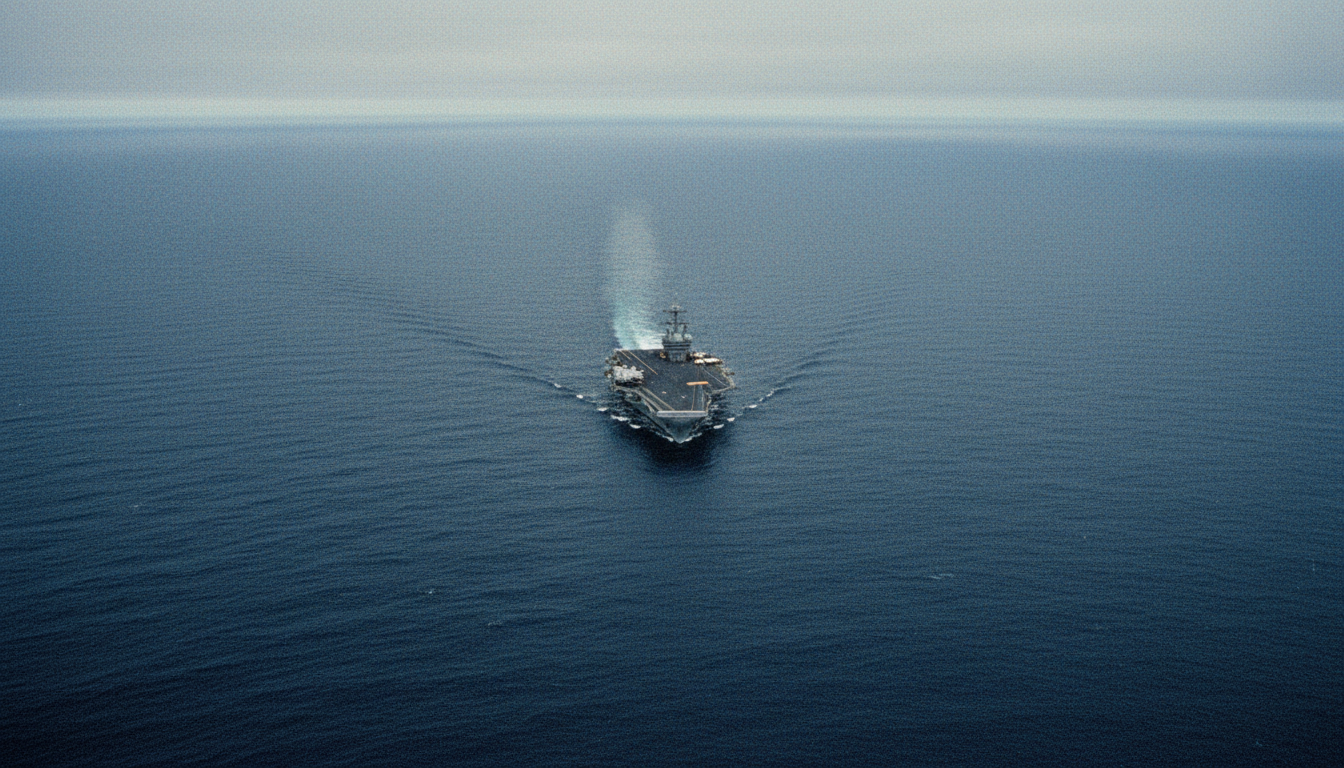
The 1973 Tehran UFO Incident
— EXECUTIVE SUMMARY
The 1976 Tehran UFO incident remains one of the most significant military encounters with unidentified aerial phenomena, involving multiple jet interceptors and corroborated radar data. Despite extensive documentation by the U.S. Defense Intelligence Agency, the nature of the objects remains officially unexplained.
The moment it began
On the night of September 19, 1976, the atmosphere over Tehran, Iran, was calm until the early hours of the morning. At approximately 12:30 AM, the Imperial Iranian Air Force began receiving a flurry of frantic telephone calls from residents in the Shemiran area of the capital. Citizens reported seeing strange, luminous objects hovering in the night sky. Some described the entities as bird-like, while others likened them to helicopters carrying bright lights. However, military checks confirmed that no helicopters were airborne in the region at that time. The reports were persistent enough to reach the attention of a senior Iranian Air Force officer, who decided to investigate the phenomenon personally. Upon looking into the sky, he observed an object that appeared as a star, but significantly larger and brighter than any celestial body he had previously witnessed. Recognizing the potential security implications of an unidentified craft operating over the capital, he made the decision to scramble an F-4 Phantom II interceptor from Shahrokhi Air Force Base to intercept and identify the source of the disturbance.
What they saw
At 1:30 AM, the first F-4 Phantom took off, heading toward a point approximately 40 nautical miles north of Tehran. The object was so brilliant that it remained visible to the pilot from a distance of 70 miles. As the interceptor closed the gap to within 25 nautical miles, the pilot experienced a total failure of his onboard instrumentation and communications systems. Faced with a complete blackout of his avionics, the pilot was forced to abort the intercept and turn away; immediately upon doing so, his systems returned to normal operation. A second F-4, piloted by Lieutenant Parviz Jafari, was then scrambled to continue the mission. Jafari successfully acquired a radar lock on the object, which appeared on his scope as a return comparable in size to a Boeing 707 tanker. As Jafari closed in, the object matched his speed and maintained a distance. Suddenly, a smaller, brightly lit object detached from the primary craft and moved toward Jafari at high speed. The pilot attempted to fire an AIM-9 Sidewinder missile, but his weapons control panel went dark, and he lost all communications. He initiated a defensive dive, and the smaller object followed briefly before returning to the main body, which then moved off into the distance.
The witnesses
The primary witnesses were highly trained military professionals whose accounts were documented in official military channels. Lieutenant Parviz Jafari, a squadron commander, later provided detailed testimony regarding the encounter. He described the object as emitting intense, rapidly flashing lights in colors of red, orange, yellow, and blue, which he compared to a strobe light. Jafari noted that the brightness was so extreme that he could not discern the physical structure of the craft itself. His radar operator, who was also present in the cockpit, corroborated the radar returns and the electronic interference. Beyond the flight crews, the incident involved ground-based radar operators and air traffic controllers at Mehrabad International Airport who tracked the movements of the objects throughout the night. These witnesses, accustomed to identifying conventional aircraft, were unanimous in their assessment that the maneuvers performed by the objects—including sudden accelerations and the ability to "jump" positions in the sky—were entirely inconsistent with the flight characteristics of any known aircraft of the era.
The investigation
Following the incident, the Iranian military conducted an investigation into the event, examining the aircraft involved to determine if mechanical faults could explain the system failures. Technicians found that the electronics were operating normally, ruling out simple equipment malfunction. The United States government also took a keen interest in the case. A four-page report was produced by the U.S. Defense Intelligence Agency (DIA), which was distributed to high-level offices, including the National Security Agency, the CIA, the Secretary of State, and the White House. The DIA report assessed the reliability of the information as "confirmed by other sources" and labeled the value of the intelligence as "high." The investigation highlighted the physiological effects on the crew, such as the loss of night vision due to the object's extreme brightness, and the inordinate maneuverability displayed by the UFOs. The documentation of this case was so thorough that it was later declassified and released to the public, providing a rare glimpse into how the intelligence community handled such anomalous reports during the Cold War era.
The official record
The official record of the Tehran incident is preserved in a declassified DIA teletype message. This document confirms that the U.S. military was aware of the encounter and treated it with significant seriousness. The report details the timeline of the civilian calls, the scrambling of the F-4 Phantoms, the loss of avionics and weapons control, and the visual observations of the pilots. Notably, the report mentions that a third object was observed landing near the ground, which illuminated an area of the terrain. While the document provides a factual account of the events, it stops short of identifying the origin of the objects. The file remains a classic example of a "confirmed" UFO report, meaning the military verified that the events occurred as described, even if they could not explain the nature of the craft. The fact that the report was circulated among the "top brass" of the U.S. defense structure underscores the gravity with which the incident was viewed at the time, despite the lack of a definitive conclusion regarding the objects' identity.
The arguments
Skeptical explanations for the Tehran incident have primarily focused on the possibility of misidentification of astronomical bodies or electronic interference caused by atmospheric conditions. Some critics, such as UFO debunker Philip Klass, argued that the pilots may have been observing Jupiter or other bright stars, and that the reported maneuvers were illusions caused by the pilots' own movements or psychological stress. However, these arguments struggle to account for the corroborated radar data, which showed the objects moving independently of the stars, and the simultaneous failure of multiple electronic systems on two separate aircraft. The argument that the pilots were simply confused by a bright star does not explain why the radar returns were consistent with a large, solid object, nor does it explain the detachment of a secondary craft that appeared to engage the interceptor. The consistency of the reports from both the air and the ground, combined with the physical evidence of system failures, makes the "misidentification" hypothesis difficult to reconcile with the documented facts of the case.
Where the case stands today
Today, the 1976 Tehran incident is widely regarded as one of the most credible and well-documented UAP encounters in history. It remains a focal point for researchers because it bridges the gap between anecdotal civilian reports and hard military data. The case is frequently cited in discussions about the need for transparent government investigation into unidentified aerial phenomena. Because the incident involved multiple trained observers, radar confirmation, and official intelligence documentation, it serves as a benchmark for what constitutes a "valid" study of the phenomenon. While the mystery of what exactly the pilots encountered over Tehran remains unsolved, the case continues to be studied by academics and military analysts alike. It serves as a reminder that even with the most advanced technology of the time, there are phenomena that defy conventional explanation. The archival data, now accessible through the National Archives and other repositories, ensures that the Tehran incident will continue to be a subject of rigorous inquiry for future generations interested in the complexities of our skies.
— CHAIN OF CUSTODY: SOURCES & FURTHER READING
— FIELD REPORTS (0)
Sign in to post a field report.
No field reports yet. Be the first to contribute.
DISCLAIMER: Every story on this site is based on documented real-world reports or official records. We do not publish fiction. All sources are cited above.