The 1977 Colares UFO Flap: A Dark Episode in Brazil
— EXECUTIVE SUMMARY
In 1977, the Brazilian town of Colares became the epicenter of a terrifying wave of unidentified aerial phenomena that prompted a secret military investigation known as Operação Prato. This narrative explores the harrowing eyewitness accounts, the subsequent Air Force intervention, and the enduring mystery surrounding the events.
The moment it began
It was August 1977, and the humid, equatorial air of Colares, a quiet fishing town in the Pará state of Brazil, hung heavy with the scent of the Amazon estuary. As the sun dipped below the horizon, casting long, violet shadows across the Marajó Bay, the rhythm of life in this isolated community was shattered. For the residents, the night was no longer a time for rest, but a period of profound, visceral terror. The weather was typical for the season—partly cloudy with a gentle breeze—but the atmosphere was charged with an inexplicable tension. Families who had lived in these wooden homes for generations found themselves huddled together, watching the sky with a mixture of dread and disbelief. It began with reports of strange, luminous objects emerging from the water or descending from the clouds, moving with a silent, predatory grace that defied the laws of conventional aviation. The local population, simple and hardworking, suddenly found themselves at the center of a phenomenon that would soon be known as the 'chupa-chupa,' a term derived from the local dialect meaning 'sucker-sucker,' reflecting the terrifying sensation that these lights were draining the very life force from those they targeted.
What they saw
Witnesses described a variety of craft, ranging from disc-shaped objects to cigar-like cylinders, all emitting intense, pulsating beams of light. These objects did not merely hover; they seemed to actively hunt. Residents reported that the lights would descend low over their homes, directing concentrated beams of illumination through windows and roof tiles. The experience was often described as paralyzing. Those caught in the path of the light reported a sudden, overwhelming sensation of heat, followed by a deep, numbing tingle that left them physically incapacitated. The objects were seen moving at high speeds, performing impossible maneuvers, and occasionally disappearing into the depths of the bay. The sequence was relentless: a silent approach, the sudden activation of a beam, the physical distress of the victim, and the rapid departure of the craft. The sheer frequency of these sightings—night after night—created a state of collective trauma. The lights were not just seen; they were felt, leaving behind a community that felt besieged by an intelligence that operated with complete impunity, indifferent to the panic it left in its wake.
The witnesses
Among the many who suffered were individuals whose lives were irrevocably altered by their encounters. Women, in particular, seemed to be frequent targets, reporting injuries that resembled burns or puncture marks, often accompanied by extreme fatigue and anemia. One such witness, Claudomira, provided harrowing accounts of being targeted by a beam that left her feeling as though her energy had been siphoned away. The local doctor, who treated many of these victims, was initially hesitant to report the findings to the state health department, fearing the ridicule that would inevitably follow such an outlandish diagnosis. Despite the fear of social stigma, the testimonies were consistent: a feeling of being watched, the sudden onset of paralysis, and the lingering physical symptoms that defied standard medical explanation. These were not the stories of people seeking fame; they were the desperate accounts of a community in pain, struggling to articulate an experience that shattered their understanding of reality. Their voices, documented in the early days of the panic, remain the most poignant evidence of the human cost of the Colares flap.
The investigation
As the panic reached a fever pitch and local newspapers began to document the 'chupa-chupa' phenomenon, the Brazilian Air Force (FAB) could no longer ignore the situation. In September 1977, the First Regional Air Command (I COMAR) in Belém initiated a formal field investigation, codenamed Operação Prato, or 'Operation Plate.' Led by Captain Uyrangê de Hollanda Lima, a team of intelligence officers was dispatched to the region to conduct on-site interviews, set up observation posts, and document the phenomena. The investigators were not merely observers; they became witnesses themselves. They utilized binoculars, cameras, and even Super-8 film to capture the objects. Captain Hollanda, initially a skeptic, found himself confronted with evidence that challenged his military training. The team logged hundreds of sightings, meticulously recording dates, times, and locations. They interviewed victims, examined physical injuries, and attempted to engage the phenomena, though the objects often seemed to anticipate their movements, effectively turning the hunters into the hunted. The operation was a systematic, professional effort to quantify the unquantifiable, resulting in a massive archive of sketches, photographs, and mission reports.
The official record
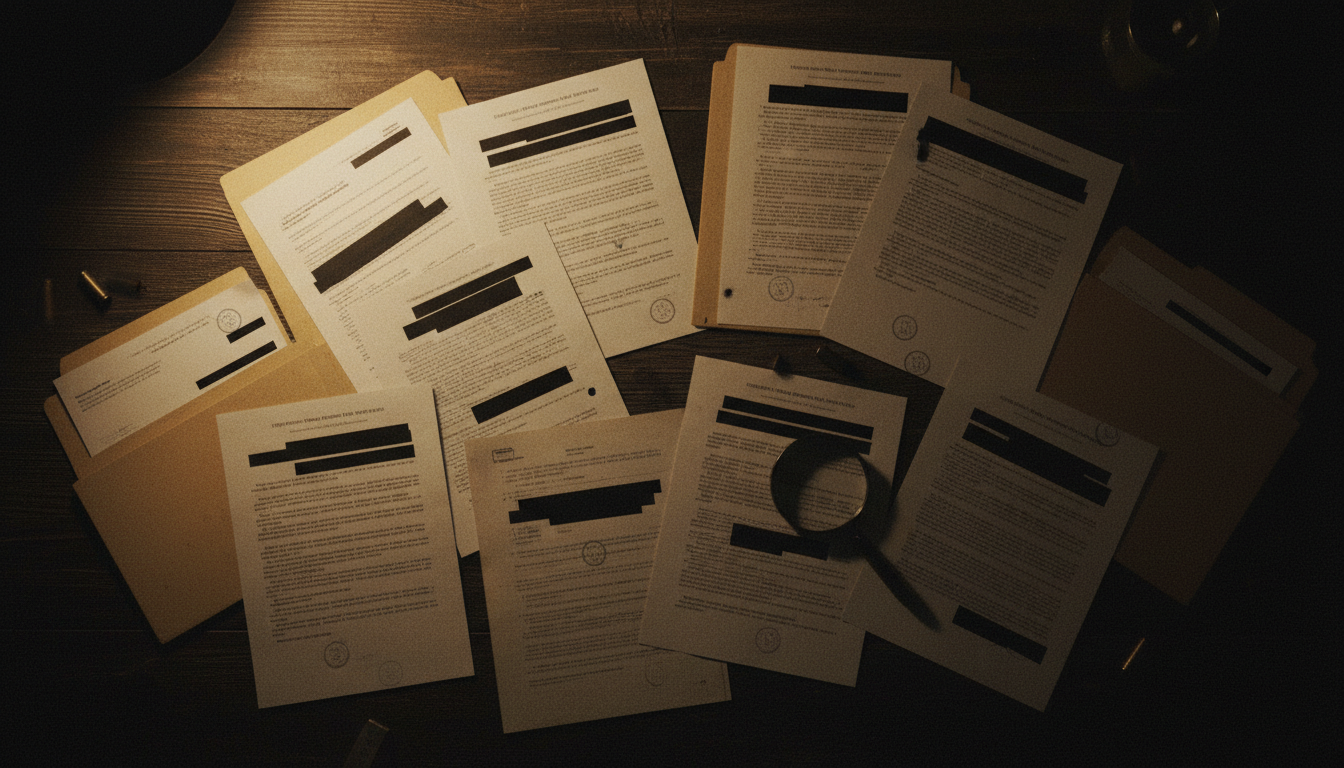
For decades, the findings of Operação Prato remained shrouded in secrecy, locked away in military archives. The official record, which eventually surfaced in the early 2000s following intense pressure from civilian researchers and the 'UFOs: Freedom of Information Now' campaign, consists of hundreds of pages of reports, photographs, and film footage. These documents confirm that the military took the threat seriously, documenting structured craft and physical injuries among the civilian population. However, the files are notable for what they do not conclude. There is no definitive statement identifying the origin of the objects, nor is there a clear explanation for the injuries sustained by the residents. While the military documented the events with clinical precision, the final reports remain frustratingly ambiguous. Some of the photographic evidence has been subject to controversy, with claims that certain images were altered or enlarged to make lights appear more like structured craft, a fact that has been used by skeptics to cast doubt on the entire collection. Despite this, the core of the military's mission report stands as a testament to a genuine, documented encounter that the Brazilian government was, for a long time, unwilling to fully acknowledge.
The arguments
Skeptics have long argued that the Colares incident can be explained through a combination of mass hysteria, misidentification of natural phenomena, and the influence of sensationalist press coverage. They point to the lack of definitive, peer-reviewed medical evidence linking the injuries to the UAPs, suggesting that the symptoms could be attributed to other environmental factors or psychosomatic responses to fear. The 'collective hysteria' theory posits that the intense anxiety of the community, fueled by rumors and media reports, created a feedback loop that amplified every strange light in the sky. Furthermore, the admission that some of the photographic evidence was doctored has provided ammunition for those who wish to dismiss the entire case as a hoax or a series of misinterpretations. However, these arguments struggle to account for the direct, corroborated observations made by the military personnel themselves. Trained officers, equipped with instruments and tasked with a serious intelligence mission, reported the same phenomena as the villagers. The consistency of these reports, combined with the physical evidence of the injuries, makes the 'hysteria' explanation feel insufficient to many researchers.
Where the case stands today
Today, the Colares incident remains one of the most significant and well-documented UAP cases in history. It serves as a cornerstone for ufological research, not because it provides a definitive answer, but because it represents a rare instance where a military force was forced to confront a phenomenon that it could neither control nor explain. The case continues to matter because it highlights the ongoing struggle for government transparency regarding aerial phenomena. The fact that the documents were eventually released, albeit after years of secrecy, is a victory for public accountability. Yet, the mystery persists. The residents of Colares, many of whom have since passed away, left behind a legacy of unanswered questions. The case is a reminder that there are phenomena that exist on the fringes of our understanding, capable of causing real, physical harm and profound psychological distress. As we continue to explore the skies, the events of 1977 in the Pará estuary remain a haunting, essential chapter in the history of the unknown, demanding that we look closer at the evidence that remains, even when the answers remain just out of reach.
— CHAIN OF CUSTODY: SOURCES & FURTHER READING
— FIELD REPORTS (0)
Sign in to post a field report.
No field reports yet. Be the first to contribute.
DISCLAIMER: Every story on this site is based on documented real-world reports or official records. We do not publish fiction. All sources are cited above.