The 1954 Flying Saucer Incident at the Lakenheath-Bentwaters Air Force Base
— EXECUTIVE SUMMARY
On the night of August 13-14, 1956, personnel at the Lakenheath-Bentwaters Air Force Base in Suffolk, England, tracked unidentified aerial objects that performed maneuvers defying conventional physics. Despite multiple radar confirmations and an attempted interception by an RAF pilot, the incident remains one of the most significant unexplained radar-visual UFO cases in military history.
The moment it began
The night of August 13, 1956, was deceptively clear over the East Anglian countryside, a region dominated by the strategic presence of the United States Air Force and the Royal Air Force. At the USAF-tenanted RAF Bentwaters in Suffolk, the atmosphere was one of routine Cold War vigilance. As the clock ticked toward 10:30 PM, the base was operating under the standard protocols of a high-security nuclear installation. The weather was calm, providing ideal conditions for radar operations, which were being monitored by personnel tasked with maintaining the integrity of British airspace. Suddenly, the routine was shattered. Radar operators at the Ground Controlled Approach (GCA) unit began tracking unidentified radar echoes (UREs) that did not correspond to any scheduled flight paths or known aircraft. These were not mere blips; they were persistent, high-speed targets that appeared to move with an intelligence that defied the mechanical limitations of the era. The operators, initially suspecting equipment malfunction or atmospheric interference, quickly realized that the consistency of the returns suggested something far more substantial. As the night progressed, the tension in the control rooms mounted, transforming a quiet summer evening into a high-stakes encounter that would eventually involve multiple radar stations and airborne interceptors, marking the beginning of a multi-hour event that would baffle military intelligence for decades to come.
What they saw
The sequence of events was as complex as it was alarming. According to the original Project Blue Book files, the incident began with multiple radar contacts at Bentwaters before the alert was even escalated to the Lakenheath Radar Air Traffic Control (RATCC) center. The objects were observed performing maneuvers that were, by the standards of 1956, physically impossible. At one point, a target was tracked at speeds estimated at 4,000 mph, while another, observed later in the evening, was clocked at an astonishing 12,000 mph. These were not linear flight paths; the objects were seen on radar screens converging to form a single, larger mass, then breaking apart again, executing sharp, instantaneous turns that would have disintegrated any conventional airframe. Ground observers at the bases corroborated the radar data, reporting bright, white lights moving across the sky with erratic, high-speed patterns. One object was tracked for 26 miles before coming to a complete, stationary hover for five minutes, a feat that defied the aerodynamic requirements of fixed-wing aircraft. The radar-visual correlation was absolute; the ground controllers watched the targets on their scopes while simultaneously observing the corresponding lights in the night sky, confirming that the anomalies were not merely electronic ghosts or sensor errors.
The witnesses
The human element of the Lakenheath-Bentwaters incident is anchored by the testimony of those who were at the consoles. Technical Sergeant Forrest Perkins, the watch supervisor at the Lakenheath RATCC, provided one of the most detailed and coherent accounts of the final phase of the encounter. His testimony, later corroborated by intelligence documents recovered from USAF files, described the frustration and confusion of the radar crews as they attempted to track the elusive targets. The aircrews were also central to the narrative; Flying Officers David Chambers and John Brady, piloting an RAF de Havilland Venom interceptor, were vectored toward the objects. Chambers reported seeing a bright white light that appeared to be a normal aircraft with landing lights, yet as he attempted to close the distance, the object performed maneuvers that left him unable to maintain a lock. The pilot’s own words, documented in the aftermath, reflect the disorientation of a trained aviator encountering a target that refused to behave like a machine. While the Condon Report and later investigations would attempt to strip away the names of these individuals to maintain anonymity, their documented experiences remain the bedrock of the case, providing a human perspective on a phenomenon that the military could neither identify nor control.
The investigation
Following the incident, the military response was swift but ultimately inconclusive. The 3910th Air Base Group sent a teleprinter message to the Air Defense Command at Ent Air Force Base just three days after the event, initiating a formal inquiry. Project Blue Book, the official USAF UFO investigation unit, took charge of the case file. Investigators analyzed the radar logs from both the Bentwaters GCA and the Lakenheath RATCC, as well as the reports from the RAF interceptor pilots. The investigation was exhaustive in its scope, attempting to correlate the radar tracks with meteorological data and known flight schedules. However, the data proved resistant to conventional explanation. The radar returns were too consistent and the visual reports too uniform to be dismissed as simple atmospheric propagation or equipment failure. Despite the depth of the investigation, the military was unable to produce a definitive identification for the objects. The files, which would later be analyzed by physicists like Dr. James E. McDonald, revealed that the military had essentially hit a wall. The investigation was not merely a search for an answer; it was a struggle to reconcile the hard data of radar tracking with the reality of an unidentified, high-performance aerial presence over a sensitive nuclear site.
The official record
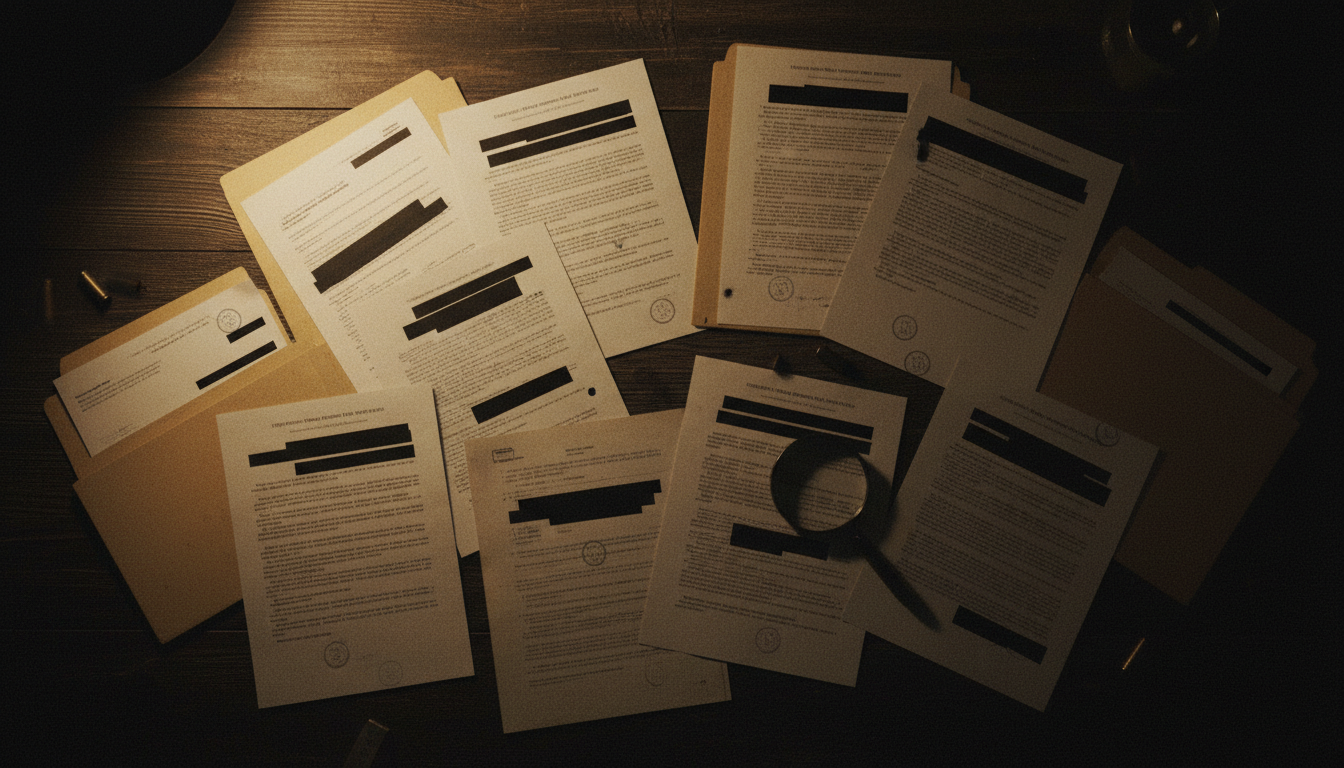
The official record of the Lakenheath-Bentwaters incident is a study in bureaucratic ambiguity. While the Project Blue Book file contains the raw data—the radar logs, the pilot reports, and the intelligence summaries—the conclusions drawn from them were often contradictory. For years, the incident remained buried, known only to those within the highest echelons of the USAF. It was not until the late 1960s, when the Condon Committee re-examined the case as part of its radar-visual study, that the incident gained wider attention. Even then, the report could not provide a satisfactory explanation, conceding that the probability of a genuine, unidentified phenomenon was high. Much of the original documentation was heavily redacted, with names of military personnel removed, which hindered independent scientific verification for years. The classified nature of the base and the Cold War context meant that much of what occurred was kept behind a veil of secrecy. The official record acknowledges the radar tracks and the visual sightings but stops short of identifying the source, leaving the files as a testament to a military encounter that the authorities were simply unable to categorize or explain away.
The arguments
The skepticism surrounding the Lakenheath-Bentwaters incident has been as persistent as the reports themselves. Critics, most notably aviation journalist Philip J. Klass, argued that the entire event could be explained by a combination of false radar returns—specifically anomalous propagation—and the misidentification of meteors or astronomical phenomena. The argument posits that the radar operators were seeing "ghosts" caused by temperature inversions, and that the pilots were simply chasing stars or planets. However, this explanation faces significant hurdles. It fails to account for the time-correlated nature of the radar and visual reports, where multiple independent radar sets and ground observers saw the same objects at the same time. Furthermore, the maneuvers described—such as the five-minute hover and the instantaneous, high-speed turns—are not characteristic of atmospheric phenomena or meteors. Proponents of the anomalous theory argue that the "false target" hypothesis is a convenient dismissal that ignores the complexity of the data. The disagreement between the tiers of military witnesses and the skeptics remains the central tension of the case, with the skeptics focusing on the limitations of 1950s radar technology, while the proponents point to the consistency of the reports as evidence of a genuine, non-human or advanced technological presence.
Where the case stands today
Decades later, the Lakenheath-Bentwaters incident remains a cornerstone of UAP research. It is frequently cited as one of the most compelling military encounters because it involves multiple, independent radar systems and trained military observers, making it difficult to dismiss as a simple hallucination or a single point of failure. The case has been revisited by numerous researchers, including those associated with the Black Vault and the Condon Committee, and it continues to be a subject of intense study in the context of modern UAP transparency efforts. The importance of the case lies not just in the mystery of what was seen, but in what it reveals about the military's historical inability to address such encounters. It serves as a reminder that even in the height of the Cold War, with the most advanced surveillance technology of the time, the skies over England held secrets that defied the reach of the military-industrial complex. As archives continue to be declassified and new technologies allow for the re-analysis of old radar data, the Lakenheath-Bentwaters incident remains a vital, unresolved chapter in the history of aerial phenomena, standing as a challenge to both the skeptic and the believer alike.
— CHAIN OF CUSTODY: SOURCES & FURTHER READING
— FIELD REPORTS (0)
Sign in to post a field report.
No field reports yet. Be the first to contribute.
DISCLAIMER: Every story on this site is based on documented real-world reports or official records. We do not publish fiction. All sources are cited above.