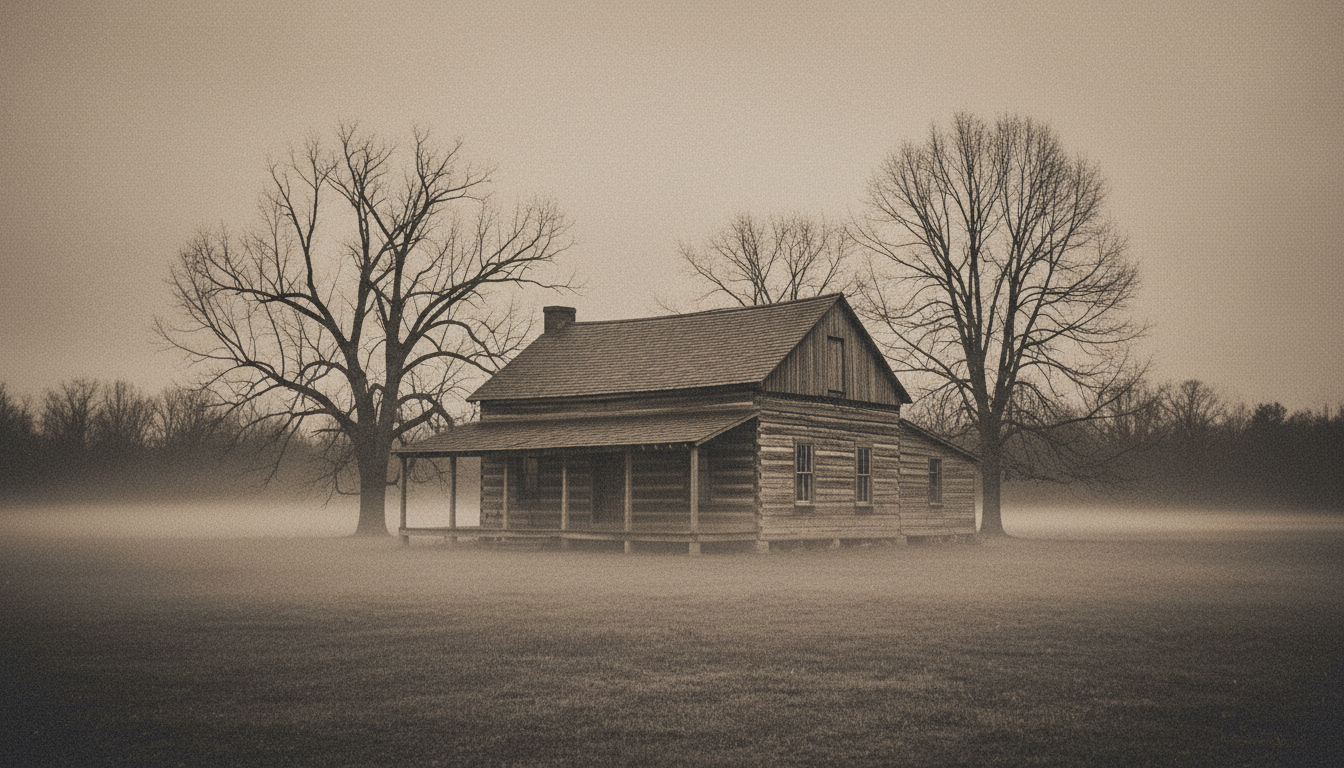
The 1966 West Midlands Poltergeist Incident: A Haunting in England
— EXECUTIVE SUMMARY
In April 1966, the Wright family of the West Midlands experienced a series of inexplicable poltergeist disturbances that drew national attention and rigorous scientific scrutiny. The case remains a cornerstone of psychical research, highlighting the complex intersection of environmental anomalies and human psychological factors.
The moment it began
It was April 1966 in the West Midlands, England, when the mundane rhythm of domestic life was shattered by the inexplicable. The Wright family, residing in an otherwise unremarkable home, found themselves thrust into a situation that defied conventional explanation. The atmosphere of the house, previously defined by the quiet routines of a typical British household, shifted abruptly as the spring air turned heavy with an unseen tension. It began not with a grand spectacle, but with the subtle, persistent intrusion of sound. Late in the evening, as the family settled into their nightly rituals, a series of rhythmic, hollow knocking sounds began to emanate from the walls and floorboards. These were not the settling groans of an aging structure, but deliberate, percussive strikes that seemed to respond to the environment. The family, initially bewildered, attempted to rationalize the noise, searching for loose pipes or structural shifts, yet the sounds persisted with an intelligence that felt increasingly invasive. As the hours stretched into the early morning, the isolation of the home amplified the terror, leaving the residents to wonder if the very architecture of their sanctuary had turned against them, marking the start of a haunting that would soon demand the attention of the nation.
What they saw
What began as auditory disturbances rapidly escalated into a physical assault on the family’s reality. The knocking, once confined to the periphery, grew in intensity and frequency, soon accompanied by the violent displacement of household items. Witnesses reported furniture sliding across polished floors without human intervention, and heavy objects—books, ornaments, and kitchenware—being launched through the air with trajectory and force that suggested a malevolent intent. The sequence of events became a chaotic ballet of the impossible; chairs would tip over in empty rooms, and windows would rattle violently in their frames despite the absence of any draft or external pressure. Most chilling were the manifestations of disembodied voices, which seemed to weave through the house, sometimes mimicking the family members or speaking in tones that felt entirely alien to the domestic setting. The showering of objects became a daily occurrence, with items appearing to materialize from thin air before crashing to the ground. Each beat of this unfolding drama was documented by the family, who, in their desperation to understand the chaos, meticulously recorded the timing and nature of every anomalous event, creating a log of terror that would eventually serve as the foundation for formal investigation.
The witnesses
At the heart of the storm were the members of the Wright family, whose lives were irrevocably altered by the events of 1966. Their backgrounds were modest, and their testimonies were characterized by a profound sense of confusion and fear. The family took great pains to document each incident, keeping detailed journals that captured the raw emotion of their experience. They were not seeking fame; they were seeking relief from a situation that had rendered their home uninhabitable. Their accounts, often delivered with trembling voices, described a sense of being watched and a feeling of helplessness as their private space was violated by forces they could not name. Neighbors and local acquaintances who visited the home during the height of the activity also provided corroborating statements, describing the palpable coldness of the rooms and the sight of objects moving in ways that defied the laws of physics. These witnesses, many of whom were initially skeptical, found their worldviews challenged by what they saw, and their documented words remain a testament to the genuine distress experienced by those trapped within the walls of the West Midlands residence.
The investigation
As the disturbances intensified, the local media brought the case to the attention of the wider public, eventually drawing the interest of the National Society for Psychical Research (NSPR). The NSPR, an organization dedicated to the scientific study of the unexplained, dispatched a team of experts to the West Midlands to conduct a rigorous assessment. These investigators arrived with an arsenal of equipment, including audio recorders, cameras, and measuring devices, determined to capture evidence of the phenomena. They spent weeks observing the family, documenting the incidents as they occurred in real-time. The investigators reported witnessing windows shaking without any physical contact and heavy furniture sliding across rooms, events they could not attribute to mechanical failure or human trickery. They meticulously cataloged the timing of the raps and the movement of objects, creating a comprehensive archive of the haunting. The presence of these experts provided a veneer of scientific legitimacy to the family’s claims, as they sought to distinguish between genuine anomalies and the potential for environmental or psychological influence, leaving behind a collection of data that remains a subject of intense study.
The official record
The official records of the 1966 West Midlands incident, preserved within the archives of the National Society for Psychical Research and referenced in historical documentation, paint a picture of a case that was as frustrating as it was fascinating. The files contain a wealth of audio recordings, photographs, and written reports that detail the investigators' findings. However, much of the raw data remains shrouded in the context of the era, with some details withheld or left unexplained due to the limitations of the technology and the sensitivity of the family’s privacy. The records highlight the involvement of a psychologist who observed the family, noting that the disturbances appeared to occur in close proximity to the youngest family member, a girl nearing adolescence. This observation, while not conclusive, suggested a potential link between the girl’s emotional state and the environmental anomalies. The official files do not offer a definitive verdict, instead presenting a collection of observations that remain open to interpretation, reflecting the inherent difficulty in documenting phenomena that refuse to conform to the rigid structures of scientific inquiry.
The arguments
The West Midlands case has long been a battleground for skeptics and believers, with each side presenting compelling arguments. Skeptics point to the potential for human agency, suggesting that the disturbances could have been staged by the family, particularly the younger members, as a means of seeking attention or expressing underlying psychological distress. They argue that the phenomena, while seemingly impossible, could be explained by simple mechanical tricks or the misinterpretation of natural sounds. Conversely, proponents of the paranormal argue that the sheer volume of documented evidence—the audio recordings, the witness testimonies, and the observations of the NSPR investigators—makes a simple explanation of trickery insufficient. They contend that the consistency of the reports and the inability of the investigators to find a physical cause for the movements suggest an external, perhaps non-human, intelligence. The debate often centers on the role of the adolescent family member, with some viewing her as a catalyst for psychokinetic energy, while others see her as the primary source of the deception, a conflict that continues to define the discourse surrounding the case.
Where the case stands today
Today, the 1966 West Midlands Poltergeist incident is held as a key example in the study of poltergeist activity, serving as a historical benchmark for researchers and enthusiasts alike. It remains a subject of significant interest, not because it provides a definitive answer to the nature of the unexplained, but because it captures the parameters of human experience during a time of intense public fascination with the paranormal. The case is frequently invoked in discussions regarding the potential impact of psychological factors on environmental anomalies, and it continues to influence perspectives within psychical research. While the house itself has long since returned to the quietude of ordinary life, the legacy of the events of 1966 persists in the archives and in the collective memory of those who study the unexplained. It serves as a reminder of the limits of our understanding and the enduring mystery of the human condition, proving that even in the most ordinary of settings, the extraordinary can leave an indelible mark on history, challenging us to look closer at the world around us.
— CHAIN OF CUSTODY: SOURCES & FURTHER READING
— FIELD REPORTS (0)
Sign in to post a field report.
No field reports yet. Be the first to contribute.
DISCLAIMER: Every story on this site is based on documented real-world reports or official records. We do not publish fiction. All sources are cited above.