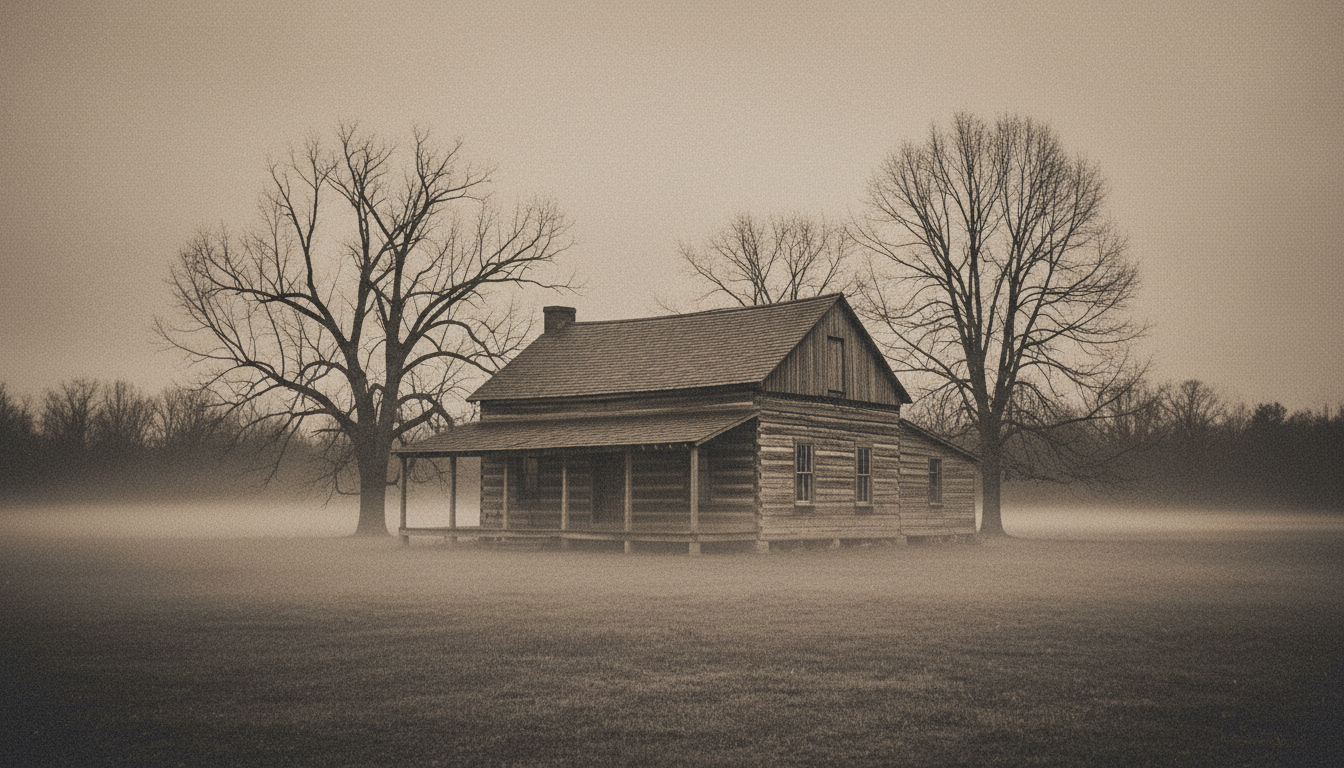
The Mysterious 1955 Alaskan Skinwalker Incident
— EXECUTIVE SUMMARY
On August 1, 1955, trappers in the Alaskan wilderness reported encounters with elusive, canine-like creatures that defied conventional biological classification. Despite subsequent investigations by local authorities and cryptid researchers, the incident remains an unresolved enigma within the annals of paranormal history.
The moment it began
On August 1, 1955, the Alaskan wilderness was a vast, untamed expanse, far removed from the encroaching reach of modern infrastructure. The air was crisp, carrying the scent of pine and damp earth, as a group of local trappers ventured deep into an isolated, rugged territory known for its dense, unforgiving terrain. These men were seasoned woodsmen, intimately familiar with the local fauna, including the wolves and bears that typically populated the region. As the sun began to dip below the horizon, casting long, distorted shadows across the forest floor, the atmosphere shifted. The usual ambient sounds of the wilderness—the rustle of small mammals, the distant call of birds—seemed to fall into an unnatural, heavy silence. It was in this quiet, isolated setting that the trappers, who had set up a temporary camp, first noticed something amiss. The temperature dropped sharply, and a sense of unease permeated the camp, as if the very environment were holding its breath in anticipation of an intrusion that did not belong to the natural order of the Alaskan interior.
What they saw
What unfolded next defied the trappers' extensive experience with the natural world. Initially, they observed two creatures stalking the perimeter of their camp. At first glance, the men assumed they were merely wolves, a common enough sight in the region. However, as the creatures moved into the fading light, the trappers realized their initial assessment was fundamentally flawed. The entities moved with a coordinated, almost tactical precision that was entirely inconsistent with the behavior of known wildlife. They did not lope or trot like wolves; instead, they seemed to glide across the uneven terrain with an eerie, fluid grace. When the trappers attempted to approach or track them, the creatures vanished with impossible speed, leaving no physical trace—no tracks, no broken branches, and no scent. The witnesses reported that the creatures appeared and disappeared as if they were flickering in and out of existence, a phenomenon that left the seasoned woodsmen deeply unsettled and questioning the reality of what they had just witnessed in the dark woods.
The witnesses
The primary witnesses were local trappers, men whose livelihoods depended on their ability to read the land and identify the animals that inhabited it. These individuals were not prone to flights of fancy or superstitious hysteria; they were pragmatic, grounded people who viewed the wilderness as a workplace rather than a source of mystery. In their documented accounts, they expressed a profound sense of confusion and fear. They described the creatures as canine-like but noted that their predatory behavior was far more calculated than that of any wolf pack they had ever encountered. One trapper noted that the creatures seemed to be observing them with a level of intelligence that felt distinctly alien. Their testimonies, shared with local authorities and later with investigators, consistently emphasized the speed and the strange, gliding movement of the entities. These men, who had spent their lives in the Alaskan bush, were adamant that what they saw on that August night was not a misidentified animal, but something that fundamentally challenged their understanding of the natural world.
The investigation
Following the initial reports, the incident drew the attention of local law enforcement and a small circle of cryptid enthusiasts who were eager to document such an unusual occurrence. These investigators traveled to the remote site, hoping to find physical evidence that could corroborate the trappers' claims. They conducted thorough sweeps of the area, searching for tracks, fur, or any signs of a struggle, but the results were consistently negative. The terrain, while rugged, should have yielded some evidence of such large creatures, yet the ground remained undisturbed. The investigators also interviewed the trappers multiple times, cross-referencing their stories to ensure consistency. They consulted with local indigenous tribes, who provided context by relaying their own long-standing folklore regarding skinwalkers—beings capable of shifting forms and moving with supernatural speed. This cultural layer added a significant dimension to the investigation, suggesting that the trappers' experiences might be linked to ancient legends that had persisted in the region for generations, even if the physical evidence remained elusive.
The official record
In the official records of the time, the 1955 Alaskan incident is largely characterized by a lack of definitive documentation. Local law enforcement officials, tasked with maintaining order and safety, found themselves unable to classify the reports within any standard framework. Because no physical evidence was recovered, the case was never elevated to a formal scientific inquiry, and it remained in the realm of anecdotal reports. Much of the information regarding the incident was preserved through the accounts of those who were present and the subsequent interest of the cryptid research community. There are no classified government files that explicitly confirm the existence of these creatures, and the incident was largely treated as a local curiosity rather than a matter of national security. However, the absence of an official explanation did not stop the story from circulating. The lack of a paper trail in the National Archives or similar repositories has only served to deepen the mystery, as the incident exists primarily in the collective memory of those who study the unexplained and the folklore of the Alaskan wilderness.
The arguments
Skeptics of the 1955 incident argue that the trappers were likely victims of misidentification, exacerbated by the psychological pressures of isolation and the dim, deceptive light of the Alaskan wilderness. They suggest that the creatures were, in fact, wolves or perhaps large dogs that appeared unusual due to the observers' heightened state of anxiety. The "gliding" movement, they argue, is a common optical illusion caused by the way light interacts with uneven terrain at night. Furthermore, the lack of physical evidence is cited as the strongest argument against the existence of any cryptid. If such creatures were present, they would leave behind biological markers—scat, hair, or tracks—that would be impossible to miss. However, proponents of the cryptid theory argue that the consistency of the witnesses' accounts, combined with the lack of any other plausible explanation for the coordinated, intelligent behavior described, suggests that the incident cannot be dismissed so easily. They argue that the skepticism often ignores the deep, localized knowledge of the witnesses, who were far more capable of identifying local wildlife than any outside observer.
Where the case stands today
Today, the 1955 Alaskan Skinwalker incident remains a cornerstone of cryptid lore, serving as a compelling case study for those interested in the intersection of folklore and unexplained phenomena. It continues to be discussed in research communities, where it is often cited alongside other high-strangeness events. The case matters because it highlights the limitations of our current scientific understanding when faced with reports that defy conventional categorization. It forces us to consider the possibility that there are aspects of our world—or perhaps our perception of it—that remain beyond the reach of traditional investigation. While the incident has not been resolved, it remains firmly embedded in the cultural history of Alaska, a reminder of the mysteries that still linger in the remote corners of the globe. As long as people continue to venture into the wilderness, the story of the 1955 encounter will persist, prompting deeper inquiries into the nature of reality and the enduring power of the legends that haunt the edges of our known world.
— CHAIN OF CUSTODY: SOURCES & FURTHER READING
— FIELD REPORTS (0)
Sign in to post a field report.
No field reports yet. Be the first to contribute.
DISCLAIMER: Every story on this site is based on documented real-world reports or official records. We do not publish fiction. All sources are cited above.