The 1954 U.K. UFO Incident: A Close Encounter in Lakenheath
— EXECUTIVE SUMMARY
The 1956 Lakenheath-Bentwaters incident remains one of the most significant radar-visual UFO cases in military history, involving multiple airbases and unexplained aerial maneuvers. Despite extensive investigation, the events defy simple explanation and continue to challenge conventional understanding of aerial defense.
The moment it began
On the night of August 13-14, 1956, the atmosphere at the U.S.-tenanted RAF Lakenheath and RAF Bentwaters airbases in Suffolk, England, was thick with the quiet tension of the Cold War. These bases, critical nodes in the Western defense network, were operating under standard night-watch protocols when the routine was shattered. The weather was clear, providing excellent visibility for the radar operators and ground crews stationed across the region. It began not with a bang, but with a series of anomalous radar returns that defied the known flight characteristics of any contemporary aircraft. As the night progressed, the Ground Controlled Approach (GCA) units at Bentwaters began tracking unidentified radar echoes (UREs) moving at speeds estimated between 2,000 and 4,000 miles per hour. The operators, seasoned professionals accustomed to the predictable patterns of military and civilian traffic, were suddenly confronted with targets that appeared, vanished, and performed impossible maneuvers. The silence of the night was replaced by the urgent chatter of telephone lines as Bentwaters alerted Lakenheath, forty miles to the northwest, to prepare for the arrival of these mysterious intruders. The personnel on duty, including radar controllers and ground observers, found themselves thrust into a situation that would soon be described as one of the most disturbing radar-visual episodes on record.
What they saw
The event unfolded in a series of distinct, baffling phases. At approximately 22:55Z, the Bentwaters GCA radar picked up a target moving west at an incredible velocity. This was not an isolated glitch; multiple radar contacts were recorded throughout the night. As the objects approached Lakenheath, ground personnel reported seeing luminous, star-like lights moving across the sky. In one instance, two distinct objects were observed to arrive, execute a sharp, instantaneous change in course, and then appear to merge into a single entity before accelerating away. The visual sightings were corroborated by radar tracking, which showed the objects performing maneuvers that no human pilot could survive. At one point, a C-47 transport aircraft flying at 4,000 feet reported a bright white light passing directly beneath it. The situation escalated when the radar controllers at Lakenheath, now fully alerted, tracked an unknown target that seemed to be playing a game of cat-and-mouse with interceptor aircraft. The objects did not behave like conventional aircraft or meteorological phenomena; they exhibited a level of control and intelligence that left the observers stunned. The radar screens showed targets that would suddenly stop, hover, and then dart off at speeds that pushed the limits of the equipment’s tracking capabilities, creating a chaotic and unprecedented scene in the night sky.
The witnesses
The primary witnesses were the men tasked with the defense of the realm: the radar operators, ground controllers, and pilots who were on duty that fateful night. Among the most prominent was Technical Sergeant Forrest Perkins, the Watch Supervisor at the Lakenheath Radar Air Traffic Control center. Perkins, who later provided a detailed account to the Condon Committee in 1968, described the frustration and confusion of the night with remarkable clarity. He noted that the radar targets were so swift that he often missed them on his own scope, only to have them confirmed by other operators. The pilots of the RAF de Havilland Venom interceptors, scrambled to investigate, were also key witnesses. One pilot reported having a bright white light in his sights, only to lose the target as it performed an evasive maneuver that placed it directly behind his aircraft. These men were not prone to flights of fancy; they were trained professionals whose careers depended on accuracy and composure. Their accounts, though fragmented by the passage of time and the confusion of the moment, consistently pointed to the presence of something that was physically real, highly maneuverable, and entirely unidentified. Their testimony, often given under the pressure of military discipline, remains the bedrock of the case, providing a human element to the cold, hard data of the radar logs.
The investigation
Following the incident, the U.S. Air Force launched an investigation under the auspices of Project Bluebook, the official program tasked with evaluating UFO reports. However, the initial investigation was marred by bureaucratic inertia and a lack of scientific rigor. It was not until years later, when the Condon Committee—a study commissioned by the U.S. Air Force and conducted by the University of Colorado—took an interest, that the case received a more thorough examination. The committee analyzed the radar logs, the teletype transmissions, and the eyewitness accounts, including the detailed letter from Sergeant Perkins. They measured the radar returns against known atmospheric conditions, attempting to rule out anomalous propagation or equipment malfunctions. Despite their efforts, the committee found themselves unable to dismiss the incident as a simple misidentification. They noted the internal inconsistencies in the military reports but were forced to concede that the probability of a genuine, unidentified aerial phenomenon being involved was significant. The investigation was hampered by the fact that many of the original records had been lost or destroyed, and the names of many witnesses had been redacted from the files released to researchers like Dr. James E. McDonald, who spent years trying to piece together the truth behind the official silence.
The official record
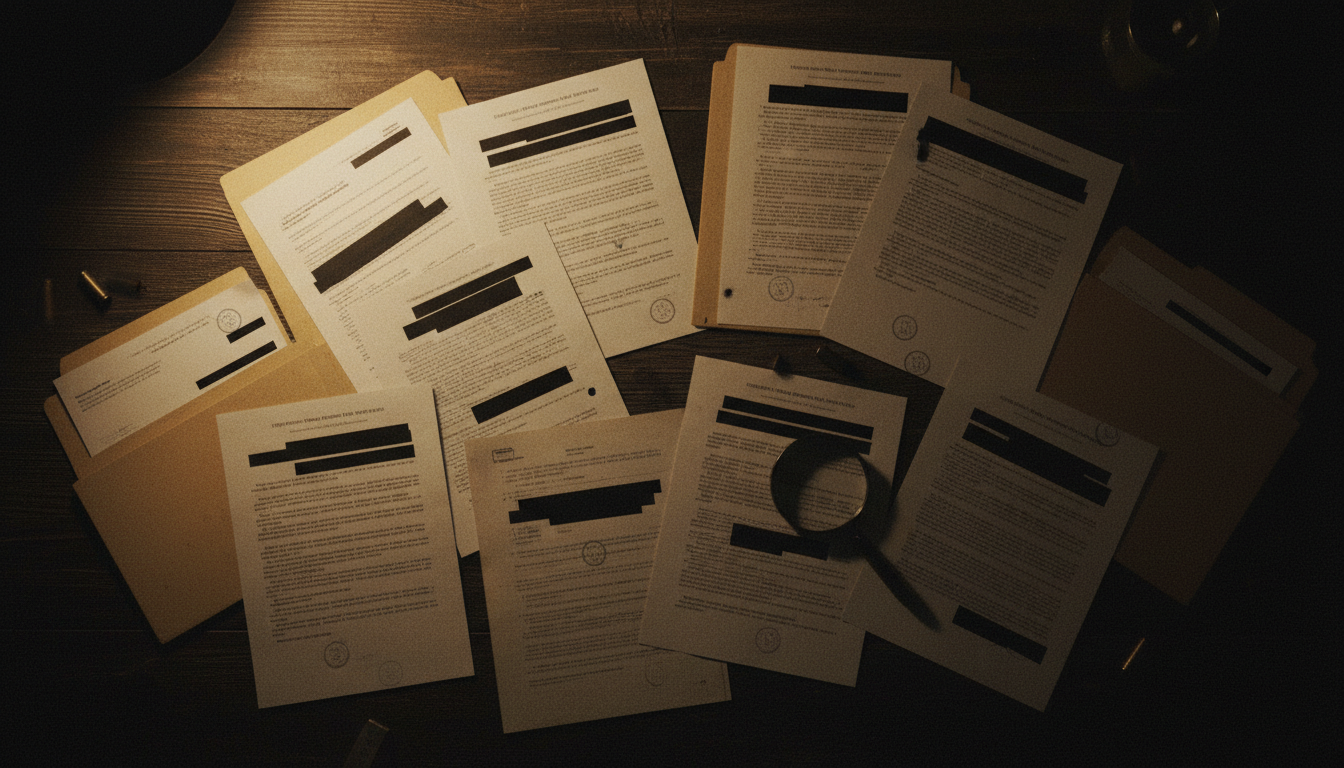
The official record of the Lakenheath-Bentwaters incident is a testament to the ambiguity that often surrounds military UFO reports. The files, now accessible through the CIA’s FOIA reading room and the National Archives, contain a mix of operational documents, teletype messages, and internal memos that paint a picture of a military establishment struggling to reconcile the events with their existing protocols. The Condon Report, while generally skeptical of UFOs, took the unusual step of classifying the Lakenheath case as 'unexplained.' This was a rare admission for a study that otherwise sought to debunk the phenomenon. The documents reveal that the Air Force was aware of the incident’s gravity, yet they chose to keep the details largely hidden from the public for over a decade. The redactions in the files, which removed the names of the personnel involved, suggest a desire to protect the identities of those who witnessed the events, or perhaps to minimize the embarrassment of an incident that the military could neither explain nor control. The official record remains incomplete, a fragmented narrative that leaves as many questions as it answers, serving as a reminder of the limitations of official reporting when faced with the truly anomalous.
The arguments
Skeptics, most notably aviation journalist Philip J. Klass, have long argued that the Lakenheath incident can be explained away by a combination of false radar returns and the misperception of natural phenomena. Klass suggested that the radar targets were likely the result of 'anomalous propagation,' a condition where atmospheric layers cause radar beams to bend and create ghost images on the screen. He also proposed that the visual sightings were merely meteors or bright stars, such as Mars, which was low on the horizon at the time. However, these arguments have been met with strong resistance from researchers who point out that the radar and visual sightings were too closely correlated to be mere coincidence. The fact that multiple, independent radar units tracked the same targets, and that pilots were vectored onto these targets only to see them perform intelligent, evasive maneuvers, makes the 'meteor' or 'ghost image' theory difficult to sustain. The sheer duration of the incident—lasting over five hours—further undermines the idea that this was a fleeting atmospheric event. While the skeptical perspective provides a necessary check on the more sensational claims, it often fails to account for the totality of the evidence provided by the trained military personnel who were there.
Where the case stands today
Today, the Lakenheath-Bentwaters incident stands as a classic in the annals of ufology, a case that continues to be cited as one of the most compelling examples of a radar-visual UFO encounter. It remains a focal point for those who argue that the military has long been aware of phenomena that defy conventional explanation. The case matters not just because of what was seen, but because of what it reveals about the military’s response to the unknown. It highlights the tension between the need for national security and the desire for scientific transparency. As more documents are declassified and the archives are scoured by new generations of researchers, the Lakenheath incident continues to evolve, shifting from a forgotten military report to a symbol of the enduring mystery of the skies. It serves as a reminder that even in the most controlled environments, there are moments when the world we think we know is interrupted by something that refuses to be categorized. Whether one views it as a failure of technology, a trick of the atmosphere, or something far more profound, the Lakenheath incident remains a vital piece of history, a haunting echo of a night when the radar screens told a story that the world was not yet ready to hear.
— CHAIN OF CUSTODY: SOURCES & FURTHER READING
— FIELD REPORTS (0)
Sign in to post a field report.
No field reports yet. Be the first to contribute.
DISCLAIMER: Every story on this site is based on documented real-world reports or official records. We do not publish fiction. All sources are cited above.