The 1936 Observer's Report: A Psychic Phenomenon in New York City
— EXECUTIVE SUMMARY
In December 1936, Edgar Cayce conducted a series of high-profile psychic demonstrations in New York City that drew intense scrutiny from the public and the scientific community. This narrative explores the intersection of his trance-based readings, the skepticism of contemporary medical professionals, and the burgeoning field of parapsychology.
The moment it began
In the waning days of December 1936, the atmosphere in New York City was thick with the chill of winter and a palpable, restless curiosity. The city, a sprawling metropolis of steel and ambition, served as the stage for a series of events that would challenge the boundaries of conventional understanding. Edgar Cayce, a man whose reputation as a 'sleeping prophet' had already begun to permeate the cultural consciousness, arrived in the city to conduct a series of demonstrations. The air in the rented rooms where he held his sessions was heavy, not just with the scent of coal smoke drifting in from the streets, but with the weight of expectation. Observers from all walks of life—academics with furrowed brows, journalists clutching notebooks, and ordinary citizens seeking solace or spectacle—gathered in the dim light. Cayce, a man of unassuming appearance, would sit in a chair, loosen his tie, and close his eyes, slipping into a trance-like state that his followers believed allowed him to access a reservoir of universal knowledge. Outside, the city continued its relentless pace, but inside these quiet chambers, time seemed to suspend itself, waiting for the voice that would emerge from the silence.
What they saw
As the trance deepened, the room would fall into a profound stillness, broken only by the rhythmic breathing of the man in the chair. The process was methodical and precise. Cayce’s wife, Gertrude, would serve as the conductor, guiding the session and posing questions on behalf of those seeking insight. A stenographer, Gladys Davis Turner, sat nearby, her pencil flying across the page to capture every word in shorthand. The event unfolded in a sequence that had become familiar to those who followed his work: Cayce would repeat a suggestion to himself, then begin a mental journey, often tracing back through dates and events with an uncanny, almost mechanical accuracy. In one notable instance, a Naval officer, suffering from ailments that had baffled traditional physicians, sat before him. Cayce, without prior knowledge of the man’s medical history, began to describe the officer’s condition with startling precision. He spoke of internal imbalances and recommended a specific course of treatment. The observers watched, transfixed, as the man who had been dismissed by others as a mere curiosity provided a roadmap for recovery that would later lead to a notable resolution of the officer's health issues.
The witnesses
Witnesses to these 1936 demonstrations were a diverse lot, each bringing their own biases and backgrounds to the table. Among them were journalists who had been sent to debunk the 'illiterate' man from Kentucky, only to find themselves unsettled by the specificity of his insights. One such account, documented in the archives of the Edgar Cayce Foundation, describes the presence of an Italian fruit dealer who was hastily summoned to transcribe a reading, his presence highlighting the eclectic nature of the audience. Academics were also present, their skepticism often warring with the evidence presented before them. Dr. Ketchum, a physician who had witnessed Cayce’s work, noted that patients deemed 'hopeless' by the medical establishment were often restored to health after following the prescriptions given during these trance states. These witnesses, ranging from the skeptical to the devout, left behind a trail of correspondence and testimonials that paint a picture of a man whose influence was as polarizing as it was profound. Their words, preserved in the case files maintained by Gladys Davis Turner, serve as the primary record of a phenomenon that defied easy categorization.
The investigation
By 1936, the scientific community could no longer ignore the growing public fascination with psychic phenomena. Dr. Joseph B. Rhine, the pioneer of parapsychology at Duke University, was at the forefront of this inquiry. Recognizing the need for a more rigorous approach, Rhine sent Lucian H. Warner to investigate Cayce’s claims firsthand. Warner spent a week in close proximity to Cayce, witnessing the readings and even participating in them himself. The investigation was not merely a matter of observation; it was an attempt to apply the scientific method to the intangible. Warner’s reports, though not always conclusive, provided a rare, documented look at the mechanics of the sessions. While Rhine himself remained unimpressed by some of Cayce’s later, less accurate readings—such as those provided for his own daughter—the investigation into the 1936 events marked a pivotal moment. It was a time when the boundaries between the laboratory and the metaphysical were being tested, with researchers like Rhine attempting to measure the unmeasurable through experiments that would eventually lead to the development of the Zener card tests and other standardized methods of evaluating extrasensory perception.
The official record
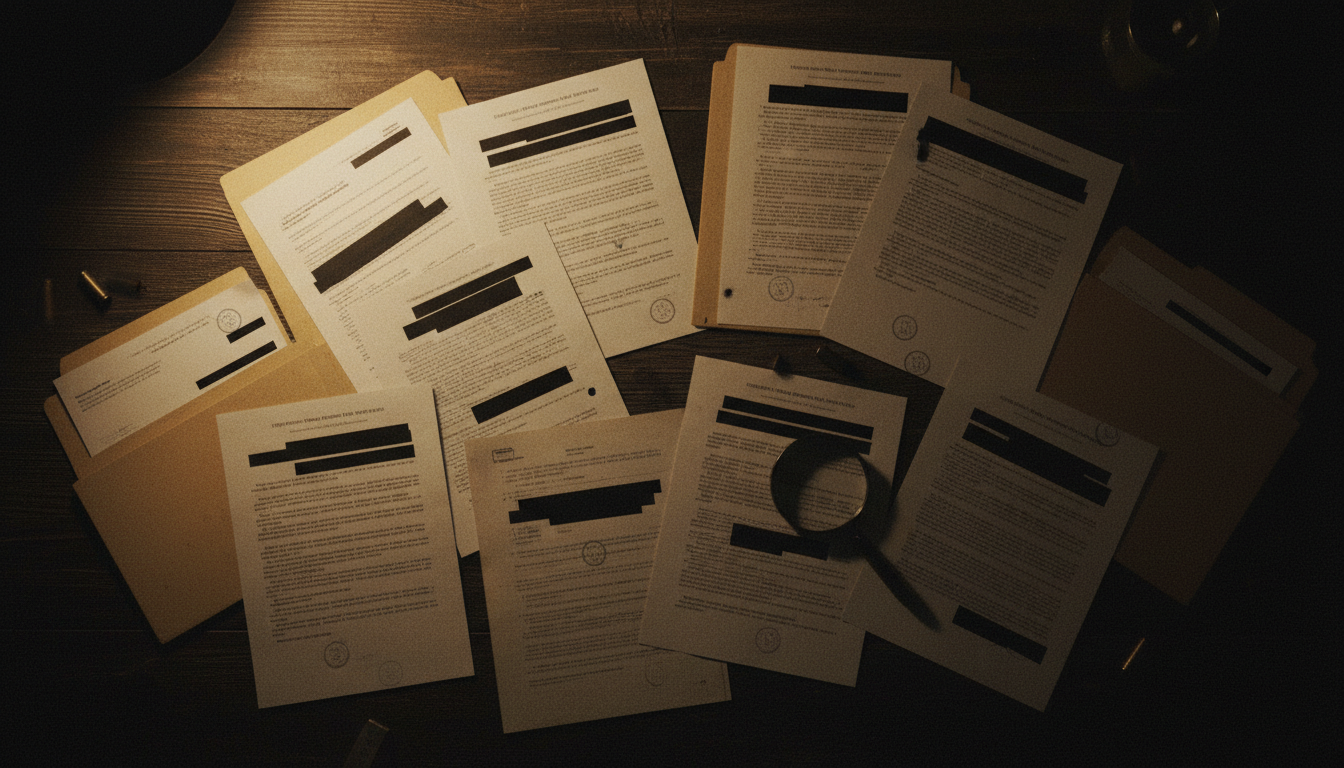
The official record of the 1936 demonstrations is housed within the extensive archives of the Association for Research and Enlightenment (A.R.E.) and supplemented by the broader collections at institutions like The Black Vault. These files, meticulously maintained by Gladys Davis Turner, contain not just the transcripts of the readings, but the accompanying case files, correspondence, and research data that document the long-term outcomes for the recipients. The records are a testament to the administrative rigor applied to a subject often dismissed as fringe. Each reading was assigned a file number to maintain anonymity, a practice Turner insisted upon to ensure the work remained 'impersonal.' Despite the volume of material, much of the 'official' scientific verdict remained elusive. While the A.R.E. bulletins from 1936 detail the topics covered—ranging from health hints to spiritual philosophy—the scientific community’s files often reflect a cautious, if not outright dismissive, stance. The records remain a mix of personal testimony and clinical observation, leaving many questions about the nature of Cayce’s 'trance' state unanswered and, in many respects, officially unexplained.
The arguments
Critics of the 1936 demonstrations, particularly those from the medical and scientific establishments, were quick to offer alternative explanations. The strongest skeptical argument, championed by figures like Joe Nickell, posits that Cayce’s insights were the result of cold reading, intuition, or mere coincidence. They argue that the lack of controlled, double-blind testing makes it impossible to verify the claims of psychic ability. Furthermore, the medical community often pointed to the placebo effect or the natural course of recovery to explain the 'cures' attributed to Cayce’s readings. These skeptics argue that the emotional vulnerability of the recipients played a significant role in their belief, creating a feedback loop of confirmation bias. Conversely, supporters argue that the sheer volume of accurate, verifiable information provided by Cayce—often regarding matters he could not have known—cannot be dismissed as simple chance. They point to the resolution of complex medical cases as evidence that there is a dimension of human perception that remains outside the current understanding of science, suggesting that the skeptics' reliance on traditional models is, in itself, a limitation.
Where the case stands today
Today, the 1936 Observer's Report remains a cornerstone of the study of psychic phenomena. It serves as a bridge between the early, more sensationalist era of mediumship and the later, more structured attempts at parapsychological research. The case matters because it highlights the enduring human desire to understand the limits of consciousness and the potential for non-ordinary perception. While the scientific community has largely moved on to other frontiers, the legacy of the 1936 demonstrations continues to influence the exploration of the mind-body connection. The Association for Research and Enlightenment, founded on the foundation of these very readings, continues to operate, providing a repository for those who seek to reconcile the spiritual with the empirical. The case is not merely a historical curiosity; it is a reminder of the ongoing dialogue between faith and science. As we continue to probe the mysteries of the human psyche, the events of that cold December in New York City remain a compelling, if unresolved, chapter in the history of the paranormal, inviting us to consider that there may be more to our reality than what can be measured in a laboratory.
— CHAIN OF CUSTODY: SOURCES & FURTHER READING
— FIELD REPORTS (0)
Sign in to post a field report.
No field reports yet. Be the first to contribute.
DISCLAIMER: Every story on this site is based on documented real-world reports or official records. We do not publish fiction. All sources are cited above.