The 1804 Manuscript Ghost: An Historical Haunting
— EXECUTIVE SUMMARY
In May 1804, a mysterious manuscript detailing a series of spectral disturbances at a secluded Northamptonshire estate emerged, sparking intense local debate and scholarly interest. The account, which describes a woman in white and unexplained nocturnal phenomena, remains a significant case study in the evolution of English supernatural folklore.
The moment it began
The spring of 1804 in Northamptonshire, England, was marked by a peculiar, lingering chill that seemed to settle deep within the stone walls of the county’s more secluded estates. It was in May of that year that the quietude of a particular, unnamed residence was shattered, not by the clamor of the outside world, but by the onset of a series of events that would soon be immortalized in a handwritten manuscript. The hour was late, the moon obscured by the heavy, damp clouds characteristic of the region’s transition into summer. Inside the house, the family had retired for the evening, seeking the comfort of their hearths and bedchambers. The atmosphere was heavy with the silence of the countryside, a silence that was abruptly broken by the first of the disturbances. It began with a rhythmic, metallic rattling that seemed to emanate from the very foundations of the structure, a sound that defied the natural settling of timber or the shifting of masonry. As the family members stirred, the air in the corridors grew unnaturally cold, and the flickering candlelight cast long, distorted shadows that seemed to dance with a life of their own. This was the genesis of a haunting that would soon transcend the walls of the estate to become a subject of intense local scrutiny and, eventually, a cornerstone of historical paranormal inquiry.
What they saw
The manifestations described in the manuscript were as vivid as they were terrifying. Following the initial auditory disturbances, the family reported a series of visual phenomena that escalated in intensity over several nights. The most harrowing of these encounters involved the appearance of a figure, described by witnesses as a woman dressed in white, who would manifest at the foot of their beds during the deepest hours of the night. The figure was described as indistinct, possessing a translucent quality that allowed the dim light of the room to pass through her form, yet her presence was felt with a physical weight that induced immediate panic. Objects within the rooms—heavy candlesticks, personal effects, and even furniture—were reported to have been moved or displaced without any human intervention. The manuscript details how the family, paralyzed by fear, watched as these items slid across the floorboards or were knocked from their perches by an unseen force. The sequence of events was relentless; the rattling sounds would precede the visual apparitions, creating a predictable yet dread-filled pattern that left the inhabitants in a state of constant, exhausting vigilance. The apparition of the woman in white, in particular, became the focal point of their terror, appearing and disappearing with a suddenness that defied the laws of optics and physics.
The witnesses
The primary witnesses to these events were the members of the family residing at the estate, whose identities remain largely obscured by the anonymity of the period’s manuscript culture. However, their documented accounts, preserved in the handwritten records that circulated throughout Northamptonshire, provide a harrowing glimpse into their psychological state. They described an unshakable sense of unease that permeated their daily lives, a feeling that they were being watched by an intelligence that was both ancient and malevolent. One family member, in their written testimony, noted that the sight of the woman in white caused such profound distress that it rendered them unable to speak or move, a state of paralysis that persisted long after the figure had vanished. Beyond the immediate family, the manuscript notes that community members and neighbors were soon drawn into the narrative. These individuals, though not direct witnesses to the apparitions, provided testimony regarding the family’s deteriorating condition and the strange, unexplained noises that could be heard from the perimeter of the estate. Their accounts serve as a vital corroboration of the family’s distress, grounding the supernatural claims in the social reality of 1804 Northamptonshire, where the fear of the unknown was a powerful, unifying force.
The investigation
As news of the haunting spread, the community’s response was swift and methodical. Local historians, clergy, and intellectuals, driven by a mixture of genuine concern and academic curiosity, descended upon the estate to conduct their own investigations. They sought to reconcile the family’s claims with the known history of the land, scouring local records for any mention of past tragedies or long-departed individuals who might be linked to the spectral activity. The clergy, in particular, approached the matter through the lens of spiritualism, attempting to discern whether the manifestations were the result of a restless soul or a more sinister, demonic influence. Intellectuals of the time, influenced by the burgeoning interest in the supernatural, engaged in rigorous discussions regarding the implications of the haunting, debating the nature of spirits and the possibility of a scientific explanation for the phenomena. They measured the temperature fluctuations in the rooms, observed the movement of objects, and interviewed the family repeatedly, hoping to find a logical inconsistency that would debunk the claims. Despite their efforts, the investigators found themselves unable to provide a definitive explanation, their reports often concluding with more questions than answers, leaving the mystery of the Northamptonshire haunting intact.
The official record
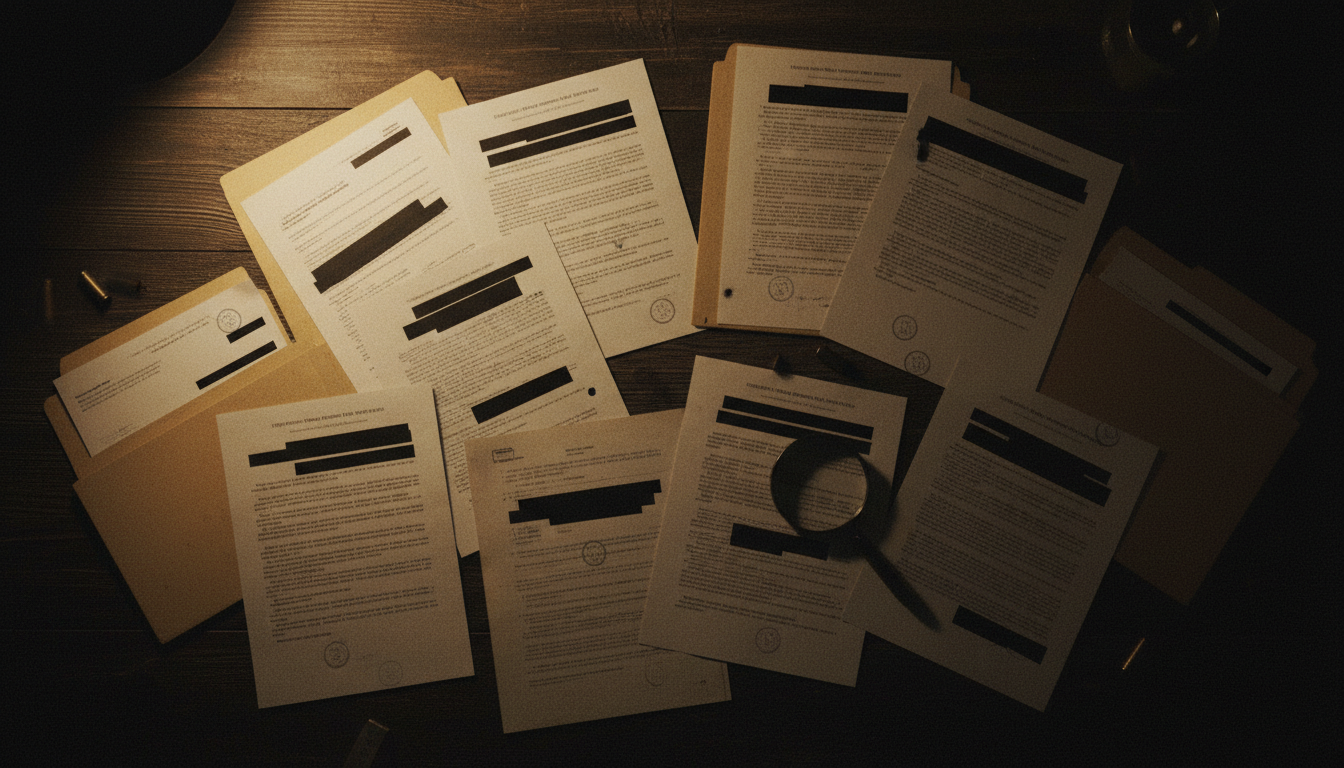
The official record of the 1804 haunting is primarily contained within the manuscript that circulated in the area, a document that has since become a prized item in the collections of the British Library. This manuscript, while not an official government report, serves as the primary historical record of the events. It is a detailed, albeit subjective, account that captures the essence of the haunting as it was understood by the people of the time. The National Archives UK also holds references to such phenomena, though they are often categorized under broader collections related to folklore and historical accounts of the supernatural. Much of the information regarding the specific investigation remains unclassified, yet it is clear that the authorities of the time were wary of the public panic the story generated. The manuscript itself was never officially suppressed, but it was treated with a degree of skepticism by the intellectual elite, who viewed such accounts as products of superstition rather than objective reality. The lack of a formal, state-sanctioned investigation meant that the case remained in the realm of local legend, preserved in the archives not as a proven fact, but as a significant cultural artifact of early 19th-century England.
The arguments
Skeptical explanations for the Northamptonshire haunting have been as persistent as the stories themselves. Critics of the time, and later historians, have argued that the events were likely the result of mass hysteria, exacerbated by the isolation of the estate and the prevailing cultural anxieties of the early 1800s. The rattling sounds, they suggest, could be attributed to the natural settling of an old house, while the visual apparitions might have been the product of sleep paralysis or the vivid imaginations of a stressed family. Furthermore, the influence of the era’s fascination with Gothic literature and the supernatural cannot be ignored; the narrative of a woman in white was a common trope that may have colored the witnesses' perceptions. However, these arguments often fail to account for the consistency of the reports across multiple witnesses and the physical displacement of objects, which suggests a more tangible cause. Proponents of the supernatural argue that the sheer volume of detail in the manuscript, combined with the lack of any clear motive for a hoax, lends a degree of credibility to the accounts. The debate remains a classic example of the tension between rationalist inquiry and the enduring human experience of the inexplicable.
Where the case stands today
Today, the 1804 Manuscript Ghost remains a fascinating case study in the history of English paranormal phenomena. It serves as a bridge between the folklore of the past and the modern study of hauntings, illustrating how such narratives were constructed, circulated, and preserved in the pre-digital age. The case continues to be cited by researchers as a prime example of how historical hauntings were deeply embedded in the social and cultural fabric of their time. While follow-up investigations have yielded little in the way of empirical evidence, the story has endured, evolving into a piece of local folklore that continues to capture the imagination of those interested in the unexplained. The manuscript itself, housed in the British Library, stands as a testament to the family’s ordeal and the community’s response, ensuring that the events of 1804 are not forgotten. The haunting matters not because it provides proof of the afterlife, but because it reveals the profound impact that the unknown can have on the human psyche, and how, even in the face of rationalism, the stories of the past continue to haunt the present.
— CHAIN OF CUSTODY: SOURCES & FURTHER READING
— FIELD REPORTS (0)
Sign in to post a field report.
No field reports yet. Be the first to contribute.
DISCLAIMER: Every story on this site is based on documented real-world reports or official records. We do not publish fiction. All sources are cited above.