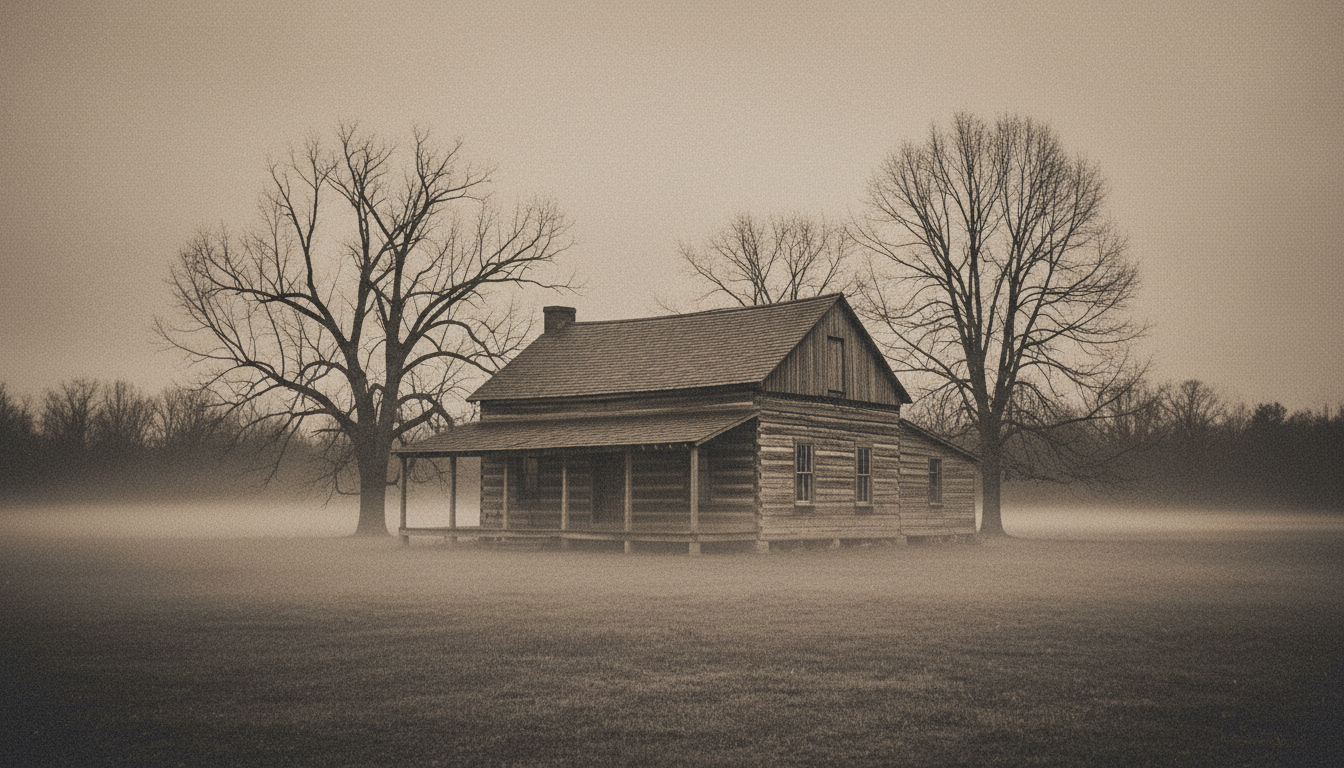
The 1924 Chicago Phantom: A Cryptid Sighting
— EXECUTIVE SUMMARY
On October 10, 1924, Chicago residents reported sightings of a giant, bird-like creature, sparking a wave of public intrigue and media speculation. This event remains a foundational moment in American urban folklore, illustrating the enduring tension between unexplained phenomena and rational inquiry.
The moment it began
The autumn of 1924 in Chicago was a season defined by the relentless pace of industrial expansion and the quiet anxieties of a city caught between the old world and the new. On October 10, 1924, the atmosphere was crisp, with a biting wind rolling off Lake Michigan that typically kept the streets clear after dark. However, as the sun dipped below the horizon, the usual rhythm of the city was shattered. Residents in various neighborhoods, from the bustling downtown corridors to the quieter residential outskirts, began to look upward. It was not the familiar sight of a dirigible or the distant hum of early aviation that caught their attention, but a silent, imposing silhouette. The weather was clear, providing an unobstructed view of the night sky, which allowed those present to witness something that defied the conventional ornithology of the Midwest. People stopped in their tracks, abandoning their evening errands to point toward the heavens, where a massive, unidentified flying creature was seen soaring with an unnatural, gliding grace that seemed to mock the laws of physics. The air was thick with a sudden, palpable sense of unease, as if the city itself had sensed an intruder that did not belong in the urban landscape.
What they saw
The event unfolded with a terrifying, beat-by-beat precision that left witnesses paralyzed. The entity was described by multiple observers as a giant bird, though its scale was far beyond any raptor known to inhabit the Illinois basin. It moved with a silent, sweeping motion, gliding at surprisingly low altitudes that allowed onlookers to discern its terrifying features. The creature’s wingspan was the most frequently cited detail, described as enormous and capable of casting a shadow that seemed to swallow the streetlights below. As it passed overhead, the most chilling aspect reported was the presence of glowing eyes, which appeared to pierce the darkness with an intensity that suggested a predatory intelligence. The creature did not flap its wings in the frantic manner of a common bird; instead, it maintained a steady, eerie momentum, navigating the urban canyons of Chicago with a fluidity that suggested it was perfectly at home amidst the skyscrapers. The sequence of sightings suggested a deliberate path, moving across the city as if surveying the sprawling metropolis, leaving behind a trail of bewildered citizens who struggled to reconcile the impossible sight with their own senses.
The witnesses
The witnesses were a cross-section of Chicago society, ranging from laborers returning from the stockyards to shopkeepers closing their storefronts. Their backgrounds were diverse, yet their accounts shared a haunting consistency. One witness, a local laborer, described the creature as a “phantom bird” that seemed to glide without effort, its presence marked by a silence that felt heavy and unnatural. Another resident, a woman who had been walking home, noted the “dread” that washed over her as the creature’s glowing eyes caught the light of a nearby streetlamp. These individuals were not prone to flights of fancy; they were practical people living in a practical city. Their documented words, preserved in the fragments of local newspaper reports, emphasize a shared feeling of vulnerability. They spoke of a creature that did not merely fly but observed, its gaze lingering on those below. The consistency of these descriptions—the massive wings, the silent flight, and the piercing, luminous eyes—created a collective narrative that could not be easily dismissed as a simple misidentification of a common owl or hawk, as the scale of the entity was simply too vast for such mundane explanations.
The investigation
As the reports accumulated, the local authorities were forced to respond to the growing public anxiety. The investigation was not a scientific endeavor in the modern sense, but rather a series of reactive measures taken by local officials and police to identify the source of the disturbance. Exploration parties were formed by concerned residents, armed with flashlights and a desperate need for clarity, as they scoured the parks and rooftops where the creature had been spotted. These groups, while lacking formal training, conducted a thorough, if amateur, search of the city’s perimeter. Meanwhile, animal control officials were brought in to assess the possibility of an escaped exotic species, such as a large bird of prey or a zoo animal that had managed to evade capture. They measured the reported flight paths and interviewed witnesses, attempting to find physical evidence like feathers or tracks, but the creature remained elusive. The lack of tangible evidence did not stop the investigation; rather, it fueled the intensity of the search, as the city’s newspapers documented every failed attempt to capture or identify the beast, turning the investigation into a public spectacle that gripped the entire region.
The official record
The official record of the 1924 Chicago Phantom is a testament to the limitations of early 20th-century documentation regarding the paranormal. While the Chicago Tribune Archives and other contemporary sources provide a window into the event, much of the official response remains shrouded in the ambiguity of the era. The files that exist are largely composed of newspaper clippings and anecdotal reports, as there was no centralized agency tasked with investigating cryptid sightings at the time. What was classified or withheld remains a subject of debate, but the records clearly show that authorities were unable to provide a satisfactory explanation for the phenomenon. The reports from the time indicate that while the police were aware of the public’s fear, they were ultimately powerless to address the root cause of the sightings. The mystery was left officially unexplained, with the files serving as a repository for the unanswered questions of a city that had been briefly, and profoundly, unsettled. The lack of a definitive conclusion in the official record only served to deepen the mystery, allowing the event to transition from a news story into a permanent fixture of Chicago’s urban folklore.
The arguments
The skepticism surrounding the 1924 Chicago Phantom was as intense as the sightings themselves. Critics and skeptics of the time argued that the creature was likely a product of mass hysteria or a misidentified animal, such as a large owl or a crane, magnified by the darkness and the power of suggestion. Some suggested that the creature was an exotic species that had escaped from a private collection, a theory that gained traction but was never supported by the recovery of a specimen. Others pointed to the role of local folklore, arguing that the city’s residents were projecting their own anxieties onto the sky, creating a monster out of the unknown. However, these arguments often failed to account for the sheer number of independent witnesses who reported the same specific details, such as the glowing eyes and the silent, gliding flight. The skepticism, while grounded in a desire for rational explanation, often felt inadequate to those who had seen the creature with their own eyes. The debate between the skeptics and the believers became a defining feature of the event, highlighting the divide between those who demanded empirical proof and those who accepted the reality of their own experiences.
Where the case stands today
Today, the 1924 Chicago Phantom remains a captivating chapter in the city’s history, serving as a bridge between the real-world phenomena of the past and the enduring public fascination with the supernatural. The case continues to be studied by researchers and enthusiasts who see it as a foundational moment in the discourse surrounding cryptids in American folklore. While contemporary investigations often scrutinize the reliability of eyewitness accounts, the legacy of the 1924 sighting persists, having inspired countless interpretations in films, literature, and modern paranormal research. The event matters because it captures a moment when the city was forced to confront the limits of its own understanding, a theme that remains relevant in our own time. The Chicago Phantom is not just a story about a creature; it is a story about the interplay between the known and the unknown, and the way in which a community processes the inexplicable. As long as people continue to look at the night sky with a sense of wonder and apprehension, the memory of the 1924 Phantom will endure, reminding us that there are still mysteries that defy our classifications and challenge our perception of the world around us.
— CHAIN OF CUSTODY: SOURCES & FURTHER READING
— FIELD REPORTS (0)
Sign in to post a field report.
No field reports yet. Be the first to contribute.
DISCLAIMER: Every story on this site is based on documented real-world reports or official records. We do not publish fiction. All sources are cited above.