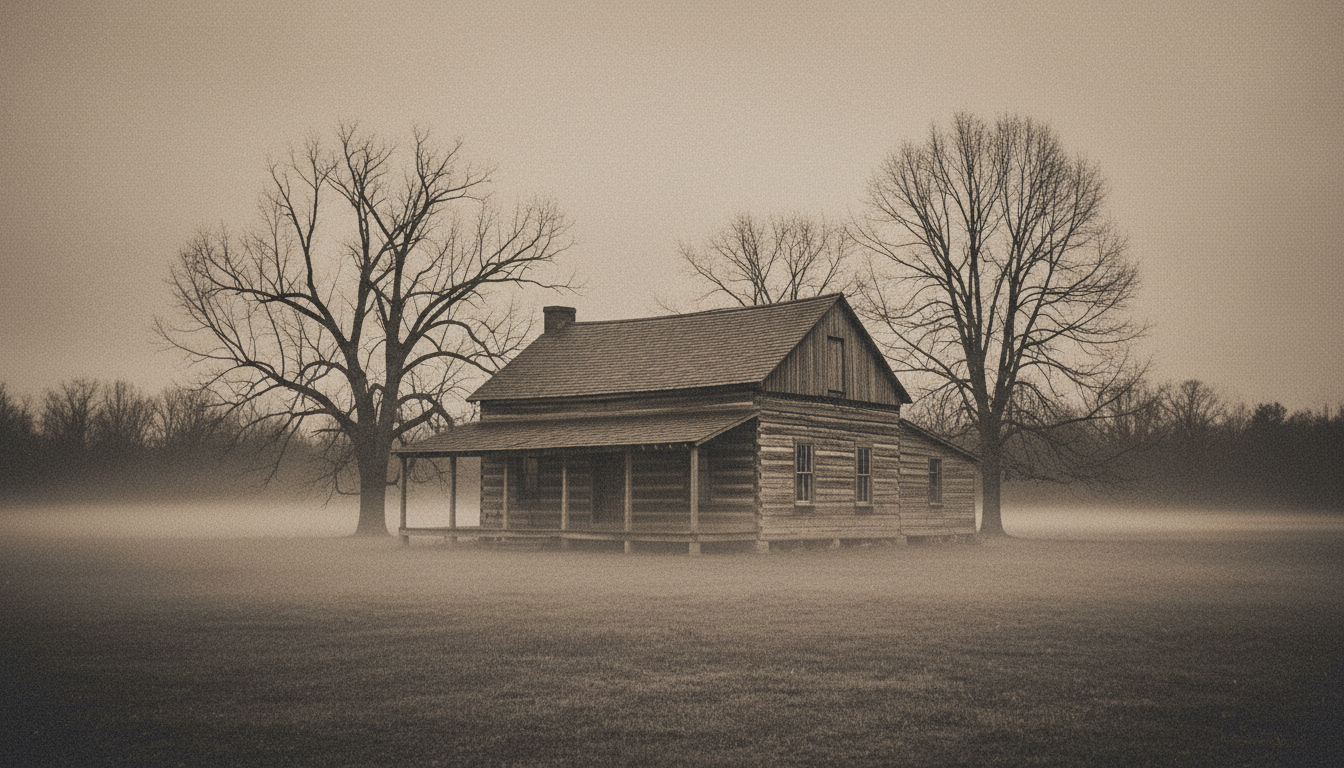
The Sodder Children Disappearance
— EXECUTIVE SUMMARY
On Christmas Eve 1945, a fire destroyed the Sodder family home in Fayetteville, West Virginia, resulting in the mysterious disappearance of five children. Despite the lack of physical remains, the family spent decades pursuing theories of abduction and arson, leaving the case as one of America's most enduring unsolved mysteries.
The moment it began
On the night of December 24, 1945, the atmosphere in Fayetteville, West Virginia, was heavy with the quiet anticipation of Christmas. George and Jennie Sodder, along with nine of their ten children, settled into their two-story home for the night. One son was away serving in the military, leaving the house filled with the remaining siblings: Maurice, 14; Martha, 12; Louis, 9; Jennie, 8; and Betty, 5. The evening had been typical for the family, marked by the warmth of the holiday season. However, the peace was shattered around 1:00 a.m. when Jennie Sodder was jolted awake by a strange noise. According to accounts documented by local author George Bragg, Jennie heard a distinct sound—something heavy being thrown onto the roof of the house. This initial disturbance would serve as the chilling prelude to a tragedy that would haunt the family and the community for generations. The house, which had been a place of safety and celebration, was about to become the epicenter of a vanishing act that defied all logical explanation, setting the stage for a decades-long search for truth in the face of an impossible void.
What they saw
Following the noise on the roof, the situation escalated with terrifying speed. Jennie woke her husband, George, and the couple, along with four of their children, managed to escape the structure as it was rapidly engulfed in flames. George Sodder, desperate to reach the five children trapped on the upper floor, attempted to re-enter the burning house. In his frantic efforts, he broke a window, suffering a severe injury that sliced a swath of skin from his arm. Despite his heroic attempts, the intensity of the fire and the rapid collapse of the structure made it impossible to reach the bedrooms. The fire department, hampered by the limitations of the era—where an operator had to manually rouse firefighters one by one—did not arrive until hours later. By the time the blaze was subdued, the house was reduced to a basement full of ashes. The most harrowing realization was not just the loss of the home, but the total absence of the children. No skeletons, no remains, and no physical evidence of the five missing siblings were ever recovered from the debris, leaving the parents to face a nightmare where their children had seemingly vanished into thin air.
The witnesses
In the immediate aftermath of the fire, the narrative shifted from a tragic accident to a potential criminal conspiracy. Reports surfaced from locals who claimed to have seen the children in a passing vehicle shortly after the fire began. These sightings, while unverified, added a layer of suspicion to the event. The Sodder family, refusing to accept the official narrative, began to collect their own accounts. They were told by a neighbor that they had witnessed the children being abducted by a group of men, a claim that remains a central, albeit unproven, pillar of the family's belief in kidnapping. Over the years, the Sodders were inundated with letters and tips from across the country. George Sodder himself became convinced he saw his daughter, Betty, in a newspaper photograph of schoolchildren in New York City. These witness accounts, ranging from the night of the fire to sightings years later in places as distant as Florida, created a tapestry of hope and confusion. The family clung to these reports, viewing them as evidence that their children had not perished in the fire but had been taken, perhaps by those who held a grudge against George for his outspoken political views.
The investigation
Following the fire, the investigation was marked by confusion and, according to the family, significant negligence. A brief, informal search of the site was conducted by local authorities, but instead of the expected human remains, they encountered only a few bones and pieces of internal organs. The family was never formally notified that anything had been found. The fire marshal, F.J. Morris, instructed the Sodders to leave the site undisturbed, promising that authorities would return for a more thorough inspection. However, George Sodder, driven by a deep distrust of the process, ignored these instructions and began his own inquiries. He hired a private investigator, C.C. Tinsley, who uncovered disturbing details, including the fact that the insurance salesman who had previously threatened George was a member of the coroner’s jury that ruled the fire an accident. The investigation was further complicated by the discovery that the fire chief had allegedly buried a box of remains at the site. When this box was later exhumed and examined at a funeral home, it was found to contain what appeared to be fresh beef liver, leading to accusations that the evidence had been planted to placate the family.
The official record
The official record of the Sodder case is a collection of contradictions and withheld information. While authorities maintained that the fire was an accidental electrical event, the lack of physical remains in the ashes remained a glaring inconsistency that the state could not adequately explain. The Federal Bureau of Investigation was contacted by the Sodders in 1947, and while J. Edgar Hoover expressed a willingness to assist, the bureau noted that they required permission from local authorities. The Fayetteville police and fire departments declined this offer, effectively closing the door on federal intervention. Documents from the era suggest that the case was treated with a level of administrative indifference that fueled the family's belief in a cover-up. The official stance remained that the children had perished, yet the failure to produce forensic proof meant that the case never reached a definitive conclusion. The records that do exist, including the reports from the coroner’s jury and the subsequent private investigations, highlight a systemic failure to address the family's concerns, leaving the official narrative as a hollow shell that failed to account for the missing children.
The arguments
Skeptics of the abduction theory argue that the fire was simply too intense for human remains to survive, suggesting that the heat of the blaze, fueled by the structure of the house, would have incinerated the children's bodies completely. They point to the informal nature of the initial search as the reason for the lack of evidence, noting that the debris was not sifted with modern forensic precision. Conversely, the Sodder family and their supporters argue that it is scientifically inconceivable for five bodies to vanish without a trace, especially given that the house was not a furnace capable of total cremation. They argue that the presence of the beef liver in the buried box was a deliberate act of deception intended to stop the investigation. Furthermore, the family points to the strange events preceding the fire—the threats from an insurance salesman and the suspicious activity on the roof—as evidence of a premeditated crime. The argument for abduction is bolstered by the sheer number of reported sightings over the decades, which the family believed were too numerous to be mere coincidences, suggesting a coordinated effort to hide the children's fate.
Where the case stands today
Today, the site of the Sodder home is a quiet, unremarkable location, with no physical traces of the 1945 tragedy remaining. The white house that now stands at the end of the gravel driveway serves as a silent witness to the history that unfolded there. The case remains a cold case, a permanent fixture in the annals of American unsolved mysteries. It matters because it represents the ultimate failure of the justice system to provide closure to a grieving family. The Sodder children's disappearance continues to be studied by researchers and enthusiasts alike, serving as a cautionary tale about the limitations of investigation and the enduring power of unanswered questions. Jennie Sodder wore black for the rest of her life, a testament to her unwavering belief that her children were still out there. The billboard she erected, featuring the faces of her missing children, eventually came down, but the mystery remains etched in the public consciousness. It stands as a reminder that some truths remain buried, not just in the ashes of a house, but in the silence of those who knew what really happened on that Christmas Eve.
— CHAIN OF CUSTODY: SOURCES & FURTHER READING
— FIELD REPORTS (0)
Sign in to post a field report.
No field reports yet. Be the first to contribute.
DISCLAIMER: Every story on this site is based on documented real-world reports or official records. We do not publish fiction. All sources are cited above.