The 1977 Operation Prato: Brazilian Military Investigations of UAP Activity
— EXECUTIVE SUMMARY
In 1977, the Brazilian Air Force launched Operation Prato to investigate a wave of mysterious aerial phenomena and alleged physical attacks on residents of Colares. The mission, led by Captain Uyrangê Hollanda, produced extensive documentation of UAP activity that remains a cornerstone of ufological study.
The moment it began
In the late months of 1977, the humid, equatorial atmosphere of Colares, a small island in the Pará region of Brazil, became the stage for a series of events that would defy conventional explanation. As the sun dipped below the horizon, the tropical heat of the Amazon basin gave way to a heavy, expectant darkness. The local population, largely reliant on fishing and agriculture, found their nightly routines shattered by the appearance of strange, luminous objects. It was a time of profound unease; the air felt charged, and the silence of the night was frequently broken by the frantic whispers of villagers who had witnessed lights hovering at low altitudes. These were not the familiar stars or the distant hum of aircraft. They were something else—objects that moved with an intelligent, deliberate grace, casting a pall of terror over the small community. Families huddled in their homes, extinguishing lamps and lighting bonfires in a desperate, folk-remedy attempt to ward off the encroaching lights. The atmosphere was thick with a mixture of curiosity and primal fear, as the residents of Colares found themselves at the center of an unfolding mystery that would soon draw the attention of the highest levels of the Brazilian military.
What they saw
What the residents described was a phenomenon they dubbed 'Chupa-Chupa,' or 'the Sucker.' According to accounts documented during the period, these luminous objects would descend from the sky, often hovering just above the treetops or the roofs of houses. Witnesses reported that the craft emitted thin, concentrated beams of light that would strike individuals with terrifying precision. The victims of these beams described an intense, searing heat, followed by physical trauma that left them incapacitated. The objects themselves were described in various forms—cylinders, discs, and spheres—that performed maneuvers defying the laws of conventional physics, such as sudden, high-speed accelerations and abrupt stops. The sequence of events was often repetitive: a light would appear, a beam would be projected, and the object would vanish into the night sky, leaving behind a population suffering from unexplained puncture wounds, skin lesions, and symptoms reminiscent of radiation sickness, including severe anemia. The sheer frequency of these sightings, coupled with the physical evidence left on the bodies of the victims, transformed the island into a place of genuine peril, where the sky itself seemed to be hunting the inhabitants below.
The witnesses
Among the most critical witnesses were the victims themselves, whose testimonies provided the medical foundation for the investigation. Dr. Wellaide Cecim Carvalho, who served as the physician at the local health clinic in Colares, found herself overwhelmed by patients presenting with identical, inexplicable injuries. She documented the puncture wounds and the systemic weakness reported by those who had been struck by the beams. The victims, often women, described being hit on the left breast or other parts of the body, feeling a sudden, draining sensation that left them physically exhausted for days. Their accounts were consistent, detailed, and deeply harrowing. They spoke of lights that seemed to track them, following them through the darkness with an intent that felt predatory. These were not the stories of isolated individuals prone to fantasy; they were the collective experiences of a community under siege. The fear was palpable, and the documented medical injuries provided a chilling, tangible reality to the claims. The witnesses were not merely observers of a light show; they were the subjects of an interaction that left them scarred, both physically and psychologically, by an unknown force that refused to be ignored.
The investigation
In response to the growing panic and the urgent requests from local authorities, the Brazilian Air Force (FAB) initiated 'Operação Prato' (Operation Plate) in October 1977. The mission was placed under the command of Captain Uyrangê Hollanda, an intelligence officer tasked with conducting a systematic investigation into the phenomenon. Hollanda led a team of approximately 20 officers, including photographers and surveillance experts, equipped with high-quality cameras and 16mm film equipment. Over the course of several months, the team established observation posts across Colares and surrounding municipalities, meticulously tracking the flight paths of the objects. They conducted hundreds of interviews, examined the medical records of the victims, and spent countless nights watching the sky. The military team successfully captured over 500 photographs and significant film footage of the craft. Hollanda later recounted that his team witnessed large 'motherships' and smaller, agile probes that operated with a level of intelligence that left no doubt in his mind that they were dealing with something extraordinary. The investigation was a rigorous, military-grade effort to quantify the unquantifiable.
The official record
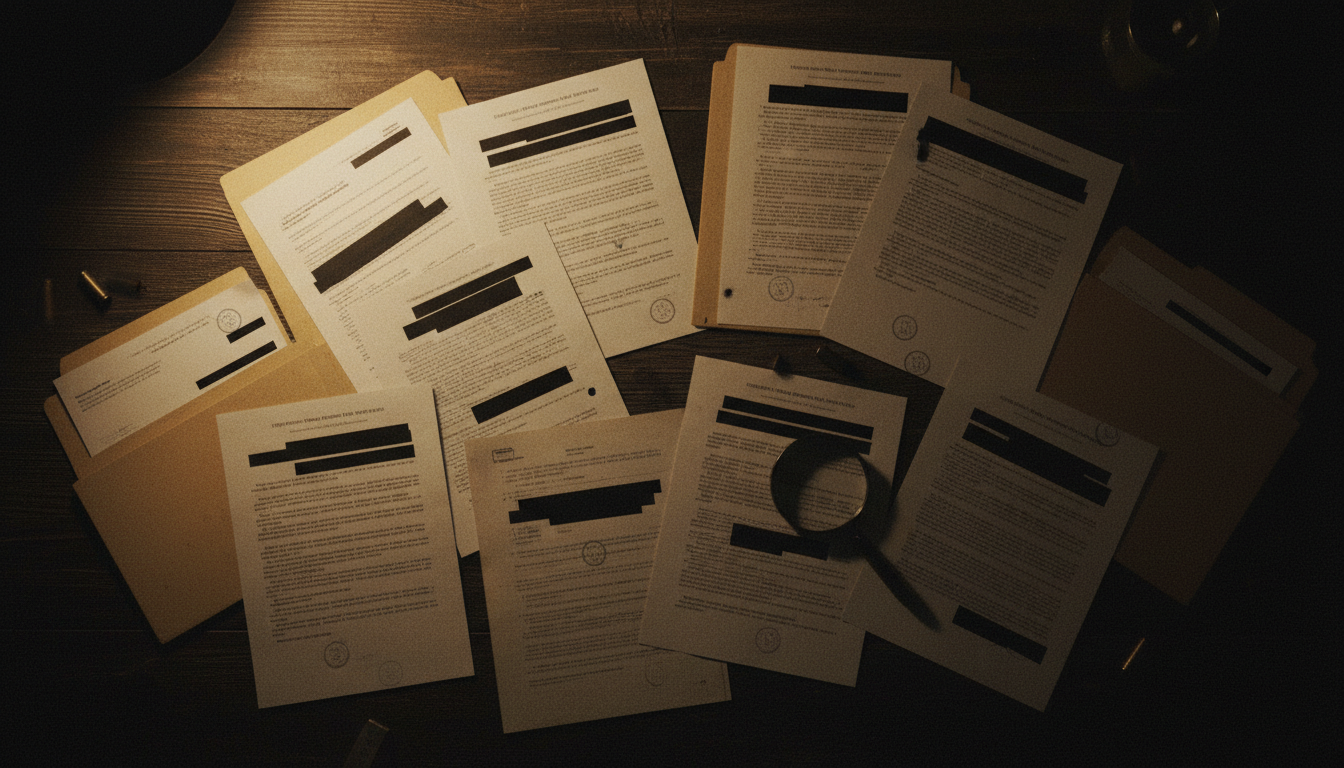
For decades, the findings of Operation Prato were shrouded in secrecy, locked away in military archives. The dossiers, which eventually totaled thousands of pages, included detailed sketches of the craft, charts of their flight paths over the Amazon basin, and psychiatric evaluations of the witnesses. The records also contained logs of radar detections that confirmed the presence of anomalous objects in the airspace. Despite the wealth of data, the official military stance remained ambiguous. While the documents themselves are a testament to the seriousness of the investigation, the final reports often characterized the findings as inconclusive or non-unusual, a stark contrast to the private admissions of those involved. The files were eventually transferred to the National Archives in Brasilia following years of public pressure from ufologists and the 'UFOs: Freedom of Information Now' movement. Even today, researchers debate whether the released documents represent the entirety of the military's findings or if significant portions remain withheld. The record stands as one of the most comprehensive military studies of UAP ever conducted, documenting a sovereign nation's inability to identify or control the objects in its own skies.
The arguments
Skeptical explanations for the Colares events have been varied, ranging from the suggestion of mass hysteria to the possibility of secret military testing by foreign powers. Some argue that the 'Chupa-Chupa' phenomenon was a social contagion, fueled by the isolation of the region and the lack of scientific literacy among the population. They point to the potential for misidentification of natural phenomena or conventional aircraft as the source of the sightings. However, these arguments struggle to account for the physical evidence—the documented medical injuries and the consistent, multi-month volume of reports from diverse witnesses. Others suggest that the lights were the result of clandestine military operations, perhaps involving advanced, experimental technology that the local population was not equipped to recognize. Yet, this theory fails to explain why such technology would be tested on a civilian population in a way that caused direct physical harm. The military's own inability to intercept or identify the craft, as noted in their internal logs, suggests that the phenomenon was not a product of their own making, nor was it easily dismissed as a simple misunderstanding of conventional aerial activity.
Where the case stands today
Today, the Colares case remains a landmark in the study of UAP, serving as a primary reference for the intersection of military investigation and anomalous phenomena. The tragic suicide of Colonel Uyrangê Hollanda in 1997, shortly after he gave a candid interview about his experiences, added a layer of melancholy and mystery to the case. His testimony, in which he insisted that the phenomena were real and intelligent, continues to be cited by researchers as a vital piece of the puzzle. The case is significant not only for the sheer volume of documentation but also for the fact that it represents a rare instance where a government officially acknowledged the presence of objects it could neither control nor identify. As the global conversation around UAP continues to evolve, the Colares files remain a critical, albeit incomplete, record of a time when the sky over the Amazon was filled with the unknown. The case serves as a reminder of the limitations of our current understanding and the enduring importance of transparent, rigorous investigation into the phenomena that continue to challenge our perception of reality.
— CHAIN OF CUSTODY: SOURCES & FURTHER READING
— FIELD REPORTS (0)
Sign in to post a field report.
No field reports yet. Be the first to contribute.
DISCLAIMER: Every story on this site is based on documented real-world reports or official records. We do not publish fiction. All sources are cited above.