The 1931 Cashen’s Gap Investigation: The Historically Documented Gef Case
— EXECUTIVE SUMMARY
The 1931 Cashen’s Gap case involved the Irving family, who claimed their remote Isle of Man farmhouse was inhabited by a talking mongoose named Gef. Despite extensive investigations by figures like Harry Price, the entity remained elusive, leaving behind a legacy of debate between claims of supernatural phenomena and potential domestic hoaxes.
The moment it began
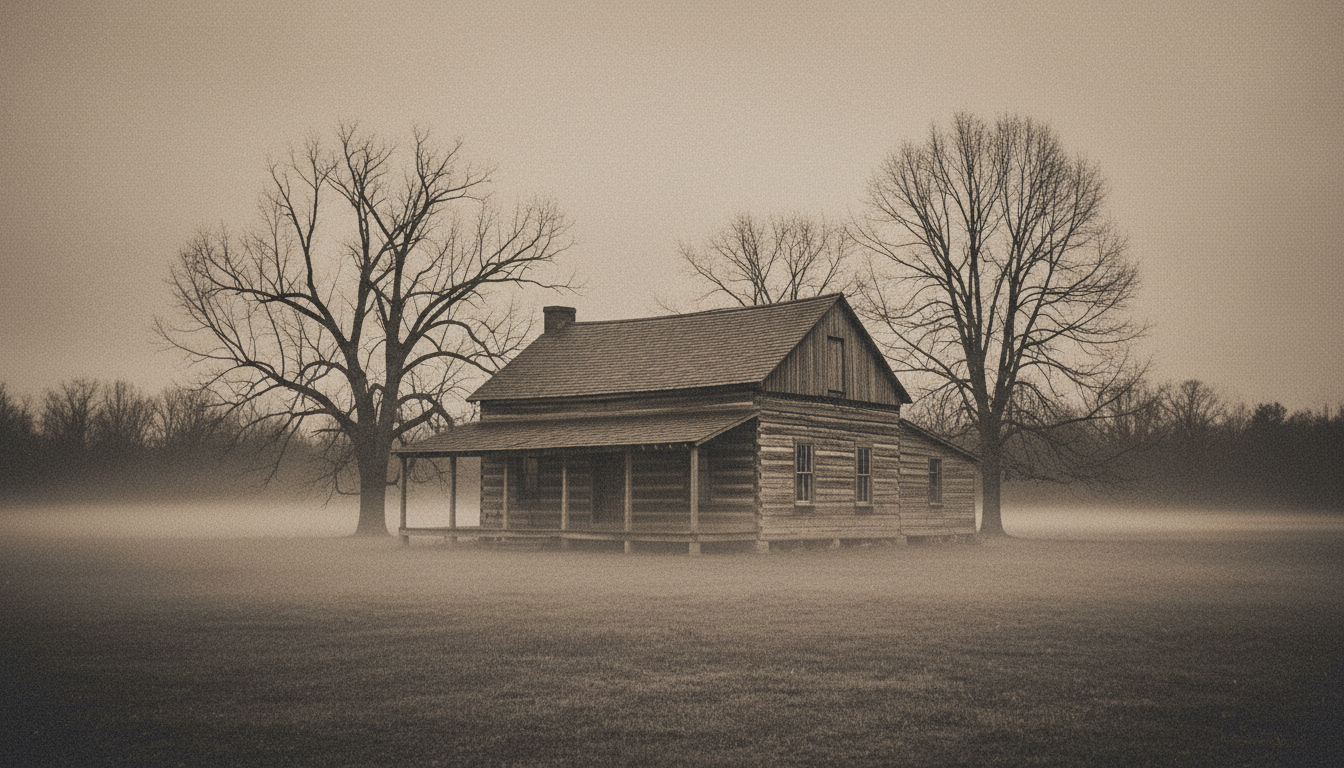
In September 1931, the quiet isolation of the Isle of Man was punctured by a series of inexplicable disturbances at a remote farmhouse known as Cashen’s Gap. The Irving family—James, a former piano salesman, his wife Margaret, and their thirteen-year-old daughter, Voirrey—had lived in the structure since 1917. The farmhouse, situated near the hamlet of Dalby, was a stone building characterized by its interior wooden paneling and significant air cavities between the walls. On a fateful evening that month, the family’s peace was shattered by persistent scratching, rustling, and tapping sounds emanating from behind the attic walls. Initially, James Irving, a man of practical sensibilities, dismissed the noises as the work of a common rodent or a stray animal that had found its way into the structure. However, the sounds soon evolved into growls and, eventually, articulate human speech. The entity, which would later identify itself as 'Gef,' claimed to be a mongoose born in New Delhi in 1852. The atmosphere in the farmhouse shifted from one of rural domesticity to a state of high tension as the family realized they were sharing their home with something that defied conventional biological explanation.
What they saw
Following the initial auditory disturbances, the phenomenon escalated into a complex, multi-year interaction. Gef, who described himself as an 'extra-clever mongoose,' began to communicate regularly with the Irvings. The family reported that the creature possessed a high-pitched, clear voice and a penchant for gossip, often reporting on the activities of neighbors or reading aloud from local newspapers. Gef was not merely a disembodied voice; he was described as a physical entity, resembling a small, yellowish animal with a long tail. He reportedly nested in a 'Sanctum'—an alcove situated above Voirrey’s bedroom—and would occasionally sing hymns or engage in playful banter. The entity’s behavior was erratic; he was known to throw objects, report on village events, and even threaten those who doubted his existence. In one instance, Gef famously declared, 'I have hands and I have feet, and if you saw me you’d faint, you’d be petrified, mummified, turned into stone or a pillar of salt!' Despite these claims, the creature remained notoriously elusive, often refusing to manifest or speak when outsiders were present, creating a frustrating cycle of anticipation and disappointment for those who traveled to the island to witness the 'Dalby Spook' for themselves.
The witnesses
James, Margaret, and Voirrey Irving were the primary witnesses to the Gef phenomenon. James Irving, in particular, was the most vocal proponent of the creature’s reality, keeping detailed diaries from 1932 to 1935 that documented the entity’s sayings and history. These records, which Harry Price later noted rivaled the 'Arabian Nights' in their improbability, served as the foundation for the family’s claims. Voirrey Irving, the young daughter, was frequently at the center of the mystery. While skeptics later suggested she might have been a ventriloquist, contemporary witnesses often reported hearing the voice while she was clearly visible or in another room. Despite the intense media scrutiny and the arrival of reporters from outlets like the Manchester Daily Dispatch, the Irvings maintained their story with unwavering consistency. Even in later life, long after the family had left the farmhouse in 1937, Voirrey maintained that Gef was not a creation of her own making. The family’s testimony remained the only direct link to the entity, as Gef consistently avoided showing himself to the various investigators who descended upon the property.
The investigation
By 1932, the story had captured the attention of the British tabloid press, leading to a wave of interest from the scientific and paranormal communities. Harry Price, the founder of the National Laboratory of Psychical Research, became the most prominent figure to investigate the case. In 1935, Price traveled to the Isle of Man accompanied by R.S. Lambert, the editor of The Listener. Their investigation was meticulous but ultimately inconclusive. Price observed the farmhouse’s unique construction, noting the double walls of wooden paneling that provided ample space for hidden activity. During his stay, Price collected various pieces of evidence, including hair samples and plaster casts of alleged paw prints. These were sent to experts, including the Natural History Museum, for rigorous analysis. The results were consistently disappointing for the proponents of the supernatural: the hair was identified as belonging to a domestic dog, and the paw prints were deemed unidentifiable or potentially made by a dog-like creature. Price’s subsequent book, 'The Haunting of Cashen’s Gap,' published in 1936, documented these findings with an objective, albeit skeptical, tone, refusing to definitively confirm or debunk the existence of the mongoose.
The official record
The official documentation of the Gef case is preserved within the Harry Price archives at the Senate House Library and referenced in the UK National Archives. These records contain a wealth of correspondence, diary entries, and scientific reports that detail the frustration of the investigators. The files highlight the disparity between the family’s vivid accounts and the lack of physical evidence. Notably, the records include the analysis of the biological samples provided by the Irvings, which consistently pointed toward mundane origins rather than an exotic, talking mongoose. The archives also document the legal fallout of the case, including a libel action in 1936 involving R.S. Lambert and Sir Cecil Levita, which further cemented the case’s notoriety. Much of the material remains a testament to the era’s fascination with psychical research, capturing the tension between the desire for scientific validation and the persistence of folklore. While the files do not contain a 'smoking gun' that proves the existence of Gef, they provide a comprehensive look at the methodology of 1930s paranormal investigation and the profound impact the case had on the public imagination.
The arguments
Skeptical arguments regarding the Gef case have remained consistent for nearly a century. The most prevalent theory is that the entire phenomenon was a sophisticated hoax perpetrated by the Irving family, specifically through the use of ventriloquism by Voirrey. Critics point to the lack of any verifiable sightings by independent observers and the fact that the 'evidence'—such as the hair and paw prints—matched the family’s own sheepdog, Mona. Furthermore, the farmhouse’s architecture, with its hollow walls, provided the perfect acoustic environment for a ventriloquist to project sound. Proponents of the supernatural, however, argue that the sheer duration of the haunting—nearly fifteen years—makes a sustained hoax unlikely. They suggest the case might be an example of 'tulpamancy,' where the collective belief and psychological state of the family manifested a semi-physical entity. Some even suggest that Gef was a poltergeist in animal form, a theory that attempts to bridge the gap between the physical evidence and the inexplicable vocalizations. Despite these arguments, the lack of a definitive, observable event leaves the case in a state of perpetual ambiguity, with neither side able to claim a total victory.
Where the case stands today
Today, the Gef case remains a cornerstone of parapsychology and folklore studies. It is frequently cited as one of the most well-documented 'poltergeist with a voice' cases in history. The enduring nature of the mystery lies in its resistance to simple categorization; it is neither a purely spectral haunting nor a clearly debunked fraud. The case continues to be referenced in academic correspondence and popular media, serving as a cautionary tale about the limits of scientific investigation when faced with phenomena that refuse to conform to laboratory conditions. The farmhouse at Cashen’s Gap has long since passed into other hands, and the new owners never reported any further activity, yet the legend of the talking mongoose persists. It remains a subject of fascination because it touches upon the human desire to find wonder in the mundane and the difficulty of distinguishing between genuine anomaly and the complexities of the human psyche. As long as the Harry Price archives remain open to researchers, the story of Gef will continue to be analyzed, debated, and retold, ensuring that the 'Dalby Spook' is never truly forgotten.
— CHAIN OF CUSTODY: SOURCES & FURTHER READING
— FIELD REPORTS (0)
Sign in to post a field report.
No field reports yet. Be the first to contribute.
DISCLAIMER: Every story on this site is based on documented real-world reports or official records. We do not publish fiction. All sources are cited above.