The 1909 Jersey Devil Mass Sighting Panic
— EXECUTIVE SUMMARY
In January 1909, a wave of over 1,000 reported sightings of a mysterious winged creature across New Jersey and Pennsylvania triggered a widespread public panic. While some attribute the event to mass hysteria and a deliberate media hoax, the archival record remains a significant case study in early 20th-century social disruption.
The moment it began
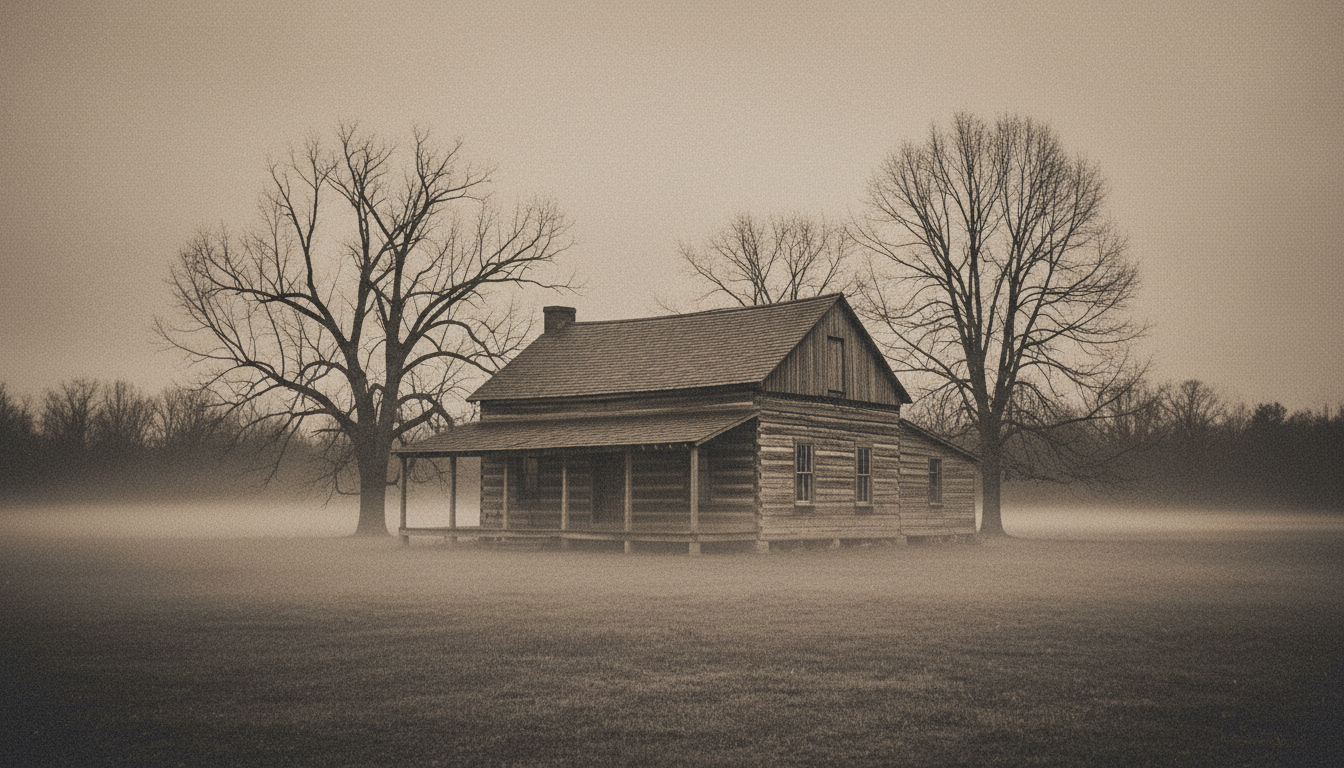
The winter of 1909 arrived with a biting, unforgiving chill that settled deep into the Pine Barrens of New Jersey. On the morning of January 16, the landscape was blanketed in a fresh, pristine layer of snow, a canvas that would soon become the site of one of the most peculiar chapters in American folklore. It began not with a scream or a shadow, but with the discovery of tracks. Residents in South Jersey, waking to their daily chores, found a series of inexplicable, cloven-hoofed impressions in the snow. These were not the tracks of a deer or a stray farm animal; they were singular, rhythmic, and defied the logic of local hunters. The prints appeared in places that seemed impossible for a terrestrial creature to reach—crossing high fences, stopping abruptly at the base of trees, and even appearing on the rooftops of homes. As the sun rose over the frozen fields of Burlington and Gloucester counties, the quiet routine of rural life was shattered. Farmers, who had lived their entire lives in the shadow of the Barrens, began to whisper of the 'Leeds Devil,' a name that had been relegated to the realm of nursery rhymes and colonial-era superstitions for over a century. The atmosphere was thick with a sudden, palpable dread as the realization dawned that something—or someone—had traversed the frozen landscape under the cover of darkness, leaving behind a trail that would soon ignite a regional firestorm.
What they saw
Following the initial discovery of the tracks, the reports escalated with terrifying speed. Within forty-eight hours, the phenomenon had migrated from the ground to the air. Witnesses described a 'flying hoofed creature' with glowing eyes, a beast that seemed to possess the anatomy of a nightmare. In Camden, the situation reached a fever pitch when police officers, responding to frantic calls, claimed to have fired upon a creature perched atop a roof. The beast, described by some as having the head of a horse, the wings of a bat, and the body of a kangaroo, reportedly moved with a fluid, unnatural grace. In Haddon Heights, a trolley car was allegedly attacked, leaving passengers in a state of shock. The creature was seen stalking chicken yards and garbage cans, its presence marked by a distinct, eerie wail that echoed through the winter night. In Bristol, Pennsylvania, the sightings crossed the Delaware River, suggesting the entity was not confined by geography. The creature was reported to be capable of breathing fire, and its movements were described as erratic, darting between the shadows of the Pine Barrens and the populated streets of Philadelphia. The sequence of events was relentless, with reports flooding into police stations and newspaper offices, creating a feedback loop of terror that transformed a local curiosity into a genuine public safety crisis.
The witnesses
The witnesses were not merely the superstitious or the uneducated; they were the pillars of their communities. Among those who reported encounters were businessmen, postal officials, and even local government representatives. Councilman E.P. Weeden of Trenton, a man of standing and reputation, claimed he was awoken in the dead of night by the sound of flapping wings outside his bedroom window. Upon investigating, he discovered the same cloven footprints that had been reported across the region. In Gloucester, a churchgoing couple, noted for their sobriety and lack of interest in local tall tales, reported seeing the creature banging on their backyard shed. Their testimony was documented by the Trenton Times, which noted that the couple had never even tasted applejack, effectively dismissing the possibility of intoxication. A Bristol postmaster provided one of the most detailed accounts, describing the creature’s anatomy with a clinical precision that unsettled investigators. These individuals, many of whom were initially reluctant to come forward for fear of ridicule, found themselves part of a collective experience that transcended their individual backgrounds. Their accounts, preserved in the archives of the Philadelphia Inquirer and the New York Times, paint a picture of a populace gripped by a shared, undeniable reality that defied the conventional explanations of the time.
The investigation
As the panic intensified, the authorities were forced to act. Local militias were mobilized, and posses were formed to hunt the beast through the dense, unforgiving terrain of the Pine Barrens. Farmers set out hundreds of steel traps, and men armed with shotguns stood watch on their porches, waiting for the creature to return. The scientific community was not immune to the fervor; experts from the Philadelphia Academy of Natural Sciences were dispatched to examine the tracks. They measured the impressions, photographed the patterns, and compared them to the known fauna of North America. Despite their expertise, they were unable to identify the tracks as belonging to any known species, leaving the scientific record frustratingly incomplete. The Philadelphia Zoo, sensing the gravity of the situation, offered a $10,000 reward for the capture of the creature, a sum that underscored the seriousness with which the authorities viewed the threat. Yet, despite the mobilization of resources and the scrutiny of experts, the investigation yielded no carcass, no clear photograph, and no definitive proof. The search, while extensive, only served to highlight the elusive nature of the entity, leaving the investigators with more questions than answers as the trail eventually went cold.
The official record
The official record of the 1909 panic is a collection of police reports, newspaper clippings, and municipal logs that document a week of unprecedented disruption. Schools were closed, factories suspended operations, and the streets of Philadelphia were patrolled by men who feared what might be lurking in the shadows. The Philadelphia Inquirer and the New York Times provided daily updates, their headlines shouting of the 'Jersey Devil' and the terror it wrought. However, beneath the sensationalism, the archival record reveals a more complex reality. Police reports from Camden and Bristol confirm that officers did indeed discharge their weapons at an unidentified target, and the sheer volume of reports—over 1,000 in a single week—suggests a phenomenon that was far more than a simple misunderstanding. Some documents from the period hint at the involvement of a Philadelphia press agent named Norman Jeffries, who allegedly planted stories and even displayed a 'Jersey Devil'—a kangaroo painted green—at the Ninth and Arch Dime Museum to capitalize on the hysteria. Yet, even with the admission of such hoaxes, the official record remains haunted by the reports that cannot be explained away by a huckster’s trickery, leaving a significant portion of the event classified as an unexplained anomaly.
The arguments
Skeptics have long argued that the 1909 panic was a classic case of mass hysteria, fueled by sensationalist journalism and the isolation of the Pine Barrens. Medical sociologist Robert E. Bartholomew and author Peter Hassall have cited the event as a prime example of how a regional urban legend can be amplified by a feedback loop between the press and a frightened public. They point to the 'hoax' theory, noting that the Ninth and Arch Dime Museum’s promotion of a fake creature likely provided the spark for the fire. Others, such as researchers McCloy and Miller, have suggested that the sightings were merely misidentifications of a Sand Hill Crane, a bird that could, under the right conditions, be mistaken for a monstrous entity. However, these explanations often fail to account for the sheer geographic spread of the reports and the consistency of the witness descriptions. The argument that the entire event was a fabrication ignores the tangible, documented disruptions to public life and the fact that the witnesses were, for the most part, ordinary citizens who had no reason to lie. While the hoax theory is compelling, it does not fully resolve the mystery of why so many people, in so many different places, reported the same terrifying experience simultaneously.
Where the case stands today
Today, the 1909 Jersey Devil panic remains a cornerstone of American cryptid lore, a case that sits at the intersection of folklore and historical fact. While the creature itself has never been captured or identified, the event serves as a powerful reminder of the fragility of our understanding of the natural world. The Pine Barrens, with their vast, empty stretches and dense forests, continue to be a place where the line between reality and myth is thin. Scattered sightings of the Jersey Devil have continued throughout the 20th and 21st centuries, though none have reached the scale of that fateful week in January 1909. The case matters because it forces us to confront the limitations of our own perception and the power of collective belief. Whether the 1909 event was a genuine encounter with an unknown species, a mass psychological phenomenon, or a masterfully executed hoax, it remains a documented historical event that challenged the scientific and social norms of its time. It stands as a testament to the enduring human need to find meaning in the unknown, and as long as the Pine Barrens remain, the legend of the Jersey Devil will continue to haunt the edges of our collective consciousness.
— CHAIN OF CUSTODY: SOURCES & FURTHER READING
— FIELD REPORTS (0)
Sign in to post a field report.
No field reports yet. Be the first to contribute.
DISCLAIMER: Every story on this site is based on documented real-world reports or official records. We do not publish fiction. All sources are cited above.