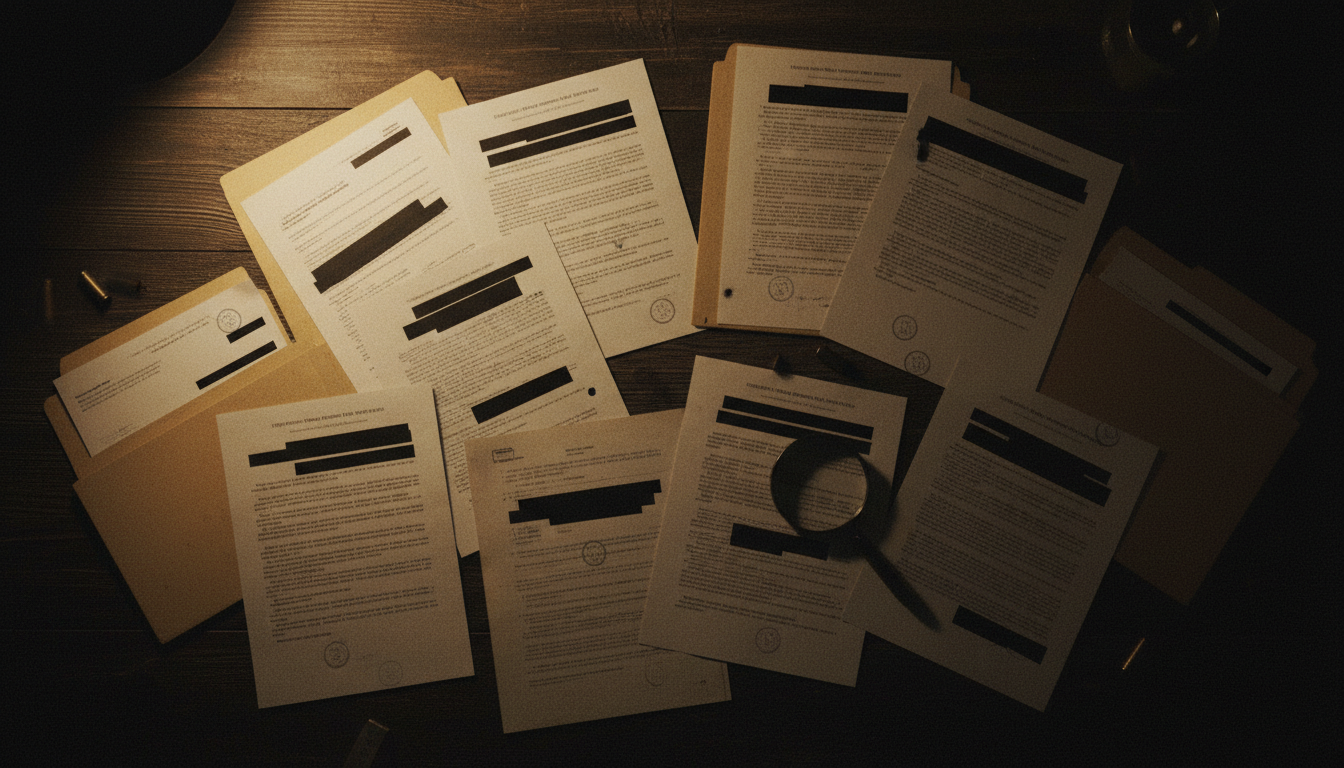
The 1954 Darwin RAAF UAP Incident: Documented Intelligence on Anomalous Multi-Point Formations
— EXECUTIVE SUMMARY
In July 1954, Royal Australian Air Force (RAAF) personnel and civilian witnesses in Darwin observed a series of luminous objects performing high-speed maneuvers. Declassified RAAF intelligence files document radar-visual confirmation and a subsequent investigation by the Directorate of Air Force Intelligence.
The July 1954 Observation
In the winter of 1954, the city of Darwin became the center of a significant UAP wave that drew the attention of the Royal Australian Air Force (RAAF). On the evening of July 12, multiple witnesses, including an RAAF wing commander and several senior air traffic controllers, reported seeing a 'v-shaped' formation of luminous objects traversing the sky at an altitude estimated at 15,000 feet. The objects moved with a silent, fluid motion that exceeded the performance capabilities of any aircraft stationed at the nearby RAAF Base Darwin, including the CAC Sabre jets.
Radar Correlation and Military Response
Crucially, the visual reports were corroborated by the ground-based radar at the Darwin airport. The radar operators tracked a 'solid target' that appeared and disappeared with erratic frequency, occasionally remaining stationary before accelerating to speeds exceeding Mach 2. When the RAAF attempted to scramble an interceptor aircraft, the objects reportedly moved out of the radar's range within seconds, demonstrating a 'reactive' capability to military presence. These details were meticulously recorded in file A705, which served as the official RAAF repository for anomalous aerial phenomena during the Cold War.
Intelligence Evaluation and Findings
The subsequent investigation by the Directorate of Air Force Intelligence (DAFI) looked into various conventional explanations, including meteorological balloons, astronomical phenomena (such as the planet Venus), and the 'Great Meteor Procession.' However, the intelligence officers concluded that the specific maneuvers—including right-angle turns and sudden stops—could not be attributed to natural or man-made objects of the era. The report noted that the witnesses were 'highly reliable' and that the radar data provided 'unambiguous evidence' of a physical craft under intelligent control.
Historical Significance and Declassification
The Darwin incident remains a cornerstone of Australian UAP history. When the National Archives of Australia (NAA) released the 'UFO files' in 2008, the Darwin 1954 case stood out for its high level of official documentation. Unlike many civilian reports, this case involved trained observers using calibrated instruments, providing a level of evidentiary weight that challenged the prevailing skepticism of the Australian Department of Defence. It continues to be studied by researchers as a prime example of a 'radar-visual' encounter in the pre-modern era.
— CHAIN OF CUSTODY: SOURCES & FURTHER READING
— FIELD REPORTS (0)
Sign in to post a field report.
No field reports yet. Be the first to contribute.
DISCLAIMER: Every story on this site is based on documented real-world reports or official records. We do not publish fiction. All sources are cited above.