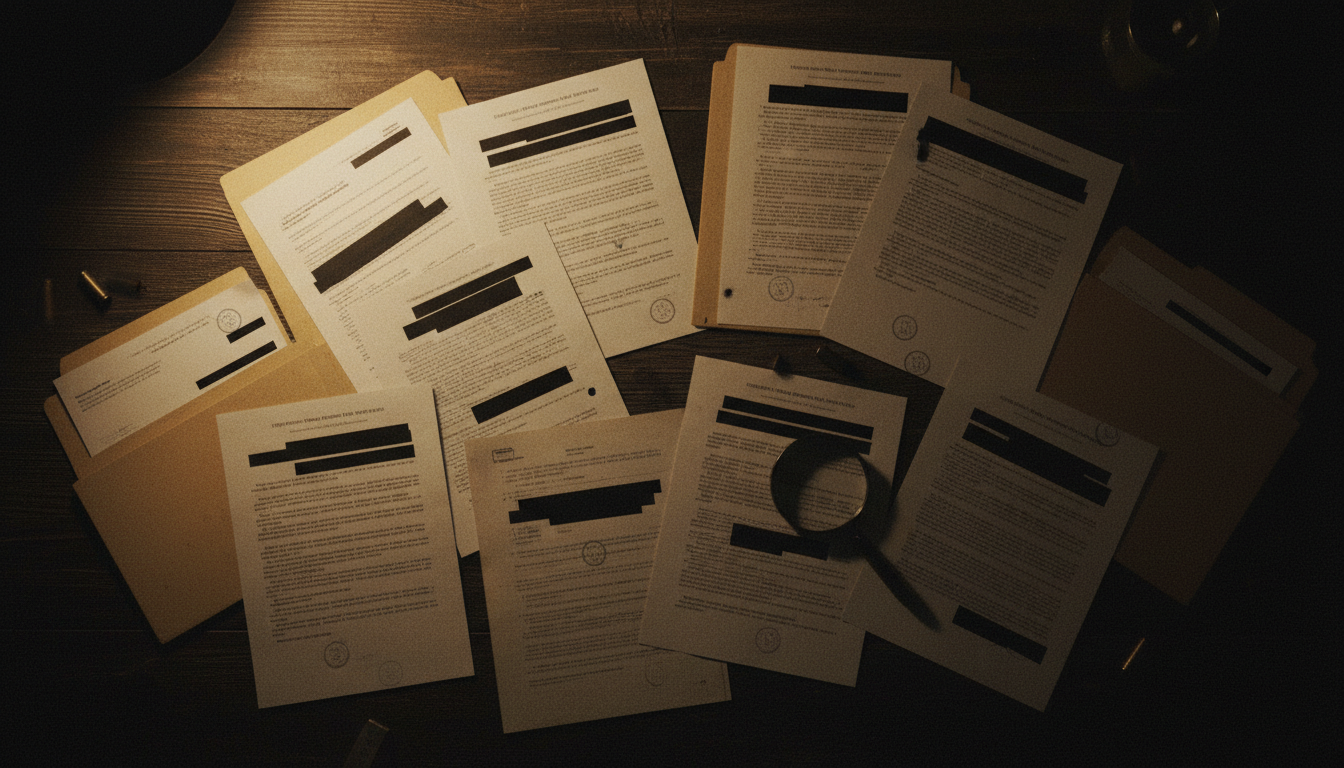
The 1976 Tehran UFO Incident: Analysis of DIA Intelligence Summaries and Electronic Countermeasure Failures
— EXECUTIVE SUMMARY
A high-credibility radar-visual encounter involving Imperial Iranian Air Force F-4 Phantoms and significant electronic interference with aircraft weapon systems.
Overview
In the early hours of September 19, 1976, the Imperial Iranian Air Force (IIAF) engaged in one of the most significant and well-documented radar-visual UAP encounters in modern military history. The incident occurred over the capital city of Tehran and involved multiple F-4 Phantom II interceptors, ground-based radar verification, and visual confirmations from both military pilots and civilian air traffic controllers. The case is notable for the specific, localized electronic malfunctions experienced by the pursuing aircraft.
Military Engagement and Technical Malfunction
The incident began when civilian citizens reported a bright, oscillating object in the night sky. After visual confirmation from the Mehrabad Airport control tower, the IIAF scrambled an F-4 Phantom from Shahrokhi Air Force Base. As the pilot, Lieutenant Yaddi Nazeri, closed within 25 nautical miles of the object, his aircraft suffered a total loss of instrumentation and all communications. Upon breaking off the pursuit and turning away from the object, all aircraft systems immediately returned to normal operation.
Weapon System Interference
A second F-4, piloted by Lieutenant Parviz Jafari, was subsequently scrambled to intercept. Jafari achieved a radar lock on an object described as possessing a brilliance similar to a strobe light, arranged in a rectangular pattern. As Jafari attempted to engage the object with an AIM-9 Sidewinder missile, his weapons control panel failed, and his radio communications were severed. Simultaneously, a smaller secondary object was observed detaching from the primary craft and descending toward the ground. The pilot performed an emergency maneuver to avoid a perceived collision before the secondary object landed and then reportedly re-integrated with the primary craft.
Intelligence Documentation and Credibility
The event was meticulously documented by the United States Defense Intelligence Agency (DIA) in a three-page intelligence summary (IR number 6 846 0139 76) distributed to the White House, CIA, and NSA. The report, later declassified, noted that the case met all the criteria for a high-credibility event: multiple witnesses in different locations, radar-visual correlation, and measurable physical effects on sophisticated electronic systems. The DIA evaluation specifically noted that the electromagnetic interference (EMI) was restricted to a specific radius around the object, suggesting a highly advanced or non-conventional propulsion and defense system.
— CHAIN OF CUSTODY: SOURCES & FURTHER READING
— FIELD REPORTS (0)
Sign in to post a field report.
No field reports yet. Be the first to contribute.
DISCLAIMER: Every story on this site is based on documented real-world reports or official records. We do not publish fiction. All sources are cited above.