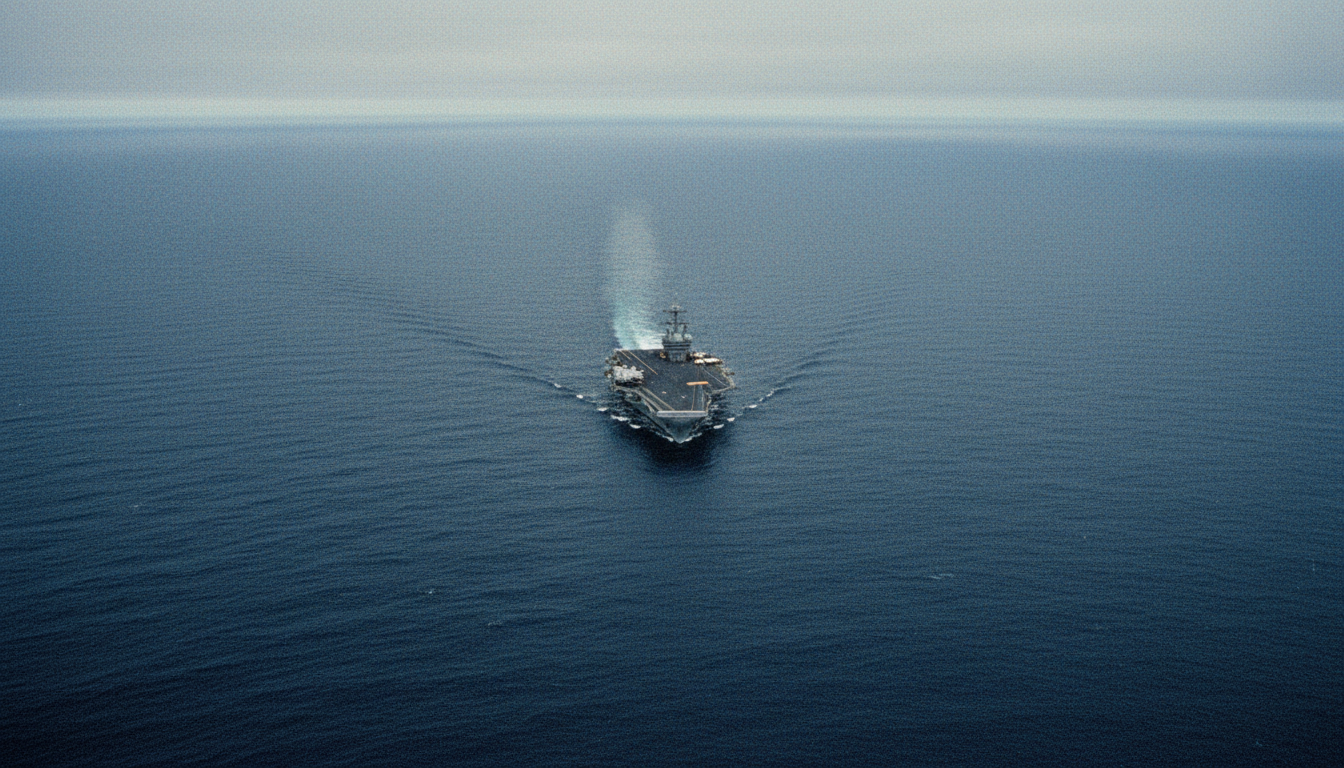
The 1967 Shag Harbour Incident: Analysis of Canadian Military and Civilian Observations
— EXECUTIVE SUMMARY
Multiple witnesses observed a large, unidentified object descend into the waters off the coast of Shag Harbour, prompting a multi-agency search and rescue operation. The event remains one of Canada's most significant and well-documented UAP cases, involving both civilian and military authorities.
The Shag Harbour Descent
On the evening of October 4, 1967, residents of the small fishing village of Shag Harbour, Nova Scotia, reported seeing a large, low-flying object with four flashing lights descending toward the water. The object impacted the surface with a loud sound, leaving behind a large patch of yellow, bubbling foam. Local residents, initially believing a plane had crashed, contacted the Royal Canadian Mounted Police (RCMP), who arrived on the scene to find the object floating approximately half a mile offshore.
Military Investigation and Retrieval
The incident triggered a coordinated response from the Canadian Coast Guard and the Canadian Forces. Despite an extensive search operation, no wreckage was recovered, and the object reportedly disappeared beneath the surface. A subsequent investigation by the Canadian military, including the Department of National Defence, failed to identify the object. The case is notable for the high degree of official involvement, with records indicating that the U.S. Condon Committee also took an interest in the event.
Historical Significance
Decades later, the Shag Harbour incident remains officially classified as unsolved. It is frequently cited in academic and government-adjacent research as a primary example of a 'crash-retrieval' style event. The availability of declassified government memos, including those archived by the Library and Archives Canada and referenced in modern UAP disclosure databases, allows researchers to analyze the event's impact on national security protocols. The case continues to be a focal point for those studying the intersection of maritime UAP sightings and government response, as it highlights the challenges of investigating anomalous phenomena in civilian-populated coastal regions.
— CHAIN OF CUSTODY: SOURCES & FURTHER READING
— FIELD REPORTS (0)
Sign in to post a field report.
No field reports yet. Be the first to contribute.
DISCLAIMER: Every story on this site is based on documented real-world reports or official records. We do not publish fiction. All sources are cited above.