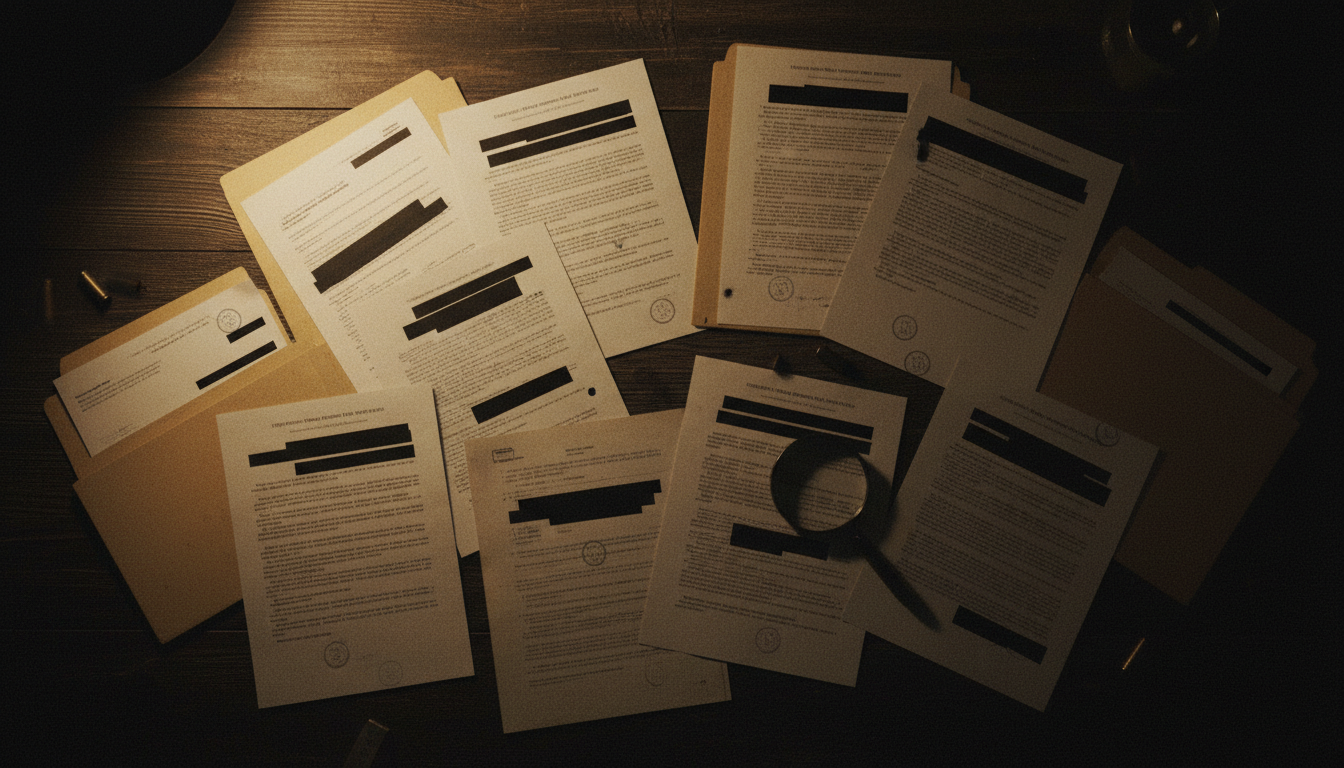
The 1967 Malmstrom Air Force Base Nuclear Incursion: Analysis of Strategic Air Command Technical Failure Records
— EXECUTIVE SUMMARY
On March 16, 1967, ten Minuteman I intercontinental ballistic missiles at Oscar Flight sequentially dropped offline into an unlaunchable 'No-Go' status while security personnel observed an anomalous glowing red-orange aerial vehicle hovering near the perimeter gate. Subsequent technical inquiries by the United States Air Force and Boeing aerospace contractors failed to pinpoint a physical, electrical, or software defect capable of explaining the simultaneous multi-site shutdown.
Background and Sensor Telemetry
In the early morning hours of March 16, 1967, the 341st Strategic Missile Wing at Malmstrom Air Force Base in central Montana experienced one of the most critical automated system failures in the history of the United States nuclear deterrent. Deep underground inside the Oscar Flight Launch Control Facility (LCF), Deputy Missile Combat Crew Commander 1st Lt. Robert Salas and Captain Fred Meiwald monitored ten Minuteman I ICBMs distributed across miles of remote launch facilities. Above ground, armed security police alerted the subterranean capsule that an unidentified, glowing red-orange disc-shaped craft was hovering silently directly above the secure front gate of the facility.
Simultaneous Strategic Weapon Deactivation
Within seconds of the topside visual contact, warning klaxons sounded inside the subterranean capsule. Across the console display panels, all ten intercontinental ballistic missiles sequentially switched from alert status into an inoperable 'No-Go' condition, effectively disabling a major strategic nuclear response unit within less than one minute. A nearly identical failure had reportedly affected Echo Flight at the same base mere days prior, shutting down ten additional missiles under similar visual reporting conditions. The simultaneous de-alerting of hardened, isolated weapon systems configured with redundant failsafes sent shockwaves through Strategic Air Command (SAC).
Technical Investigations and Contractor Findings
Extensive post-incident investigations led by the Air Force and Boeing technical teams isolated the weapon control electronics and cable conduits, testing for electromagnetic pulse (EMP) interference, power fluctuations, ground-current loops, and deliberate sabotage. Declassified Air Force unit histories confirm the unexpected disabling of the missile flights but provide no underlying mechanical failure diagnosis. In February 2023, testimony concerning the incident was officially presented to the Pentagon's All-domain Anomaly Resolution Office (AARO), reopening technical scrutiny into historical airborne incursions over nuclear command-and-control facilities.
— CHAIN OF CUSTODY: SOURCES & FURTHER READING
— FIELD REPORTS (0)
Sign in to post a field report.
No field reports yet. Be the first to contribute.
DISCLAIMER: Every story on this site is based on documented real-world reports or official records. We do not publish fiction. All sources are cited above.