The Phantom Intercept: Deconstructing the 1976 Tehran UAP Encounter
— EXECUTIVE SUMMARY
In September 1976, two Imperial Iranian Air Force F-4 Phantom jets experienced total electronic and weapons failure while attempting to intercept a luminous, high-speed aerial object over Tehran. The incident remains one of the most credible and well-documented military UAP encounters in history, supported by declassified U.S. Defense Intelligence Agency reports.
The moment it began
The night of September 18, 1976, began with an air of routine calm over the Imperial Iranian Air Force command post in Tehran. The weather was clear, providing excellent visibility for the night watch. However, this tranquility was shattered shortly after midnight on September 19. The command post began receiving a flurry of urgent telephone calls from residents in the Shemiran area of Tehran. These citizens reported seeing strange, luminous objects hovering in the sky. Some described the objects as bird-like, while others insisted they were helicopters with bright lights, despite the fact that no military or civilian helicopters were airborne in that sector at the time. The reports were persistent and alarming enough that the officer in charge decided he needed to see for himself. Upon stepping outside, he observed an object to the north that appeared like a star, only significantly larger and brighter. Recognizing the potential security implications of an unidentified craft operating over the capital, he made the decision to scramble an F-4 Phantom jet from Shahrokhi Air Force Base to investigate the anomaly. The stage was set for a confrontation that would defy conventional explanation and enter the annals of military history as a premier case of unexplained aerial phenomena.
What they saw
The first F-4 Phantom took off at 01:30 hours, proceeding to a point approximately 40 nautical miles north of Tehran. As the pilot closed the distance, the object’s brilliance became unmistakable, visible from as far as 70 miles away. The encounter took a harrowing turn when the F-4 reached a range of 25 nautical miles from the target. Suddenly, the pilot reported a total loss of all instrumentation and communications, including both UHF radio and the aircraft's intercom system. Faced with a blind cockpit and a malfunctioning jet, the pilot broke off the intercept and turned back toward Shahrokhi. Miraculously, as soon as the aircraft turned away and was no longer perceived as a threat, all systems returned to normal operation. A second F-4 was scrambled at 01:40 hours. The backseater, a weapons systems officer, successfully acquired a radar lock on the object at 27 nautical miles. As they approached, the object began to maneuver, maintaining a constant distance. At one point, a smaller, brightly lit object detached from the primary craft and moved at high speed toward the interceptor. The crew attempted to arm a missile, but their weapons control panel went dead, and their communications were again severed. They were forced to abandon the pursuit, watching as the object moved off into the distance.
The witnesses
The primary witnesses to this event were the highly trained pilots and weapons systems officers of the Imperial Iranian Air Force, whose professional reputations were on the line. These men were not prone to flights of fancy; they were seasoned aviators accustomed to the rigors of supersonic flight and complex radar systems. Their accounts, documented in official military debriefings, describe a level of technological sophistication that far exceeded the capabilities of any known aircraft in 1976. The pilots reported that the object’s lights were flashing in a sequence so rapid that all colors—blue, green, red, and orange—appeared to be visible simultaneously. One pilot, in later retrospective accounts, expressed his profound fear during the encounter, noting that when the communications failed, he was left in total silence, wondering if his aircraft would remain controllable. The civilian witnesses in the Shemiran district provided the initial impetus for the scramble, their descriptions of a hovering, luminous entity providing the ground-level context for the aerial pursuit. These witnesses, ranging from local residents to airport control tower staff, consistently described an object that defied the flight characteristics of conventional aircraft, moving with abrupt starts, stops, and periods of absolute immobility that left observers baffled.
The investigation
The investigation into the Tehran incident was not merely a local affair; it drew the attention of the United States intelligence community. A three-page teletype message, later released under the Freedom of Information Act, confirms that the Defense Intelligence Agency (DIA) treated the report with high priority. The DIA evaluation form, which was attached to the military teletype, categorized the information as "Confirmed by other sources" and rated its value as "High (Unique, Timely, and of Major Significance)." The report noted that the case met all the criteria for a valid study of the UAP phenomenon, specifically citing the multiple witnesses from different locations, the confirmation of visual sightings by ground and airborne radar, and the consistent reporting of electromagnetic effects (EME) across three separate aircraft involved in the broader incident. The DIA assessment concluded that the report was "outstanding," a rare descriptor for a military intelligence document. While no physical debris was recovered, the data captured by the F-4’s radar systems and the consistent, corroborated testimony of the flight crews provided a robust dataset that military analysts could not easily dismiss as mere sensor error or atmospheric phenomena.
The official record
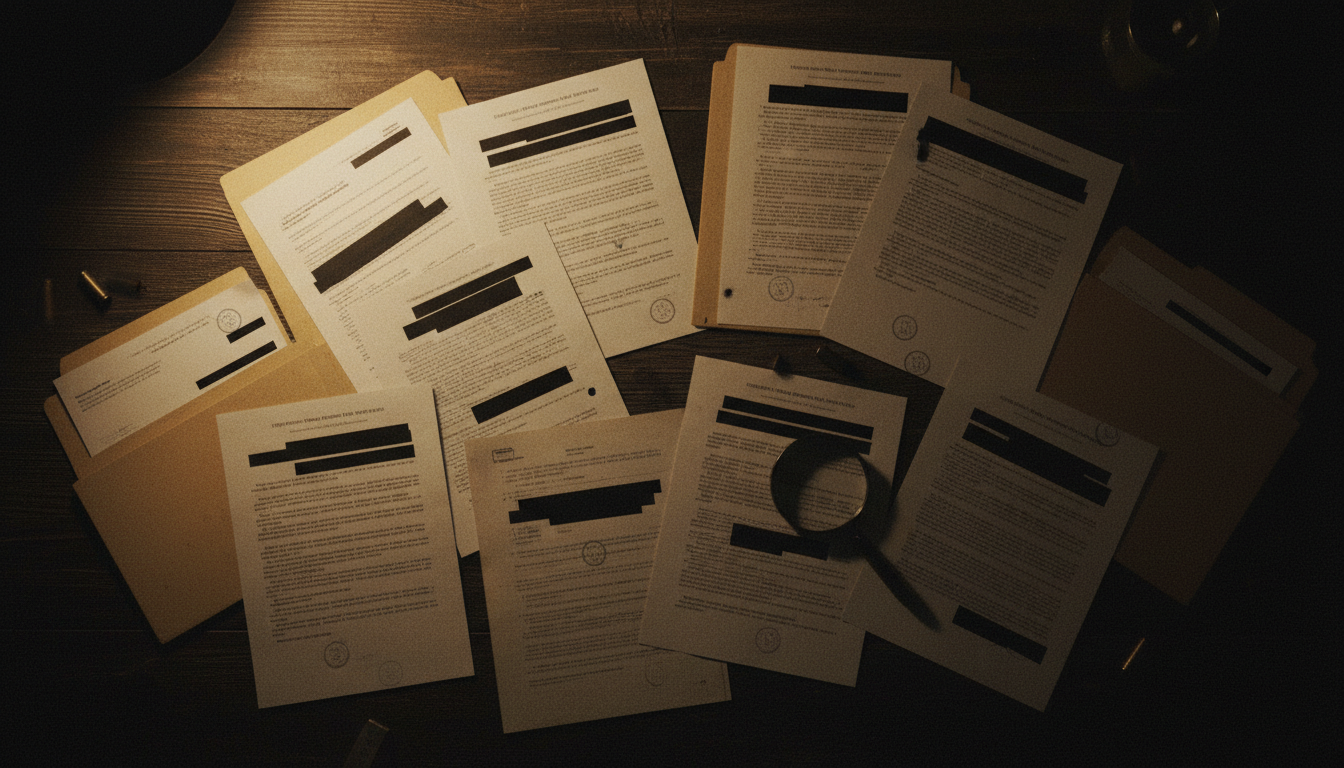
The official record of the Tehran incident is preserved in declassified documents held by the U.S. government, including files from the DIA and the National Security Agency. These documents provide a stark, clinical account of the events. The "Verbatim Wire Message" details the timeline: the initial civilian calls at 12:30 AM, the scramble of the first F-4 at 01:30 AM, and the subsequent failure of the second F-4’s weapons systems. The documents are notable for what they do not explain. They confirm the loss of instrumentation and the inability to fire weapons, but they offer no definitive identification of the object. The files were circulated among high-level agencies, including the Defense Air Command and the Commander in Chief of Forces in Europe, indicating the seriousness with which the Pentagon viewed the breach of Iranian airspace. Despite the wealth of data, the official stance remained one of cautious observation. The documents were eventually declassified, allowing researchers to piece together the sequence of events, yet the core mystery—the nature of the object and the mechanism by which it disabled the F-4s—remains officially unexplained in the declassified record.
The arguments
Skeptical explanations for the Tehran incident have primarily focused on the possibility of astronomical misidentification or sensor malfunction. Some critics have suggested that the object was merely the planet Jupiter, which was exceptionally bright in the sky that night, combined with the psychological stress of the pilots. However, this explanation fails to account for the radar data. A planet does not produce a radar return that moves, maneuvers, and detaches smaller objects. Furthermore, the argument that the F-4s suffered from routine mechanical failure is undermined by the specific, repeatable nature of the malfunction: the systems failed only when the jets approached the object and returned to normal immediately upon turning away. This correlation suggests an external influence rather than a random technical glitch. While some have proposed that the pilots were chasing a secret U.S. or Soviet reconnaissance drone, the performance characteristics described—such as the ability to hover and the rapid, multi-colored light sequences—do not match the technology of the mid-1970s. The consistency of the reports across multiple, independent crews makes the "misidentification" theory difficult to sustain without dismissing the professional integrity of the Iranian Air Force personnel involved.
Where the case stands today
Today, the 1976 Tehran incident stands as a cornerstone of UAP research, frequently cited by both civilian investigators and government officials as a "classic" case. It remains significant because it involves high-quality, multi-sensor data—radar and visual—coupled with the testimony of trained military observers. In an era where UAP sightings are once again being taken seriously by the U.S. Department of Defense and the All-domain Anomaly Resolution Office (AARO), the Tehran case serves as a historical benchmark. It demonstrates that the phenomenon is not a modern invention but a persistent reality that has challenged military aviation for decades. The case matters because it highlights the limitations of our current understanding of aerial technology and the potential for unidentified objects to interact with military hardware in ways that compromise safety and operational control. While the physical origin of the object remains unknown, the Tehran encounter continues to be a subject of rigorous study, reminding us that the skies have long held mysteries that defy our current scientific paradigms and demand continued, objective investigation.
— CHAIN OF CUSTODY: SOURCES & FURTHER READING
— FIELD REPORTS (0)
Sign in to post a field report.
No field reports yet. Be the first to contribute.
DISCLAIMER: Every story on this site is based on documented real-world reports or official records. We do not publish fiction. All sources are cited above.