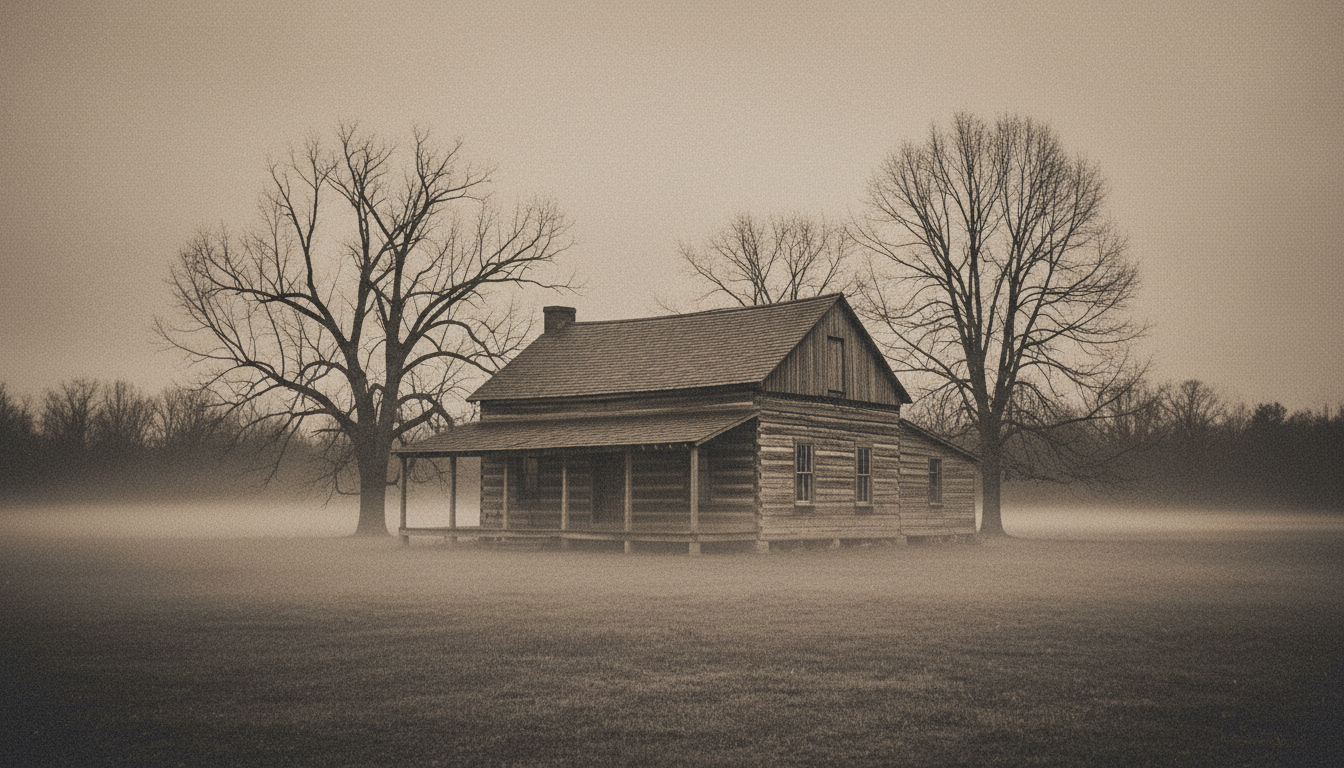
Shadows of the Rim: The 2014 Fools Hollow Lake Encounter
— EXECUTIVE SUMMARY
In April 2014, a lone fisherman at Fools Hollow Lake reported a startling encounter with a large, bipedal creature that mirrored the classic descriptions of the elusive Mogollon Monster. This incident remains a significant modern data point in the ongoing, century-old folklore of Arizona's high-altitude pine forests.
The moment it began
The afternoon of April 22, 2014, began with the deceptive tranquility common to the high-altitude forests of Navajo County, Arizona. Near the town of Show Low, the air around Fools Hollow Lake was thick with the impending pressure of a seasonal monsoon. A lone fisherman, navigating the waters in a modest 12-foot aluminum boat, found himself roughly 50 yards from the shoreline as the sky began to bruise with dark, rolling clouds. The atmosphere was heavy, the kind of stillness that precedes a violent shift in weather, and the witness, feeling the prickle of static electricity in the air, decided it was time to retreat. He steered his small craft westward, intending to reach the safety of the shore before the storm broke. It was approximately 5:00 PM, and the overcast conditions had already begun to dim the natural light, casting long, grey shadows across the Ponderosa pine-lined banks. The witness was alone, focused on the task of navigating the lake, when his attention was suddenly drawn to a movement on the bank. He initially assumed he was observing a bear, a common enough sight in the region, but the posture of the figure would soon shatter that mundane assumption, pulling him into a narrative that has haunted the Mogollon Rim for over a century.
What they saw
As the witness maneuvered his boat, he observed what he initially identified as a bear down on all fours, drinking from the edge of the lake. However, as he watched, the creature transitioned into a movement that defied his expectations. The entity rose, revealing a bipedal stature that the witness estimated to be between seven and eight feet tall. The creature possessed a distinct, hunched gait, moving with a long, powerful stride that the witness later compared to the iconic movements captured in the 1967 Patterson-Gimlin film. Its physical appearance was striking; the creature was covered in a reddish-brown coat of hair, described as being a few shades darker than that of an orangutan. Its arms were notably long, reaching down toward its mid-thigh, a feature that emphasized its non-human anatomy. The creature did not acknowledge the boat; instead, it turned with a fluid, deliberate motion and retreated into the dense, wooded area bordering the lake. The witness watched, paralyzed by the suddenness of the event, until the creature vanished into the treeline. The entire encounter lasted only a short time, but the visual clarity provided by the proximity—roughly 50 yards—left the witness with a vivid, indelible impression of a creature that did not fit the profile of any known local fauna.
The witnesses
In the world of cryptid research, the credibility of a report often rests on the witness's ability to articulate their experience without embellishment. The individual who reported the Fools Hollow Lake sighting chose to remain anonymous in public records, a common practice for those who fear the social stigma associated with reporting encounters with the unknown. However, the Bigfoot Field Researchers Organization (BFRO), which documented the case as Report #47536, maintains that the witness was a credible observer who provided consistent details during follow-up interviews. The witness, a resident of the area, was familiar with the local wildlife and the rugged terrain of the Mogollon Rim. His account was not framed as a sensationalist claim but as a factual observation of an anomaly. He expressed a clear discomfort during the encounter, driven not just by the approaching storm, but by the realization that he was in the presence of something that defied his understanding of the natural world. His background as a local outdoorsman suggests a level of competence in identifying regional animals, making his inability to classify the creature as a bear or mountain lion a point of significant interest for researchers who study the persistent folklore of the region.
The investigation
Following the submission of the report, the BFRO initiated a follow-up investigation led by investigator TF Zamiski. The investigation process involved multiple phone interviews with the witness to verify the timeline, the environmental conditions, and the specific physical characteristics of the creature. Zamiski focused on the witness's assessment of the distance and the duration of the sighting, concluding that the witness had a clear, unobstructed view of the creature as it walked back into the woods. While no physical evidence—such as hair samples, scat, or casts of footprints—was recovered from the site due to the impending storm and the difficulty of accessing the specific muddy bank after the rain, the investigation served to formalize the account within the broader database of Sasquatch-like sightings. The BFRO classifies this as a 'Class A' report, meaning the witness had a clear view of the creature under conditions that rule out misidentification of known animals. This classification is reserved for reports where the investigator finds the witness to be reliable and the details provided to be consistent with the established, albeit anecdotal, profile of the Mogollon Monster.
The official record
There is no official government file on the Mogollon Monster in the sense of a classified military or intelligence document. The 'official record' of such encounters exists primarily within the archives of private research organizations and the historical columns of regional newspapers. The legend itself traces back to a 1903 account in The Arizona Republican, where a prospector named I.W. Stevens described a creature with long white hair and talon-like claws. Since then, the record has been built through a patchwork of oral histories, Boy Scout camp stories from the 1940s, and modern digital reports. The 2014 Fools Hollow Lake incident is a documented entry in the BFRO database, which serves as the primary repository for these types of sightings. While the state of Arizona does not maintain a department for cryptid investigation, the persistence of these reports in local media and folklore guides ensures that the 'file' on the Mogollon Monster remains open. The lack of official government interest is often cited by skeptics as proof of the creature's non-existence, while proponents argue that the government has no mandate to investigate biological anomalies that do not pose a direct threat to public safety or national security.
The arguments
Skeptics of the Mogollon Monster legend often point to the lack of physical evidence as the primary argument against its existence. Biologists and wildlife experts frequently suggest that sightings are misidentifications of black bears, which can occasionally stand on their hind legs, or perhaps even the result of pareidolia—the human tendency to see familiar patterns in random stimuli. The 'soggy dog' odor often reported by witnesses is dismissed as the scent of wet fur or decaying vegetation. Furthermore, the absence of a breeding population, skeletal remains, or clear photographic evidence is cited as a fatal flaw in the cryptid hypothesis. Proponents, however, argue that the rugged, inaccessible nature of the Mogollon Rim provides ample cover for a reclusive species to avoid detection. They point to the consistency of the descriptions—the height, the reddish-brown hair, the specific vocalizations—across decades of independent reports as evidence that something is indeed roaming the forests. They argue that the absence of evidence is not evidence of absence, especially in a region as vast and geologically complex as the Mogollon Rim, where a large, intelligent creature could theoretically evade human contact for generations.
Where the case stands today
Today, the Mogollon Monster remains a fixture of Arizona's cultural landscape, occupying a space between genuine mystery and regional folklore. The 2014 sighting at Fools Hollow Lake serves as a modern anchor for the legend, proving that the stories are not merely relics of the early 20th century but continue to be generated by contemporary observers. The creature has been immortalized in local endurance races, such as the Mogollon Monster 100, and continues to be a subject of fascination for those who explore the Ponderosa pine forests. While science remains unconvinced, the persistence of the belief is a testament to the human desire to find mystery in the wild places that remain. Whether the Mogollon Monster is a biological reality, a misidentified animal, or a psychological manifestation of our fear of the unknown, it continues to matter because it challenges our perception of the world. It reminds us that even in the age of satellite imagery and constant connectivity, there are still corners of the map where the imagination can run wild, and where the possibility of the impossible remains a persistent, haunting presence in the shadows of the trees.
— CHAIN OF CUSTODY: SOURCES & FURTHER READING
— FIELD REPORTS (0)
Sign in to post a field report.
No field reports yet. Be the first to contribute.
DISCLAIMER: Every story on this site is based on documented real-world reports or official records. We do not publish fiction. All sources are cited above.